
Fiat Key Programming: Complete Locksmith Guide (Fiat, Alfa Romeo, Abarth)
Five chip families, two body computer suppliers, and the pre-coding step that is not in the tool menu
Key Takeaways
- Fiat is organised by supplier, not by generation — five chip families (Megamos Crypto ID48, Hitag 2 ID46, Hitag Pro, Megamos AES, Hitag AES) overlap across the same model years, so work from the chip and never from the badge
- A virgin aftermarket blank will not programme to a Fiat until it has been pre-coded with that vehicle's security data. The five-digit number on the CODE card is the immobiliser PIN only and does not carry the pre-code data
- On Hitag 2 cars, check whether the body computer is Delphi or Marelli before you order a remote. Eight legs on the key's button IC means Marelli, ten or sixteen means Delphi, and fitting the wrong board gives you a key that starts the engine with dead buttons
- Fiat key learning rebuilds the whole key list from what you present in the session. Any working key not shown to the car during programming is scrapped permanently, so collect every key before you start
- The Ducato is three different jobs under one badge. The 2022-on Hitag AES van has no OBD immobiliser read at all — it is a dealer-precoded key or a bench dump of the body computer, at 2.5 to 4 hours
- The blade profile is SIP22 across effectively the whole range, so a single Lishi SIP22 twin-lifter covers Fiat, Alfa Romeo and Abarth
Fiat key programming does not have generations. It has suppliers.
Every other make guide in this series is organised by immobiliser era, because that is how the manufacturer built the cars. Ford went PATS I to Gen 4. Volkswagen went Immo III to MQB. Those are lines you can draw on a calendar. Fiat is not like that. Across the same handful of years the same badge covers Megamos Crypto ID48, Hitag 2 ID46, Hitag Pro, Megamos AES and Hitag AES, fitted to body computers from two different suppliers whose remote boards are not interchangeable. A 2016 Fiat and a 2016 Fiat can be two entirely different jobs.
That is why Fiat catches people out. The cars themselves are easy money — a Fiat 500 add-key is a comfortable half-hour once you know what is in front of you, and the 500, Panda and Punto between them make up a large slice of the small-car parc on any UK round. The difficulty is never the procedure. It is the identification you do before you touch the OBD socket, and the pre-coding step that sits between a virgin blank and a key the car will accept. Get either wrong and you have a key that starts the engine with three dead buttons, or a customer whose other keys you have just scrapped.
This guide covers Fiat, Alfa Romeo and Abarth, pulled from the Keysolved Fiat database. Lancia and the Jeep side of FCA share some of this architecture but are out of scope here.
The five chip families you will meet on a Fiat
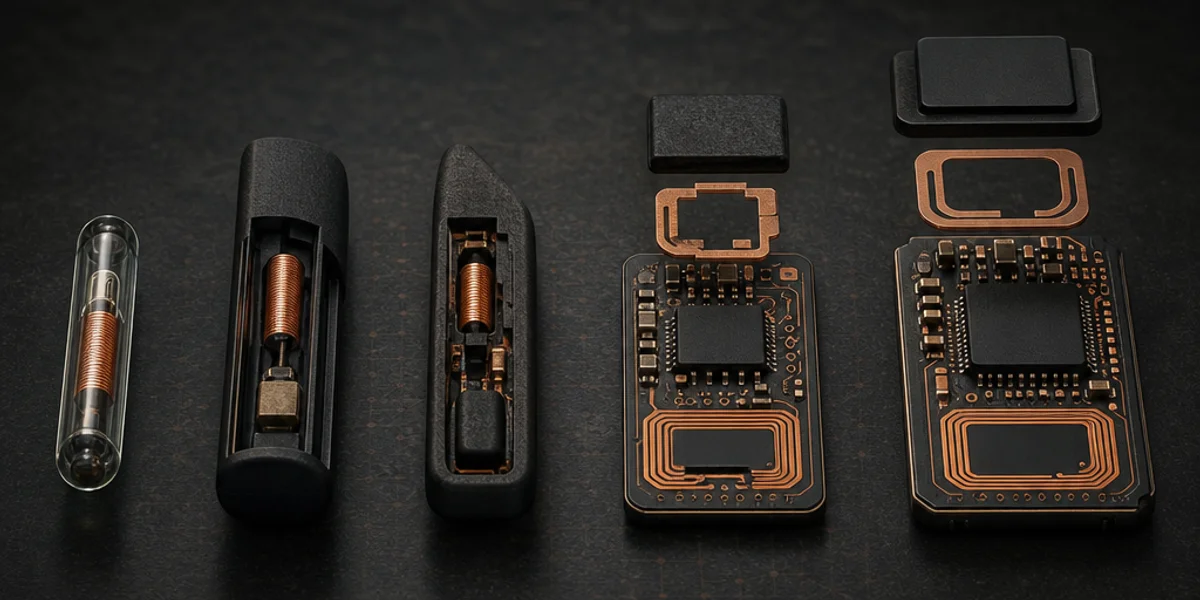
Work from the chip, not from the model year. These are the families recorded against the Fiat, Alfa Romeo and Abarth vehicles in the database.
| Chip family | Typical vehicles | Clonable | Blade |
|---|---|---|---|
| Megamos Crypto ID48 | Ducato Type 250, Dec 2006 – Sept 2008 | Via tool, pre-coded | SIP22 |
| Hitag 2 ID46 (PCF7936 / PCF7946) | 500, Abarth 595, Panda 319, Punto 199, Bravo II, Ducato Sept 2008 – 2021, Giulietta to mid-2016, MiTo | Yes, start-only | SIP22 |
| Hitag 2 / Hitag Pro (PCF7947 / PCF7953) | Doblo II, early then late | Hitag 2 yes, Pro no | SIP22 |
| Megamos AES (MQB48 / ID48-MQB / "4A") | Tipo 356, 500X 334 | No | SIP22 |
| Hitag AES (ID4A / PCF7939) | Giulietta mid-2016 on, Giulia 952, Stelvio 949, Ducato 2022 on | No | SIP22 |
Two things fall out of that table immediately. First, the blade profile is SIP22 on effectively everything, which is the one genuinely convenient thing about Fiat — one Lishi SIP22 twin-lifter pick and decoder covers the entire range, eight positions, and the anti-glare version earns its money on kerbside work. Second, the cloning column is where the money is. Hitag 2 clones onto an Xhorse Super Chip or a JMA TPX1 for a start-only spare with no diagnostic time on the car at all. Both AES families do not clone, full stop. Our cloning versus programming guide sets out where that wall sits across all makes, and the transponder chip cross-reference maps these families to the rest of the UK parc.
Delphi or Marelli: the check that comes first
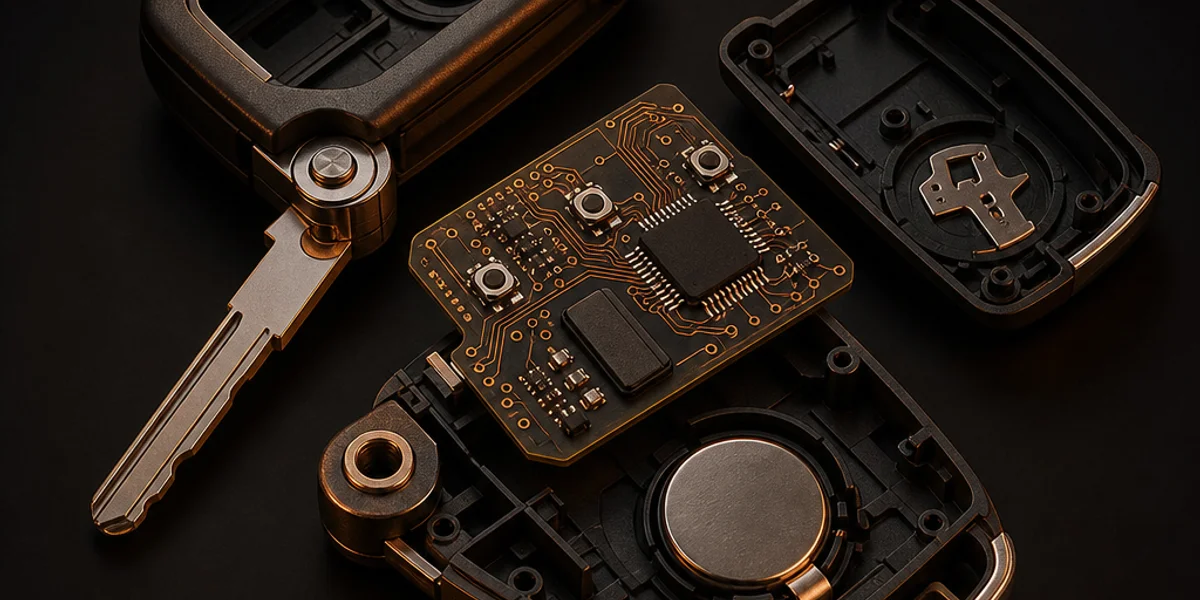
On the Hitag 2 cars the body computer supplier matters more than the model year, because the two suppliers use different remote boards. They are physically interchangeable and electrically not. Fit the wrong one and the immobiliser side authorises perfectly, the engine starts, and the lock, unlock and boot buttons do nothing.
There are three ways to establish which you have, and it is worth using two of them.
- Scan the body computer. The supplier appears in the unit identification. On a Delphi unit you will also see which processor generation is fitted — an NEC 70F3632 with an external 93C86 EEPROM on earlier production, or a standalone NEC 70F3633 from roughly 2012 with the key data held inside the microcontroller and no external EEPROM at all.
- Count the legs on the original remote. Open the customer's existing key and look at the small button IC beside the transponder. Eight legs means Marelli. Ten or sixteen means Delphi.
- Read the key ID. Some aftermarket boards are dual-mode and switch between the two with a button-hold sequence that varies by board. After switching, read the key ID with your tool to confirm where it landed — an ID ending 25 is sitting in Marelli mode, an ID ending 2A or 2Y is in Delphi mode.
On the type 312 platform — the classic 500 and the Abarth 595 — the field evidence in the database points to Delphi throughout, and the Marelli body computers you see in tool menus (95160, 95320, 95640) belong to the Ducato, Bravo, Punto and their relatives rather than to the 500. Check it anyway. It costs you ninety seconds and the alternative is a return visit.
The practical consequence for your van stock: on Delphi cars the Chinese aftermarket remotes from Keydiy and Xhorse are fine. On Marelli cars they are unreliable — fit a genuine or Silca remote, or transplant the PCF into a Silca shell.
Pre-coding: the step that is not in the tool menu
This is the single most common reason a Fiat job goes wrong for someone who has done fifty Fords.
A virgin aftermarket PCF7936 or PCF7946 will not programme to a Fiat. The car rejects it outright. The chip has to be written with that specific vehicle's security data first, turning it into what the trade calls a dealer key, and only then will key learning accept it. OEM keys ordered to the VIN arrive pre-coded, which is why a dealer key appears to just work.
The database records what each page of the transponder does on the type 312 platform, and it explains the dead-buttons fault precisely:
- Pages 1 to 3 make the chip start the car.
- Pages 4, 5 and 6 make the buttons work.
- Page 6 is where you declare whether the board is a ten or sixteen-leg Delphi or an eight-leg Marelli.
Get page 6 wrong and you have a key that starts the engine with three dead buttons. Re-running the programming sequence will not fix it, because nothing in the car is wrong — the key is. On a buttonless service key none of this applies beyond pages 1 to 3, which is why a plain transponder spare is a markedly better first job on this platform than a remote.
The number printed on the customer's Fiat CODE card is not a substitute. That five-digit code is the immobiliser PIN, and it is only half of what you need. Without the per-vehicle pre-code data the body computer will not take the chip whatever PIN you type in.
Fiat 500 and Abarth 595
The classic 500, type 312, ran from 2007 to 2024 as a petrol and mild-hybrid hatch, and it stayed on Hitag 2 ID46 for its entire life. It never moved to Hitag Pro. The Abarth 595 is the same car underneath with a scorpion badge and its own part numbers — same PCF7946, same Delphi body computer, same SIP22 keyway, same 433.92 MHz, same five-digit code, same pre-coding requirement. A plain Fiat 500 key of the right system works perfectly on an Abarth; it simply does not look right to the customer. The 2016 Series 4 facelift changed the front end, the instrument graphics and the infotainment, and moved nothing that matters to us. A 2016 car and a 2021 car are the same job.
Note what the 500 is not: there is no onboard or do-it-yourself key programming on this car at any point in the run. An owner can emergency-start it by entering the CODE-card number through an accelerator-pedal sequence, but that neither adds nor saves a key.
Adding a key to a 500 or 595
- Disarm the factory alarm with a working remote before you touch the OBD socket. An armed Abarth alarm survives a battery disconnect and will sound the moment power returns.
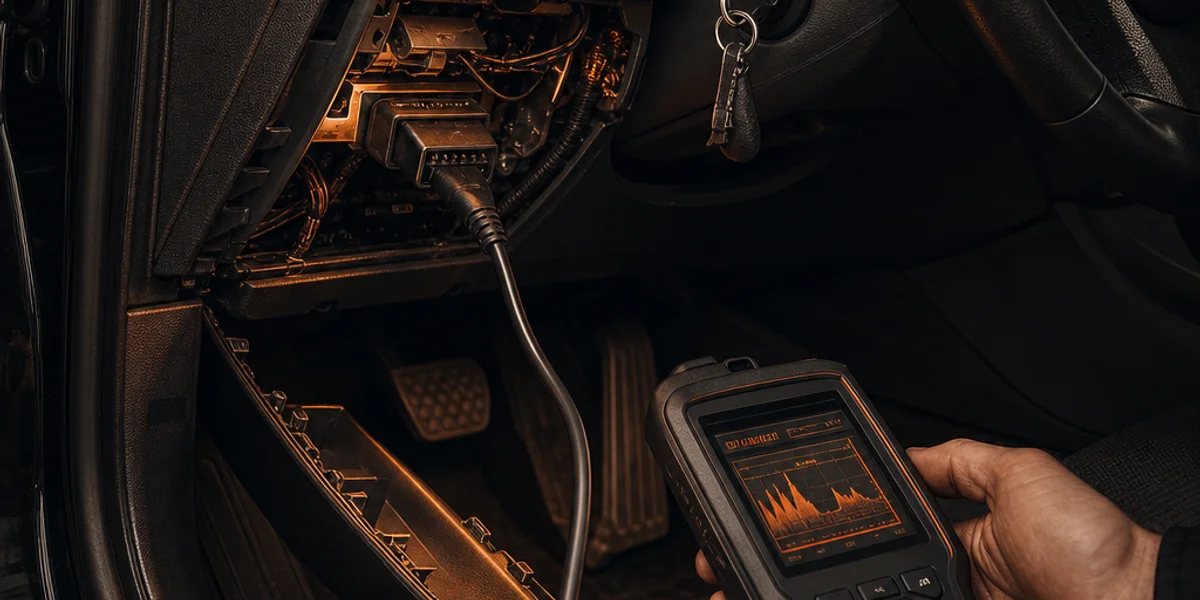
- Drop the lower dash panel and plug into the yellow sixteen-pin connector. On a right-hand-drive UK car the socket sits to the left side of the under-column opening, towards the centre tunnel — mirrored from the mainland layout. Fit a battery support, because the learning sequence runs through several ignition cycles.
- Scan the body computer and note the supplier and processor.
- Read the immobiliser data. The tool returns the five-digit code, the key count, the stored key IDs and the pre-code data. Write the five-digit code down before you go any further.
- Pre-code the new blank, selecting the correct leg count at page 6. Skip this for an OEM key ordered to VIN.
- Cut the SIP22 blade and check it turns both the driver's door and the ignition barrel before you learn anything.
- Run key learning and present every key that must keep working, one at a time, ignition on for each. Order does not matter. Completeness does — any working key not presented in the session is scrapped permanently.
- Cycle the ignition off and on to close the session, then check the reported key count matches the number of keys you actually programmed.
- Test start on every key, then lock, unlock and boot release on every remote. The buttons are a separate authorisation from the immobiliser and can fail while the engine starts perfectly.
- Time: 30–45 minutes including cutting, on a car whose system you have identified correctly.
All keys lost on a 500 or 595
- Pick and decode the driver's door with the Lishi SIP22. Do not assume the door decode is the ignition cut on this car — verify against the barrel before you commit, or work from the key code.
- Cut a SIP22 blade and prove it turns the ignition.
- Expect the alarm to sound, because there is nothing to disarm it with. Some tools cope with an armed alarm and some stall on it, so plan for it rather than being surprised.
- Plug in, fit a battery support, scan and identify the body computer.
- Read the immobiliser code and pre-code data. No working key is needed for this on a supported tool.
- Pre-code a blank and run the erase-and-programme routine. This wipes every previously stored key, so warn the customer before you start that a key found later down the back of the sofa will be dead.
- Programme every key the car is to have in this one session, close it with an ignition cycle, and test start plus all three buttons on each key.
- Time: 75–120 minutes, assuming the OBD read succeeds.
On 2008–2012 cars with the 93C86 EEPROM body computer, OBD all-keys-lost is not always available and the module may have to come out for a bench read. From 2012 the NEC microcontroller cars are read over OBD by current tools. Price the bench route separately and tell the customer which one you are on before you start.
When the OBD read refuses
If the tool reports the key count and the code as N/A but still pulls fault codes from the body computer, you are almost certainly looking at a locked unit rather than a coverage gap. It turns up after a tow, a flat battery or a botched earlier attempt. Before writing it off: stabilise the voltage, let the car sleep fully or run the tool's BSI reset, confirm you have the right vehicle selection, and try again.
If it still refuses, the routes are a bench read of the NEC data-flash to recover the code and key data — an IO Terminal with the Fiat BSI licence or a TMPro2 will decode the five-digit code out of that dump and pre-code a blank, though you go back to an OBD tool to learn it in — or processor renewal, or a replacement body computer configured to the car. Time: 2–3 hours. None of it is a plug-in job. Price it as bench work.
Panda, Punto, Bravo and Doblo: the Delphi BSI family
The Panda 319 and the Punto 199 sit on the same Delphi BSI platform as the 500, along with the Fiorino and Qubo, the 2010-generation Doblo, and — usefully — the Ford Ka from 2008. One of our subscribers logged exactly that crossover on a 2009 Ka, programmed with an Xhorse key on the Fiat system. If a Ka of that era lands on your bookings, treat it as a Fiat job and read this section rather than the Ford guide.
Two traps here, both year-dependent.
The Punto protocol split. Grande Punto production from 2005 to roughly mid-2007 communicates over K-line, ISO KWP2000, through the same sixteen-pin connector. CAN bus immobiliser communication arrived on the 199 from approximately the 2008 model year. Professional tools detect and handle both, but you must confirm the tool has selected the correct protocol before attempting the PIN read on an early example. Bench fallback is needed noticeably more often on the K-line cars than on the CAN cars. Otherwise the key hardware is unchanged from 2005 right through to the end of production in 2018 — PCF7946 throughout, across Grande Punto, Punto Evo and the final series, with the 2009 and 2012 facelifts changing cosmetics and infotainment only.
The Panda generation boundary. The 319 is the third-generation car and the research scope starts at 2011. The Panda 169, the second-generation car that overlaps to 2012, is a different platform with different key hardware. Check which one you are standing in front of.
Add-key on the Panda and Punto is a beginner-level job and all-keys-lost is intermediate, both over OBD with the five-digit PIN read from the body computer. Time: 25–40 minutes for an add key, 60–90 minutes for all keys lost. The bench fallback exists for a locked BSI, which the database notes is typically triggered when the vehicle was last secured by remote with no key inside.
The Doblo II is the odd one out in this group and deserves its own check. Early cars, 2009 to 2014, run IMMO III with a PCF7947 Hitag 2 chip in a fixed-blade remote head key. The 2015 facelift moved to IMMO IV with a PCF7953 Hitag Pro chip in a folding blade. Same badge, different chip, different clonability. Time: 30–45 minutes either way.
Tipo and 500X: the blank that will not work
The Tipo 356 arrived in 2015 and went on UK sale in 2016, and it is on Megamos AES — MQB48, also written as ID48-MQB, and called the 4A chip in some tool databases. All three names refer to the same 128-bit chip. The 500X on the 334 platform shares the same key hardware and the same programming path.
The warning the database puts in capitals is the one worth repeating: do not use a PCF7946 Hitag 2 blank on this car. It will not programme and the body computer will reject it. You need a virgin, never-programmed Megamos AES blank, because a previously programmed AES key cannot be reused and AES keys cannot be cloned at all. If you carry one AES blank and one ID46 blank in the van and grab the wrong one, you have wasted the slot.
Check the button count on the customer's existing key before ordering. A four-button variant exists on the same platform for higher trims with an identical chip, blade, frequency and procedure — same chip, different board and shell.
Add key and all-keys-lost are both intermediate over OBD, and the PIN is read from the body computer. The Autel IM608 Pro II adds a PIN-free read and a remove-disabled-key function for the Tipo across 2015 to 2021, which is the cleanest path on this car. Time: 30–45 minutes for an add key, 45–70 minutes for all keys lost.
Alfa Romeo
Giulietta: the mid-2016 cutover
The Giulietta 940 is where Alfa will cost you a call-out if you order from the model year. Cars from 2010 to roughly mid-2016 are PCF7946 Hitag 2 and clonable. Facelift cars from mid-2016 moved the transponder to Hitag AES while keeping the same three-button flip shell, the same SIP22 blade and the same 433.92 MHz remote. The keys look identical. The AES chip cannot be cloned, so all-keys-lost on a late car means programming a fresh key rather than copying one, and an AES blank will not go into an early car or the reverse.
The exact month of the cutover varies through 2015 and 2016, which means the model year is not a reliable guide. Read the existing key or scan the body computer before you order, and match both the chip generation and the board profile — the Marelli versus Delphi question still applies on top of the chip question, so there are two independent things to get right. Most Giuliettas are Marelli; the Delphi board version turns up on sister cars like the MiTo.
Add key is intermediate on both chip generations. All-keys-lost is intermediate on the Hitag 2 car and skilled on the AES car. Time: 30–45 minutes for an add key, 60–90 minutes for all keys lost over OBD, 2–3 hours if the PIN has to come off the BSI 95C640 EEPROM on the bench.
Giulia and Stelvio
The Giulia 952 and the Stelvio 949 share the same smart key hardware: NXP PCF7939 Hitag AES, 433.92 MHz, with a SIP22 emergency blade stored inside the fob. The transponder did not change at the 2020 facelift. Cloning is not possible.
This is the easiest Alfa on the list, and a welcome change after the Giulietta. The OBD port sits in the driver's footwell below and right of the column, above the dead pedal, with no cover and no trim to remove — a rare courtesy on a Fiat Group product, and one of the few entries in our OBD port location guide that needs no access instructions at all. The tool reads the four or eight-digit security PIN from the body computer automatically, with no manual lookup, and no working key is required for that step even in all-keys-lost.
- Connect to the OBD port in the driver's footwell.
- Select the Giulia or Stelvio smart key menu and the add-key or all-keys-lost path.
- Let the tool read the security PIN from the body computer.
- Place the new smart key in the sensing zone or key slot when prompted and follow the on-screen sequence.
- Test lock, unlock and push-button start.
- Time: 25–40 minutes for an add key, 40–60 minutes for all keys lost.
One caveat on later cars: on 2020-on units the body computer may require a security access seed and key exchange before it will give up the PIN, so confirm your tool firmware is current before you attend. These are also among the first FCA vehicles to carry the Security Gateway module, discussed below.
Ducato: three vans, one badge
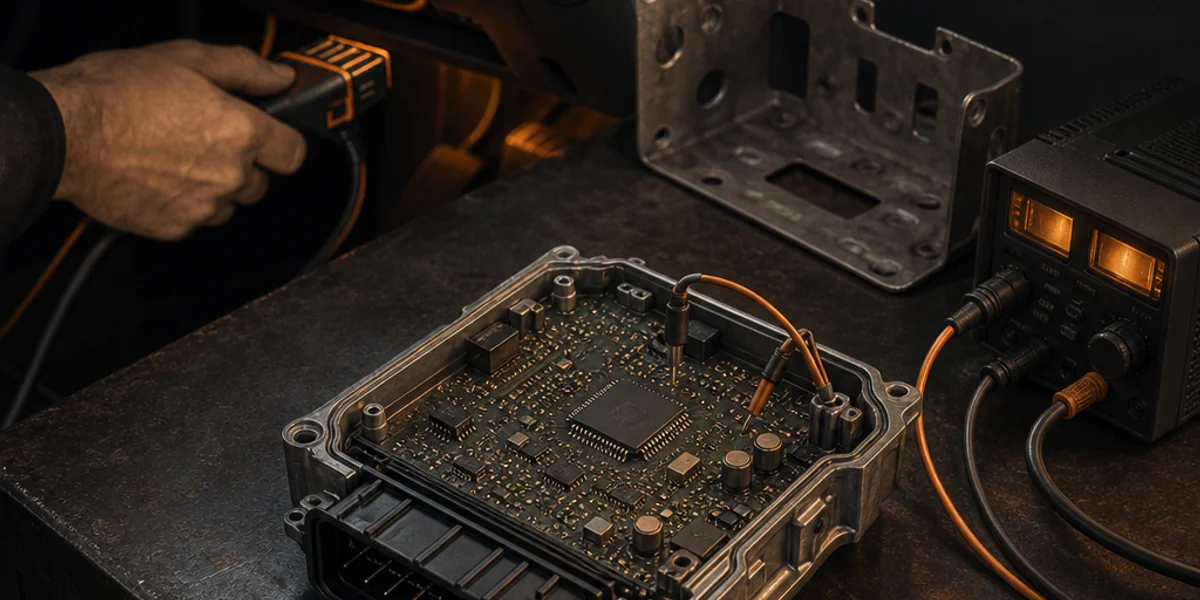
The Ducato is not one job and should never be quoted as one. The database records three distinct systems under the same name, and the gap between the easiest and the hardest is the difference between forty minutes and a bench strip.
December 2006 to September 2008, Type 250, Megamos Crypto ID48. The five-digit PIN lives in the Marelli BSI EEPROM and is read over OBD without removing the module. Keys are pre-coded in the Fiat dealer format, so aftermarket blanks must be ordered to VIN for pre-coding or prepared from an EEPROM dump. All-keys-lost is available over OBD on this generation; bench removal is not required. Abrites reads the Marelli 95160 EEPROM by OBD without physically opening the module. Some very early 2006 production, before December, may use the older pre-Type-250 TRW system with a separate immobiliser box. Time: 40–60 minutes for an add key, 60–90 minutes for all keys lost.
September 2008 to 2021, Type 250 and Type 290, Hitag 2 ID46. This is the dominant era and the one you will meet most. PCF7946 in the flip remote, two-button on panel-van variants and three-button elsewhere, with identical chip, blade, battery and tool coverage between them. PIN read from the Marelli BSI over OBD, no bench work, add key and all-keys-lost both intermediate. The same system carries over to the badge-engineered Peugeot Boxer and Citroën Relay of this era — and note carefully that those vans use Fiat's immobiliser here, not the PSA BSI system covered in our Peugeot and Citroën guide. Time: 35–55 minutes for an add key, 60–90 minutes for all keys lost.
2022 onwards, Hitag AES ID4A. This is where the aftermarket stops being comfortable. There is no OBD immobiliser data read on the new-platform van at all. An Autel IM line tool returns a data-read failure if you attempt one; it will report the key count over OBD and nothing more. Two routes work:
- Dealer-precoded route. Order a key pre-coded against the VIN from Fiat together with the PIN, cut the SIP22 blade to code, and write the key in with a capable programmer. The remote learns automatically once the immobiliser side accepts the key.
- Bench dump route. Remove the Marelli body computer, read its EEPROM or flash, extract the secret, prepare a dealer key from the dump, write the key in and refit the module. The vehicle PIN comes from the dump rather than from a dealer.
Add key is skilled on this generation and all-keys-lost is expert. There is no onboard or OBD all-keys-lost path. Time: 2.5–4 hours for the bench route, including module removal and refitting; 60–90 minutes if you have a dealer-precoded key in hand. Use a stable external supply at around 13.5 volts throughout — power loss during body computer EEPROM operations risks bricking the module, and that turns a job into a liability.
Identify the system before quoting. An AES van shows the redesigned colour-display dashboard and will not let you read immobiliser data over OBD. The key is locked to the body computer after first coding and cannot be cloned or moved to another van, which also rules out the usual donor tricks. The same key is shared right across the Stellantis SEVEL van family — Peugeot Boxer, Citroën Jumper and Relay, Vauxhall Movano, Toyota Proace Max and RAM ProMaster — so everything in this section applies to those badges too.
Tool coverage, honestly
Fiat is well covered on the Hitag 2 cars and thin at the AES end. That is the shape of it, and no amount of marketing changes it.
Full coverage across the Hitag 2 range. The Autel IM608 Pro II handles the 500, Panda, Punto and Ducato families with the onboard programmer doing the pre-coding, so no separate XP400 Pro is needed — though the XP400 Pro remains the pre-coding unit if you are running an IM508. The OBDSTAR X300 DP Plus is strong on Delphi and needs the FCA 12+8 universal adapter for FCA vehicles; the database is blunt that some software versions can throw an EEPROM verification error on Marelli reads, so confirm your version covers your exact Marelli unit before quoting. The Xhorse VVDI Key Tool Plus reads the PIN and makes the dealer key on the coil, and the Key Tool Max Pro enters the five-digit PIN automatically. The Lonsdor K518Pro does the same with no per-vehicle token fee.
Where the tiers separate. The Advanced Diagnostics Smart Pro runs the European Fiat 500 pack covering 2007 to 2018, but without the Smart Dongle you get PIN reading only and not key programming — worth knowing before you drive out. ZedFull is a genuinely useful fallback when an OBDSTAR Marelli read errors, which is a specific and real scenario rather than a generic recommendation.
The AES end. The Abrites AVDI is the fullest aftermarket path on the hard Fiats. Abrites documents FN022 as the PIN and key manager licence for FCA, and separately lists FN025 for key programming on FCA vehicles with HiTag AES mechanical keys by dump, plus FN024 for RH850 dump work. Abrites also publishes a Ducato 2024-plus all-keys-lost procedure using the AVDI with a DS Box and FN022, so the licence you need depends on the exact van and your firmware — check your own licence set against the vehicle before you commit to a price. Be clear-eyed about the cost: AVDI coverage needs an active annual maintenance subscription, which the database puts at roughly £1,200 a year for the full package. On the AES Ducato the AVDI route also requires taking the gateway module out of circuit and connecting on a direct-CAN cable, which an Abrites distribution box makes less unpleasant. OBDSTAR's X300 Classic G3 is recorded as covering the ID4A Marelli blade key including all-keys-lost with a C4-09 adapter and a pre-coding step — verify your firmware shows the ID4A Ducato entry before attending.
Some locksmith sources report that 2023-on Ducato units with a newer body computer variant are effectively dealer-only even with the bench route. The database flags this as unconfirmed, and so do we. Do not quote a 2023-plus Ducato all-keys-lost as a certainty.
For coverage counts across the whole database rather than just Fiat, our key programmer comparison ranks thirteen tools by confirmed vehicles.
The FCA Security Gateway
From roughly 2017 and 2018, FCA began fitting a Security Gateway module that sits between the diagnostic socket and the CAN bus. Reading codes, VIN and live data still works through it; clearing codes, active tests and teach-in procedures do not. The module is reported in the commonly cited model-year lists on 2018-on Alfa Giulia and Stelvio and Fiat 500L and 500X among others, with near-universal fitment by 2020 — though those lists are US-market and the same source notes that vehicles sold outside the United States may not be affected, so treat it as something to check rather than assume on a UK car.
Where it is fitted, you have three options. Unplug the gateway and fit a 12+8 bypass cable in its place, then refit the module afterwards. Use a tool authenticated to the manufacturer's access service. Or, on the 500 specifically, connect to the internal CAN at the body computer or RF hub, which is the route the database records for reading the PIN on 2017-on cars.
The longer-term answer in the UK is accreditation rather than bypass. The SERMI scheme went live in the UK on 1 April 2026, granting accredited independent operators legitimate access to security-controlled data including immobiliser and key programming functions. Accreditation runs through RMISC as the UK conformity body with identity verification by Digidentity, and costs roughly £1,800 for the five-year term plus a Basic DBS check for every technician to be authorised. It is a real cost and a real wait, and on security-gated FCA work it is increasingly the difference between taking the job and turning it away.
Common pitfalls
The key starts the car but the buttons are dead. Three causes, in this order of likelihood: the wrong board type for the body computer, the wrong leg count selected at the pre-code step, or a poor-quality aftermarket board that does not carry a real PCF7946. Re-running the programming sequence fixes none of them. Open the key, count the legs, and compare against what you scanned.
The customer's spare key has stopped working. You scrapped it. Fiat key learning rebuilds the whole key list from what is presented in the session, so any working key not shown to the car during programming is cancelled permanently. Ask for every key before you start, and if you are not certain you got them all, re-run the session — a key already in the list reports as already programmed, which confirms it survived. That tip comes from a Keysolved subscriber and it is the cheapest insurance on this platform.
The blank will not programme on a Tipo or 500X. Almost always an ID46 blank on an AES car. Check the chip family before you cut.
You ordered a Giulietta key from the model year. Mid-2016 is a chip boundary with no visible change to the key. Read the existing key or scan the body computer first.
The tool returns N/A for key count and PIN but still reads fault codes. Locked body computer, not a coverage gap. Stabilise voltage, let the car sleep or run the BSI reset, confirm the vehicle selection, retry. Bench work only after that.
The alarm goes off and the tool stalls. Disarm before plugging in where you have a working remote. On all-keys-lost you cannot, so expect the siren and warn the customer and the neighbours.
You quoted a Ducato without identifying it. Three systems, one badge, and the hardest of them is a bench job. Confirm the dashboard and the model year before you give a number.
Frequently asked questions
Can a Fiat key be programmed without a diagnostic tool?
No. There is no onboard or do-it-yourself key programming sequence on any Fiat in the database. A tool is always required to read the body computer PIN and pre-code the blank. An owner can emergency-start a classic 500 using the CODE-card number through an accelerator-pedal sequence, but that neither adds nor saves a key.
Why will my new Fiat key not programme even with the correct PIN?
Because the PIN is only half of it. A virgin aftermarket chip has to be pre-coded with that specific vehicle's security data before the body computer will accept it. The number on the CODE card is the immobiliser PIN and does not carry the pre-code data. OEM keys ordered to the VIN arrive already pre-coded, which is why they appear to work straight away.
Can Fiat keys be cloned?
The Hitag 2 ID46 cars can — the 500, Abarth 595, Panda 319, Punto 199 and the 2008 to 2021 Ducato all clone onto an Xhorse Super Chip or a JMA TPX1 from a working key, with no diagnostic time on the car. A clone is start-only: the engine fires and the remote buttons do nothing. Both AES families, Megamos AES on the Tipo and 500X and Hitag AES on the Giulia, Stelvio, late Giulietta and 2022-on Ducato, cannot be cloned at all.
Is the Ford Ka a Fiat job?
From 2008, yes. The second-generation Ka sits on the same Delphi BSI platform as the 500 and Panda, and the key hardware is Fiat's. Approach it as a Fiat and the job goes smoothly.
How long does a Fiat all-keys-lost take?
On a Hitag 2 car with a successful OBD read, 60 to 120 minutes including gaining entry and cutting. If the body computer is locked or you are on an early 93C86 car that will not read over OBD, add two to three hours for bench work. On a 2022-on Ducato without a dealer-precoded key, budget two and a half to four hours and quote it as bench work from the outset.
What is the difference between Delphi and Marelli on a Fiat?
They are the two body computer suppliers, and their remote boards are not interchangeable. Eight legs on the button IC means Marelli, ten or sixteen means Delphi. Fitting the wrong board gives you a key that starts the engine with dead buttons. Aftermarket Chinese remotes are reliable on Delphi cars and unreliable on Marelli cars, where a genuine or Silca remote is the better choice.
Before you drive out
Fiat rewards preparation more than almost any make on a UK round. The procedures are not difficult — most of them are beginner or intermediate — but the identification in front of them is unforgiving, and there are three independent things to get right before you order a blank: the chip family, the body computer supplier, and on the Ducato the generation. Get those three right and the job is a comfortable half-hour. Get one wrong and you have a wasted blank, a scrapped spare, or a van you cannot finish.
Look the vehicle up before you leave. The Fiat section of the Keysolved database carries the chip, frequency, blade, OBD port location, pre-coding requirement and per-tool field notes for all fourteen Fiat vehicles, plus the six Alfa Romeos and the Abarth 595, and it will tell you in thirty seconds which of the five chip families you are driving out to. If you are chasing an immobiliser warning light rather than a key, start with our immobiliser fault diagnosis guide instead.
Full database access
Check the Chip Before You Drive Out
Cancel any time · Billed monthly
Look up the exact chip family, frequency, blade profile, OBD port location and pre-coding requirement for any Fiat, Alfa Romeo or Abarth on Keysolved.
No card required to browse — subscribe to unlock full specs and procedures
Frequently Asked Questions
▶Can a Fiat key be programmed without a diagnostic tool?
▶Why will my new Fiat key not programme even with the correct PIN?
▶Can Fiat keys be cloned?
▶Is the Ford Ka a Fiat key programming job?
▶How long does a Fiat all-keys-lost take?
▶What is the difference between Delphi and Marelli on a Fiat?
Full database access
Stop Guessing on Fiat Jobs
Cancel any time · Billed monthly
Keysolved holds key specs, programming procedures, OBD port locations and per-tool field notes across 60 makes, written by working locksmiths.
No card required to browse — subscribe to unlock full specs and procedures
Sources
- Dealer-Level Diagnostics, Key Programming, Module Replacement and Vehicle Configuration for Fiat, Alfa Romeo and Lancia(2026)— Abrites' own documentation of the FCA licence set: FN022 for PIN and key management, FN025 for HiTag AES key programming by dump, FN024 for RH850 dump work, plus a published Ducato 2024-plus all-keys-lost procedure.
- SERMI scheme goes live in UK: Independent garages gain access to security data(2026)— UK go-live date of 1 April 2026, accreditation through RMISC with identity verification by Digidentity, and the cost and DBS requirements for independent operators needing immobiliser and key programming access.
- FCA Secure (Firewall) Gateway Module Explained - SGM SGW(2025)— Model-year fitment lists for the FCA Security Gateway, what it blocks versus what it still permits, module locations, and the 12+8 bypass cable and authenticated-tool access routes. Lists are US-market and the source notes non-US vehicles may differ.
- Original Lishi Fiat / Lancia / Iveco SIP22 2-in-1 Pick and Decoder(2026)— The twin-lifter SIP22 pick and decoder that covers the eight-position Fiat Group keyway across the whole range, including the anti-glare variant.