
Car Key Cloning vs Programming: When Each One Works
The transponder families that still clone in 2026, the ones that never will, and the job times for each
Key Takeaways
- Cloning copies a transponder and never touches the vehicle — the immobiliser's registered key count does not move, so an all-keys-lost job later is no easier than it would have been
- Texas DST40 and DST80, Megamos ID48 and most Hitag 2 applications still clone; Hitag Pro (ID47) and Hitag AES do not, and no clonable blank is coming
- BMW CAS keys are written to a module slot rather than copied, even though the transponder is a Hitag 2 part — architecture decides, not just the chip
- A 40-bit Texas clone is a 10 to 15 minute job with no OBD connection; an ID48 Megamos clone needs the car present for onboard sniffing cycles and takes 25 to 40 minutes
- Universal chips written as Toyota 4D-70 read back correctly and then fail to crank — carry genuine transponders for Toyota work
- Cloning copies the transponder only; remote buttons are always a separate pairing step
Car key cloning is the quietest job in the trade. No diagnostic lead, no PIN, no security countdown, no entry in anybody's key register — you read the customer's chip, write a copy, cut a blade and the car starts. On the right vehicle it is a ten-minute job you can do on the pavement with the bonnet shut.
The trouble is that the list of vehicles where it works has been shrinking for fifteen years, and the boundary is not where most people assume it is. It does not fall neatly at a model year, and it does not follow the badge. It follows the transponder. A 2013 Toyota with a G chip clones. A 2015 Vauxhall with a Hitag Pro chip does not, and never will. Two cars on the same driveway, two years apart, and the job is either ten minutes or ninety.
This is the reference for working out which one you are looking at before you quote. Every chip family, frequency and procedure below is pulled from the Keysolved vehicle database rather than from a generic chart, so the examples are real vehicles you can look up and check.
Cloning and programming are two different jobs
Programming enrols a new key into the vehicle. The immobiliser module learns the transponder, writes it to a key slot, and from then on the car recognises it as one of its own. The key count goes up. The tool needs to talk to the car, usually over OBD, and on most systems it needs a security code first — Ford calls it an incode, Vauxhall prints it on the Car Pass, Volkswagen stores a four-digit SKC in the instrument cluster.
Cloning never touches the car. You read the customer's existing key in a transponder machine, work out its secret, and write the same identity onto a blank chip. As far as the immobiliser is concerned, nothing has happened: the same key has been presented twice. The Keysolved entry for the Toyota Yaris Mk2 puts it plainly — nothing is registered, so the immobiliser's key count does not move and the customer's existing keys are untouched.
That last point cuts both ways, and it is the part worth explaining to a customer before you take the money.
| Cloning | Programming | |
|---|---|---|
| Vehicle connection | None | OBD, or bench on the module |
| Working key needed | Yes, always | Add-key yes; AKL no |
| Security code needed | No | Usually |
| Key count in the module | Unchanged | Increases |
| Typical time | 5–15 minutes | 20 minutes to several hours |
| Works on all keys lost | Never | Yes, on most systems |
| Remote buttons | Separate job | Usually paired automatically |
Where the line falls, chip family by chip family
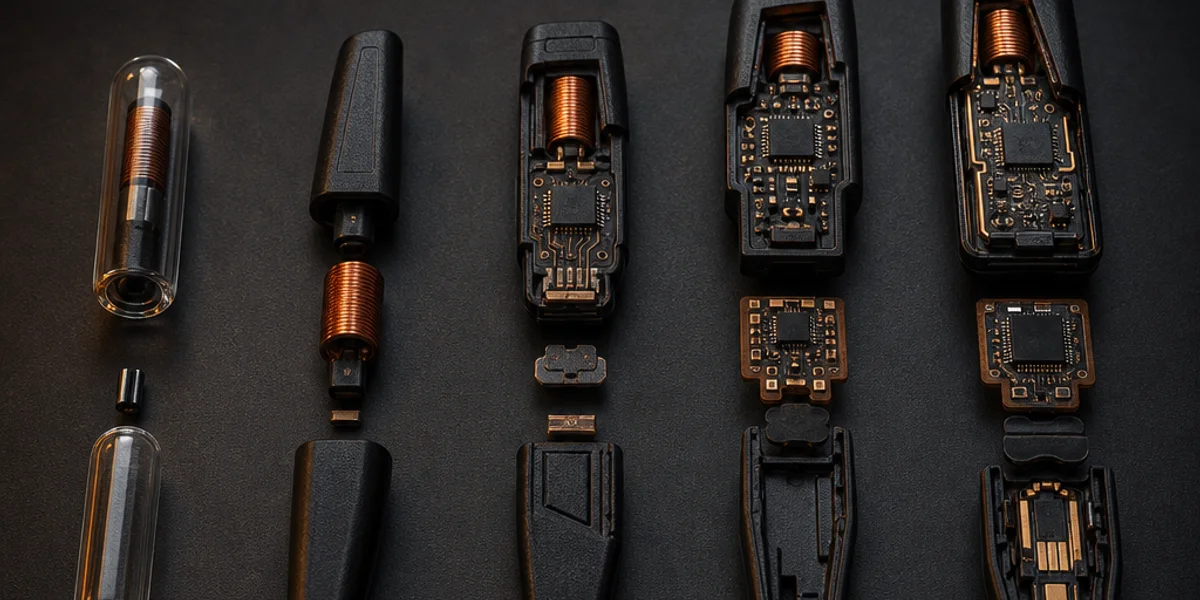
Five transponder families cover almost everything on a UK driveway. The cloning boundary runs straight through the middle of them.
Texas DST40 (4D-60, 4D-70, 4D-67). Clones reliably, and this is the family most cloning machines were built for. The Ford Fiesta Mk6 runs a TMS37145 on PATS 2; the Toyota Aygo Mk1 runs the same silicon behind a Valeo immobiliser box. Both are flagged clonable in the database, and on both the copy is faster than the OBD route.
Texas DST80 (Toyota G chip, 4D-72, ID6E; Ford PATS 4). Clones, but only onto 80-bit-capable blanks and only on machines with the right firmware. The late Toyota Corolla and Auris E140 flip key from mid-2009 is a DST80 part, listed in tool menus variously as 4D72, ID72, 72G or ID6E. The CN5 blank is the one to stock, because it covers both 4D and the Toyota G chip on the same machine. The Ford Transit Mk7 uses a TMS37157 DST80 and is also flagged clonable — which matters a great deal on that van, because programming it from May 2010 onwards needs a sixteen-digit incode that only Ford ETIS will issue.
Megamos Crypto ID48. Clones, but not in the ordinary sense. An ID48 copy requires the vehicle: the machine listens to several authentication exchanges between the original key and the car to recover enough material to build the clone. Keyline describes reducing the onboard sniffing cycles needed by its TKM Xtreme solution from eight to four, which tells you how the process works and how tedious it used to be. The Volkswagen Golf Mk5 sits here, with a four-digit SKC in the cluster EEPROM if you would rather programme properly.
Hitag 2 (ID46, PCF7936, PCF7941). Clones on most applications. The Vauxhall Corsa D runs a PCF7941 across the whole 2006–2014 run with no chip change at the facelift, and the database flags it clonable. Read the vehicle entry before you assume the clone will behave, though — there is a specific trap on that car covered further down.
Hitag Pro (ID47) and Hitag AES. This is the wall. The Keysolved entry for the Vauxhall Corsa E states it without hedging: Hitag Pro (ID47) system, no cloning possible. Every key is enrolled against a PIN read from the BCM. Cars on Hitag AES behave the same way. There is no clonable blank coming for these, and anyone who tells you otherwise is selling something.
BMW deserves a line of its own because the architecture removes the question entirely. On the E90 3 Series the CAS module owns the immobiliser and keys are written to a CAS key slot, never cloned — even though the transponder itself is a Hitag 2 part. The chip family tells you what is technically copyable; the vehicle architecture tells you whether copying achieves anything.
If you want the full chip-to-vehicle mapping rather than these five headline families, the transponder chip cross-reference chart covers all of them with clonable status per generation.
Procedure: cloning a Texas DST40 key
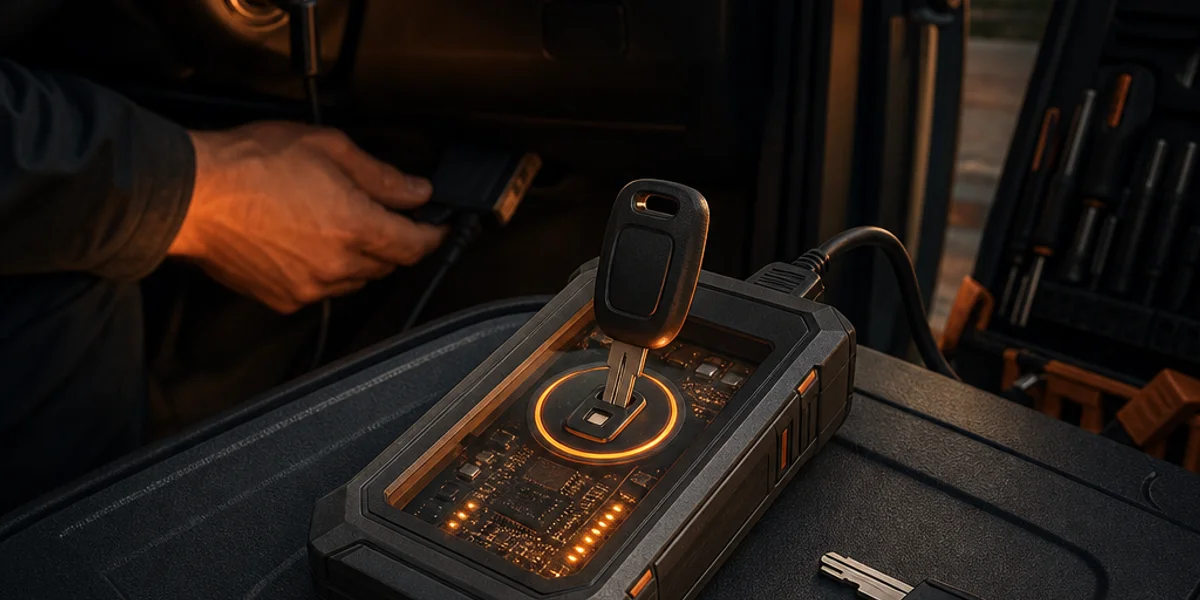
Worked on the Toyota Yaris Mk2, which is the archetype. A customer with one working key wants a spare, and does not want to pay for a registered key.
- Confirm the chip before you cut anything. Put the customer's key in the machine and read it — on a MaxiIM KM100 it reports back as TIRIS DST 4D, on a CN900 the route is Copy 4D and the machine identifies the Toyota 40-bit crypto part itself.
- Check the key is a master, not a valet. Insert it and watch the security light: no flash at all is a master, on for a second then off is a valet. A valet will clone, but it will not authorise an add later.
- Acquire. Leave the original in the slot while the machine calculates.
- Write to the blank. Use a clonable 40-bit chip, not a universal chip written as 4D-70. This matters more than anything else on the page and is covered in the pitfalls below.
- Read the new chip back and compare it against the original before it goes anywhere near a blade.
- Cut the blade. On the Mk2 Yaris it is TOY47, not TOY43 — several catalogues have this wrong and a TOY43 blank will not work the lock.
- Assemble, then test: engine start, and leave it running for thirty seconds rather than declaring victory on the first crank.
- Time: 10–15 minutes, including cutting, with no OBD connection at all.
The equivalent registered key on the same car is a 4D 67/68 group OBD session with a 120-second ignition window and roughly sixty seconds of learning, and the all-keys-lost route is a timed security countdown of sixteen or thirty minutes that regularly overruns. That is the commercial argument for cloning in one sentence.
Procedure: cloning a Megamos ID48 key
Worked on the Golf Mk5. Different job, and the customer needs to be with the car.
- Confirm the vehicle is on IMMO 3 and the key is an ID48 Megamos Crypto part, HU66 blade.
- Read the original key into the cloning machine and create a partially written blank.
- Sit in the car with the blank and run the onboard sniffing cycles — the machine listens to the original key authenticating against the ignition antenna ring and recovers what it needs. Recent kit needs around four cycles rather than the eight it used to be.
- Complete the write on the machine.
- Cut the HU66 blade and assemble.
- Test the engine start, then test the remote separately.
- Time: 25–40 minutes, most of it sniffing cycles.
Compare that against programming: the four-digit SKC lives in the instrument cluster EEPROM and reads out over OBD in a couple of minutes on a VDO cluster, and the key is then learnt properly with eight slots available. Bosch RB8 clusters are the exception — OBD extraction on those can take a long time or fail entirely, at which point the cluster comes out and the EEPROM gets read on the bench. On a VDO car, programming is the better job. On a Bosch RB8 car, the clone starts looking sensible again.
Procedure: cloning a Toyota G chip (DST80)
- Verify the chip is an 80-bit part. On the E140 Corolla and Auris the split is mid-2009 — earlier fixed remotes are 4D-67 or 4D-70, later flip keys are DST80.
- Load an 80-bit-capable blank. A CN5 covers both 4D and Toyota G on the same machine, which is why it is the one worth keeping in the van.
- Read, acquire, write. The machine will take longer on an 80-bit part than a 40-bit one.
- Read back and verify.
- Cut the TOY43 or TOY47 blade — check which, because the E140 uses both depending on variant.
- Test the engine start.
- Time: 15–20 minutes.
Cloning tools, and what each one is actually for
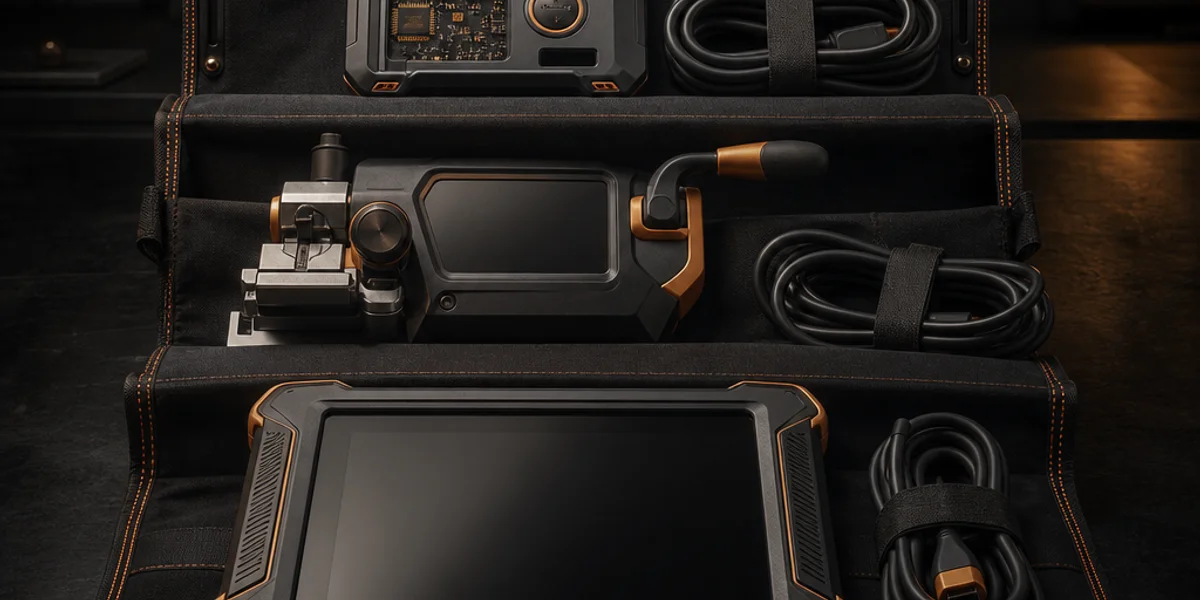
Tier 1 — dedicated copiers. These do one thing well and need no vehicle connection for 40-bit work.
- CN900 — the trade workhorse for 4C, 4D and Toyota G. Writes to CN2 and CN5 blanks. Stock CN5 if you see any G-chip Toyotas at all.
- ZedFull — strong across the Texas families and has EEPROM applications for bench work when the clone is not possible. Worth being honest about its limits: on the Mk2 Yaris it is a copier rather than a programmer, so if the customer has no working key it will not finish the job.
- Tango — copies the Texas 40-bit family and doubles as a dump tool for all-keys-lost work. The Toyota OBD framework add-on is aimed at the later smart systems and does nothing for a bladed 4D car, so do not buy it expecting to skip the bench.
Tier 2 — key machines that clone as a side function.
- MaxiIM KM100 — quick and cheap for DST40 add-key work, using an AT100 universal transponder as the donor.
- VVDI Key Tool Max — chip and remote work without an OBD port of its own. Fine as a copier; it needs the Mini OBD dongle before it becomes a programmer.
- KD-X2 — budget chip generation and cloning.
- KH100+ — handles 70E and 72G chip copies; its OBD immobiliser coverage is limited, so treat it as a chip machine.
Tier 3 — full programmers that also clone.
- MaxiIM IM608 Pro II, X300 DP Plus, K518Pro, VVDI2 and AVDI all clone within their chip menus. If you already own one of these, you probably do not need a separate copier for 40-bit work. Abrites is the cleanest example — on the Mk2 Yaris the same software both prepares and clones the 40-bit chips, so one box does both halves of the job.
Note what is not on this list. The Smart Pro is the UK trade standard for OBD key programming, but Advanced Diagnostics sells the Smart Aerial as a separate expansion accessory specifically for transponder precoding — the base unit is a programmer, not a copier. That distinction catches people who assume the most expensive tool in the van does everything. For the full picture on which programmer earns its money, the 2026 coverage matrix counts confirmed coverage rather than repeating marketing claims.
Universal chips sit awkwardly between the tiers. Xhorse publishes a long conversion list for the XT27A Super Chip, covering 4D variants from 60 through 72G and 83, plus 46, 47, 48, 4C, 8A and 8E, and the chips are rewritable rather than single-use. That flexibility is genuinely useful. It is also the single most common cause of a clone that reads back perfectly and then will not crank — see below.
Common pitfalls
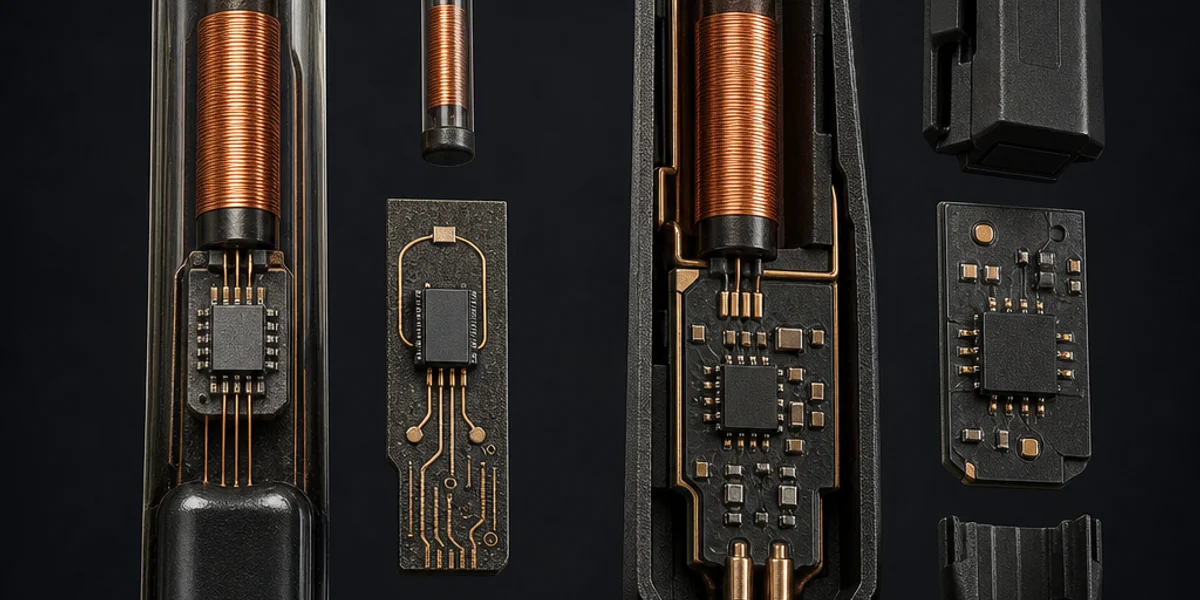
A universal chip written as 4D-70 that will not start a Toyota. The Keysolved entries for the Mk2 Yaris carry this warning against several tools independently: dealer keys made onto an XT27 Super Chip as 4D-70 have repeatedly come back not cranking, and the fix every time has been an OEM chip in the same slot. The chip reads back correctly. The car still refuses it. Carry genuine 4D-70 transponders for Toyota work and keep the universal chips for platforms where they are proven.
Xhorse clone remotes on a Corsa D. The database flags this one explicitly: VVDI clone remotes carrying a PCF7946 chip do not work with the Delphi BCM on the Corsa D. It has to be an OEM or aftermarket key with a genuine PCF7941. The same entry warns that pre-coded keys come in ISN variants by chassis number range, so order against the chassis number rather than the model year.
The clone starts the car and nothing else works. On the Aygo the database is blunt about it — the clone starts the engine but does nothing for the central locking. Cloning copies the transponder, not the remote. Fit the blade and the board, then learn the buttons with the in-car door sequence as a separate step. Quote for both or you will be doing the second half for free.
Cloning a valet key. Toyota supplied a black master and a grey sub key on several generations, and both carry a chip. The difference is authority, not hardware. A cloned valet key starts the car and will never authorise adding another key, which becomes somebody's problem eighteen months later.
Cutting before cloning. Do the copy first. A cut blade and a chip that would not copy is a blank you have paid for twice.
Assuming the key count went up. It did not. If the customer later loses everything, the recovery job is the same all-keys-lost it would have been with one key — and if you are the one who supplied the clone, you will be the one explaining that.
When cloning is the wrong answer even though it works
A clone is a duplicate identity, not an additional key. Three situations where that matters:
A fleet or lease vehicle where the operator audits registered keys. The clone will not appear anywhere. Some lease returns are inspected on key count, and a clone does not satisfy the requirement.
A car where the existing key is intermittent. Cloning a failing transponder gives the customer two unreliable keys. Read the original, check it reads cleanly and consistently, and if it does not, programme a fresh key instead.
A car heading for a module replacement. If the BCM or immobiliser is being changed, every key needs enrolling against the new module anyway. On the Corsa D the database notes that replacing the BCM invalidates the original security code entirely, because the EEPROM and MCU encryption keys are paired.
Set against that, cloning is the right answer more often than the trade admits. It is the honest recommendation on a high-mileage older car where the customer wants a cheap spare, on the Mk7 Transit where the sixteen-digit ETIS incode costs money and time before programming can even begin, and on any Bosch-cluster VAG car where PIN extraction is going to eat an hour.
Proof of ownership applies to clones as well
Locksmithing is not regulated by government in the United Kingdom, and the Master Locksmiths Association runs its own vetting, inspection and qualification regime precisely because nothing else does. That puts the responsibility on the individual, and it applies to a clone exactly as it applies to a programmed key.
Check the V5C against the vehicle and the person in front of you. Take photo identification. Record the registration, the VIN, the date and what you supplied. A clone is harder to trace afterwards than a programmed key, not easier, which is an argument for better records rather than fewer. If the paperwork is wrong, the answer is the same as it always is: walk away and keep the note.
Frequently asked questions
Can every car key be cloned?
No. Cloning depends on the transponder family. Texas DST40 and DST80, Megamos ID48 and most Hitag 2 applications clone. Hitag Pro (ID47) and Hitag AES do not, and never will — the Keysolved entry for the Vauxhall Corsa E states this directly. Architecture matters too: BMW CAS keys are written to a module slot rather than copied, whatever chip is inside them.
Does cloning a car key add a key to the immobiliser?
No. That is the defining difference. The immobiliser sees the same key presented twice and its stored key count does not change. Programming enrols a genuinely new key and the count increases.
Can you clone a key if all keys are lost?
No. Cloning always needs a working original to read. With no key at all you are into all-keys-lost programming — an OBD enrolment, a timed immobiliser reset, or bench work on the module EEPROM depending on the vehicle.
Is cloning faster than programming?
On a 40-bit Texas car, yes — roughly 10 to 15 minutes against 20 to 40 for a registered key, and against half an hour or more for an all-keys-lost reset. On an ID48 Megamos car the gap closes, because the onboard sniffing cycles take 25 to 40 minutes and programming with a readable SKC can be quicker.
Why did my cloned chip read back correctly but not start the car?
Almost always the blank. Universal transponders written as a specific chip type are not accepted by every immobiliser, and Toyota 4D-70 is the notorious case. Fit a genuine chip of the correct type and the same job completes.
Does cloning copy the remote buttons?
No. Cloning copies the transponder only. Central locking and boot release are a separate pairing step, usually an in-car door or ignition sequence, and on some vehicles a separate programming session.
Before you quote
The decision is always the same three questions. Does the customer have a working key? What transponder family is in it? And does this particular vehicle architecture accept a copy at all?
The first one the customer answers. The second two are a lookup — and getting them right before you leave the yard is the difference between a ten-minute job and a wasted call-out. Search the vehicle on Keysolved and the entry gives you the chip, the frequency, the blade profile, whether cloning is available on that variant, and which of the tools in your van will finish the job.
Full database access
Check Before You Cut
Cancel any time · Billed monthly
Look up any vehicle on Keysolved for the transponder family, whether cloning is available on that variant, the blade profile and the tools that will finish the job.
No card required to browse — subscribe to unlock full specs and procedures
Frequently Asked Questions
▶Can every car key be cloned?
▶Does cloning a car key add a key to the immobiliser?
▶Can you clone a key if all keys are lost?
▶Is cloning faster than programming?
▶Why did my cloned chip read back correctly but not start the car?
▶Does cloning copy the remote buttons?
Full database access
The Whole Database in Your Van
Cancel any time · Billed monthly
Key specs, transponder chips, OBD locations and per-tool compatibility across 60 makes, with field notes from working locksmiths.
No card required to browse — subscribe to unlock full specs and procedures
Sources
- ID48 car key cloning, from today even faster and more practical(2025)— Keyline on the TKM Xtreme Megamos Crypto ID48 cloning solution, including the reduction of onboard sniffing cycles from eight to four.
- Smart Pro OBD Vehicle Key Programmer(2026)— Advanced Diagnostics product documentation confirming that transponder precoding requires the Smart Aerial expansion accessory rather than the base unit.
- Xhorse VVDI Super Chip XT27 Transponder(2026)— Xhorse conversion list for the XT27A universal transponder, covering 4D 60 through 72G and 83, plus 46, 47, 48, 4C, 8A and 8E, and confirming the chips are rewritable.
- Are locksmiths licensed in the UK?(2026)— Master Locksmiths Association on the absence of government regulation in UK locksmithing and the MLA vetting, inspection and qualification regime.
- The Silca RW5 Plus: Cloning Equipment Gets An Upgrade(2025)— Locksmith Ledger review of current dedicated cloning hardware and the cloneable blank families it supports.