
Suzuki Key Programming: Complete Locksmith Guide (All Models)
Every generation from the ZC Swift to the YTB S-Cross, with the code source, the chip and the job time for each
Key Takeaways
- Every Suzuki key registration erases all four stored key slots before relearning, so every key the customer wants to keep must be at the job
- Suzuki uses three separate security-code regimes: the fixed factory code 0408 on the 2004-2010 Swift, a dealer or distributor PIN on the SX4, and a tool-calculated 8-digit code on every modern model
- The same model name is sold in Japan, Europe and India with different chips and frequencies, and the tool menu branches are badly labelled — OBDSTAR's Swift 06-10 branch is the Indian car, and Lonsdor's Japan branch stops at 2004
- The SX4 splits by engine: petrol takes ID46 PCF7936, diesel takes ID40 PCF7935, and nothing on the car tells you which
- Four blade profiles cover the range — HU133R on most of it, but TOY43 on the Grand Vitara remote head key, HU87 on its smart key, and SZ11R on the early Jimny
- On the UK Vitara only the Xtool X100 PAD3 and the OBDSTAR X300 DP Plus are recorded as covering both the blade key and the smart key
- A failed learn on a Vitara can leave the car on zero keys with a dead dash: recover by feeding 12V to the IG1 SIG fuse, never the MTR fuse
Suzuki sits in an awkward place on a UK round. It is not a make you see every day like Ford or Vauxhall, so most locksmiths never build a routine for it. But it is common enough that a Swift or a Vitara lands on the diary every few weeks, and when it does, the job behaves nothing like the last Suzuki you touched.
That is the real problem with Suzuki key programming. This make does not have immobiliser generations in the way Ford has PATS or Volkswagen has Immo IV. It has three entirely separate approaches to the security code, four blade profiles across a ten-model range, and the same model name sold in Japan, Europe and India with different chips, different frequencies and different menu branches on your tablet. Get the region wrong and the key programmes happily and never locks a door.
This guide works through every Suzuki in the Keysolved database, generation by generation, with the chip, the code source, the procedure and a realistic job time for each. Suzuki took 1.0% of UK new car registrations in the year to October 2026, or 19,816 cars, according to SMMT registration data — a small share, but a growing one, and the back catalogue on the road is far larger than the new-car numbers suggest.
The three security-code regimes
Before you look up a specific model, understand which of three camps it falls into. This single question decides whether the job is a twenty-minute add-key or a phone call to a dealer.
Regime one: the fixed factory code. The 2nd-generation Swift (ZC-series, 2004-2010) uses the security code 0408, with 0000 as the fallback if the tool rejects the first. There is no dealer login, no online service and no VIN calculation. Nothing to buy and nothing to wait for. This is the easiest Suzuki you will ever programme.
Regime two: the dealer or distributor PIN. The 1st-generation SX4 (2006-2014) wants a genuine 4-digit PIN, obtained from the Suzuki dealer or distributor after an ID-code read, or from Advanced Diagnostics' AD600 software. On one documented 2008 SX4 that had a replaced BCM, the commonly quoted fixed PINs did not work at all. Quote this car with a PIN-sourcing delay built in.
Regime three: the tool-calculated code. Every modern Suzuki — Vitara LY, Swift AZ, S-Cross YTB, Ignis MF — holds a vehicle-specific password in the BCM or the keyless start module. The tool reads a module ID over OBD and calculates or bypasses an 8-digit code. You never type a PIN by hand. Some tools calculate it online, so you need a working data connection in the van.
One rule spans all three regimes, and it is the most expensive thing about this make: every Suzuki key registration erases all stored keys first. Four slots, wiped, then relearned one at a time. If the customer has a second key at home and you do not have it with you, you have just turned their spare into a paperweight. Ask before you connect.
Why the region matters more on a Suzuki than on anything else
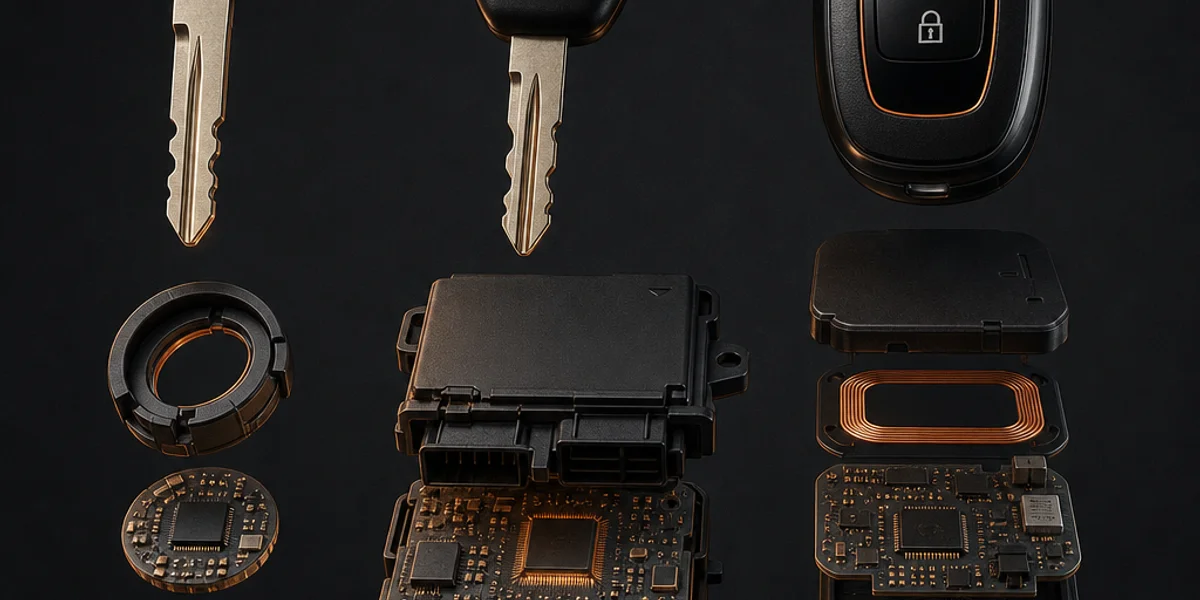
Suzuki builds the same nameplate in several markets and does not harmonise the key hardware. The database records this explicitly, and the difference is not cosmetic.
Take the Swift. The 2004-2010 record is the Japanese ZC-series car: a PCF7936 Hitag 2 chip on an HU133R blade, running at 314.9 MHz. The 2017-2024 UK record is a PCF7961 Hitag 3 on the same blade at 433.92 MHz. A fob at the wrong frequency will learn its transponder without complaint, start the car, and then never operate the central locking. The customer pays, drives away, and rings you the next morning.
Your tablet's menu structure carries the same split, and the branches are badly labelled:
- On OBDSTAR units, the Swift branch marked
06-10is the Indian-built car on a different code scheme. A Japanese ZC-series Swift will not answer there. Use theOther → 05-entry instead. - On Lonsdor units, the Japan branch of the Suzuki list stops at the 1996-2004 Swift. A Japanese-market ZC car has to be programmed from the China 2005- entry, which catches people out every time.
- On Xtool units, the Europe entries for the 2006-2010 Swift are the 433 MHz cars. For a Japanese import, take the Asia branch.
None of this is in the tool documentation in a form you can skim mid-job. It is worth checking the vehicle record before you open the menu rather than after the first failure.
Swift: three generations, three different jobs
2nd generation, ZC-series (2004-2010)
The Immobiliser Control Module is a small unit clamped around the ignition barrel, carrying the coil antenna. It does not store the keys — the transponder codes live in the engine ECM, which holds a maximum of four and clears all four on every registration run.
Diagnostic access is K-line on pins 7 and 9. The other modules talk on an internal CAN bus that is not brought out to the socket, so a CAN-only generic scanner will connect for emissions data and see nothing at all on the immobiliser. That is not a fault; that is the car.
- Transponder: PCF7936, Hitag 2. Blade HU133R. Remote head key at 314.9 MHz on a CR1620
- Security code: fixed 0408, fallback 0000
- Cloning: available, and often the better route
- Skill level: beginner to add, intermediate for all keys lost
Twist-knob keyless-start cars add a keyless-start control module holding up to four remote IDs. To give the tool an ignition-on state, pull the cap off the ignition knob, put the fob's chipped blade into the lock cylinder underneath and turn it.
Add a key by cloning (preferred where the customer still has one working key):
- Read the customer's working key on the cloning tool's coil.
- Hold the acquisition antenna against the reader ring around the ignition barrel and switch the ignition on with that key so the tool captures the handshake.
- Return the original to the coil to decrypt.
- Write the result to a 46 cloning chip, or into the built-in transponder of a remote shell.
- Cut the HU133R blade and test the start.
- Time: 15-20 minutes.
This works only because Suzuki left this chip on its factory password. The clone starts the car with no connection to the ECM and without erasing anybody's keys, which on a four-slot car that wipes on every write is a genuine advantage. It is no help at all with every key lost, because there is nothing to sniff.
Add a key over OBD:
- Confirm the car is a ZC-series Japanese or European Swift, not the Indian car.
- Collect every key that must keep working. All four ECM slots are cleared at the start.
- Connect to the socket in the driver's footwell and switch the ignition on.
- Run the key-learning routine, entering 0408 when prompted, or 0000 if refused.
- Learn each key individually: ignition on, wait, ignition off, swap.
- Disconnect the tool, then cycle every key to the on position without starting, and start on each one. The ECM completes registration on that first clean cycle.
- Time: 25-35 minutes for two keys.
A "fail" message on this car almost always means you tried to programme a key the ECM already knows, or that all four slots were full. Run the clear-keys function and start again with the complete set.
3rd generation, FZ/NZ (2010-2017)
Be straight with yourself about this one: it is the thinnest-documented Suzuki in the UK fleet, and the database says so. No UK or EU source names the module that holds the key list, the protocol, or how many keys it stores. Sources disagree on whether a PIN is needed — OBDSTAR reports Swift FZ key programming without one, while Lonsdor lists both PIN and no-PIN routes without specifying years. The smart key's chip family is not settled between Hitag 2 and Hitag 3.
What is confirmed on the 2010-2017 record is the remote head key: PCF7961, Hitag 2, 433 MHz, CR1616, HU133R. Xtool's Suzuki list carries three Europe Swift blade-key rows in this generation, each showing add-key and all-keys-lost over OBD, with remote programming marked as not needed.
Treat an all-keys-lost on an FZ Swift as a job to verify on the vehicle before you commit to a price. Allow 45-75 minutes and have a second tool in the van.
4th generation, AZ (2017-2024)
Two immobiliser layouts, decided by trim. On remote-key cars (SZ3, SZ-T, SZ-L) the immobiliser sits in the BCM, supplied by Omron. On keyless push-start cars (SZ5 and Sport) it sits in the keyless start control module, supplied by Calsonic Kansei. Either way the key ID is checked against the engine ECM over CAN, so immobiliser faults appear in the ECM as well as in the BCM or keyless module.
- Remote key: PCF7961, Hitag 3, 433.92 MHz, CR1616, HU133R
- Smart key: PCF7953X on part numbers 37172-53R0x and -53RAx, or NCF29A1X on 37145-53R0x and 37172-M81R0x. Both are ID47 Hitag 3 at 433 MHz on a CR2032
- Security code: read from the module over OBD and calculated by the tool, sometimes online
- Skill level: intermediate to add, skilled for all keys lost
There is an ordering trap here worth the price of the guide. Some suppliers list an ID46 (PCF7936) Calsonic key, part 37145-55JC1, against early Ignis and Swift models. Read the customer's original key on a transponder tester before you order or cut, and only proceed if it reads Hitag 3 / ID47. Hitag 3 cannot be copied to a clone chip on this car, so every key has to be programmed to the module over OBD. The HITAG family from NXP uses mutual authentication with encrypted data transmission, which is precisely why the cloning route that works so well on the ZC Swift is closed here.
Add a smart key:
- Gather every smart key the customer is keeping, plus the new one. All keys are cleared first, up to a maximum of four.
- Connect to the socket and put the car in ignition-on with a working key inside.
- Run the key-learning routine. On Autel units this is the "Key Learning (Without Password)" path, which reads the password so nothing has to be typed.
- Hold each key logo-side out against the Start/Stop button and confirm. The count steps up by one each time.
- Test lock, unlock, keyless entry from the door-handle request switch, and push-button start on every key.
- Time: 35-50 minutes for two keys.
All keys lost: gain entry, cut the emergency blade, hold the new smart key logo-side out against the Start/Stop button and run the same routine, forcing the ignition on when the tool prompts. Time: 90 minutes to two hours including entry and cutting.
As with any all-keys-lost job, establish that the person in front of you is entitled to the keys before you touch the car. The Master Locksmiths Association's voluntary code of practice for cutting vehicle keys asks members to have the customer complete the appropriate form and prove their identity. Check the V5C registration certificate against photographic identification, and record what you checked and when. On a car that wipes all four key slots the moment you start, that record is worth as much to you as it is to the customer.
Vitara LY (2015-2024): the most common modern Suzuki job
This is the Suzuki you are most likely to be called to, and it is the one with the sharpest teeth. The UK record covers both the blade-key cars (SZ4, SZ-T) and the keyless cars (SZ5, S), before and after the late-2018 facelift. The OBD port is in the driver's footwell, directly above the bonnet release lever, facing downwards — feel up under the lower dash edge rather than looking for it on the dash face.
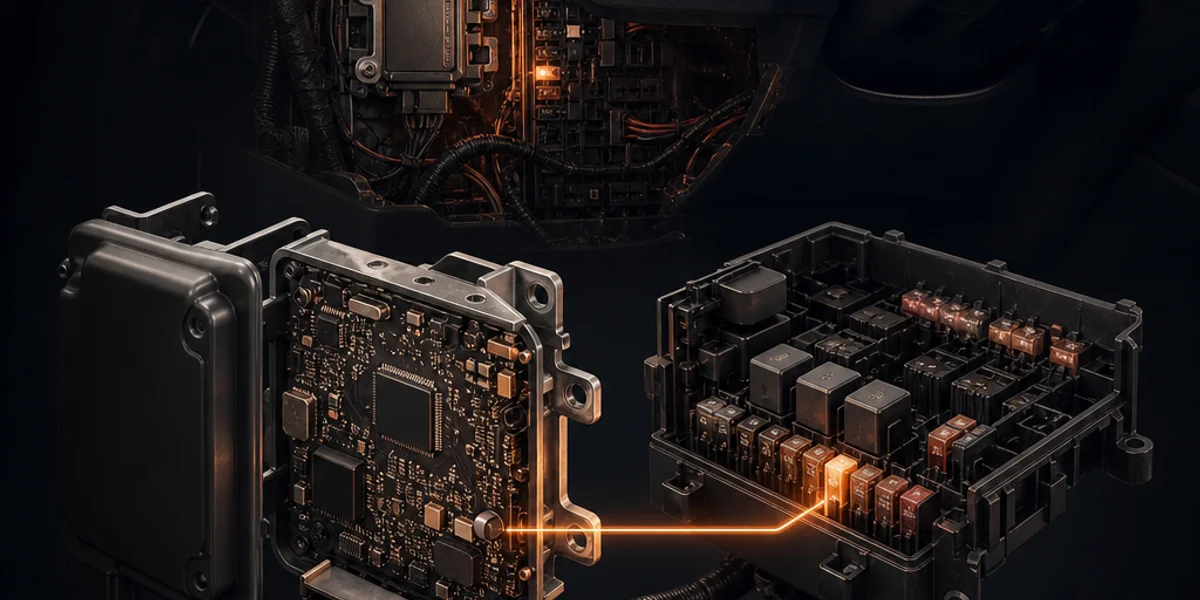
Blade-key cars carry an immobiliser coil antenna on the steering lock that passes the code to the Keyless Entry Control Module. Push-button cars use the Keyless Start Control Module (KLS) under the driver's side of the dash, which switches the ACC and ignition relays itself and talks to the steering lock unit over a UART serial line. Either module stores a maximum of four keys.
- Remote key: PCF7961X running in Hitag 3 (ID47) mode, built onto the remote board. There is no separate glass chip, so the remote and the immobiliser learn together in one session. 433.92 MHz, CR1620, HU133R. Remote board is Omron T68L0
- Smart key: Omron R64M0 with an NCF2952X locked Hitag 3, 433.92 MHz FSK, CR2032, HU133R
- Security code: 8-digit PIN calculated from the module ID read over OBD. Dealer route is the Suzuki SDT-II with the security dongle
Two part-number warnings sit in this record. Suzuki used the same T68L0 housing on older Swift keys fitted with an ID46 chip, so check the part number (37145-54P0x) rather than the case. And some parts catalogues describe the smart fob as Hitag Pro / ID49 when it is in fact ID47 — read the customer's fob with your tool and match the part number (37172-54P0x or 37172-54810) before ordering.
Add a key (blade or smart):
- Have every key the customer wants to keep, plus the new one. Registration erases all stored keys.
- Connect to the OBD port above the bonnet release. Switch the hazards on and the ignition on.
- Run key learning for the Vitara LY. The tool reads the module ID and calculates or bypasses the 8-digit PIN.
- For a blade car, switch the ignition on with each key in turn, new key last. For a smart car, hold each fob logo-face against the Start button until the tool confirms.
- Check the stored key count in the tool before switching off.
- Test start and remote lock and unlock on every key. The remote learns with the transponder, so there is no separate pairing step.
- Time: 30-45 minutes for a blade car, 35-50 minutes for a smart car.
All keys lost:
- Cut the new key to code (HU133R) so the barrel turns, or cut the emergency blade on a keyless car.
- No working key means no ignition. Feed 12V to the IG1 SIG fuse — the keyless start module ignition feed — not the MTR (meter) fuse. Some tools instead suggest shorting the immobiliser box wire.
- Read the module ID and obtain the 8-digit PIN.
- Learn each new key in turn and confirm the stored key count before you remove the 12V feed.
- Time: 90 minutes to two hours.
Two hard-won warnings on this car. First, use an OEM fob or a properly generated Xhorse or KeyDIY key. Cheap unbranded proximity fobs are known to fail to learn on these cars, and a failed learn can leave the vehicle on zero keys with no ignition at all — dash dead, start button dead. The recovery is 12V to the IG1 SIG fuse and a re-run, but you do not want to discover that on a customer's driveway. Second, never switch the ignition off on a push-button car until the tool's live data shows at least one key stored.
If the module refuses to accept learning at all, the factory answer is a replacement Keyless Entry or Keyless Start module registered with the Suzuki SDT-II and the security dongle. That is a dealer job, and saying so early is better than saying so late.
S-Cross YTB (2021-2024)
A cleaner job than the Vitara. The S-Cross record shows a BCM-based immobiliser: the Body Control Module holds the smart-key data and the engine ECU validates the key over CAN. The tool reads an 8-digit immobiliser password from the BCM over OBD and runs a guided add-key or all-keys-lost routine, with no dealer or online registration needed. Bench EEPROM work on the BCM is a fallback for unsupported edge cases only.
- Smart key: PCF7953, Hitag Pro, 433.92 MHz, CR2032, HU133R
- Skill level: intermediate to add, skilled for all keys lost
- Time: 35-50 minutes to add, 90 minutes to two hours for all keys lost
Be aware that coverage on this model is partly inferred. For the VVDI Key Tool Plus and the OBDSTAR X300 DP Plus, the database notes that the procedure matches the wider Suzuki ID47 platform rather than resting on a published S-Cross job. It should work. Verify on the vehicle before you quote a fixed price.
Ignis MF (2016-2024): read this before you quote
The Ignis record in the database is the Japanese-market car, not the UK one. It runs at 315 MHz on an HU87 blade, with a PCF7953 Hitag Pro chip and an 8-digit code the tool calculates from a 20-digit BCM outcode. The OBD port description is for a right-hand-drive JDM car.
The UK Ignis is a separate specification and is not yet in the catalogue. Around 33,719 UK-registered Ignis models from 2015 onwards are on the road with no UK record covering them, which is an acknowledged gap rather than a claim that the JDM data transfers. Do not order a 315 MHz fob for a UK car on the strength of this record, and do not assume the HU87 blade. Read the original key and decode the lock.
Jimny JB43 (1998-2018)
A separate immobiliser unit with a coil antenna around the key barrel, talking to the ECU. Keys, immobiliser and ECU are matched together, so replacing any one of the three requires re-coding. The Jimny record splits into three variants:
- 1999-2002: Texas 4C (Tiris) on an SZ11R blade, with the data in a 24C01 EEPROM. OBD or EEPROM routes
- 2002-2006: Texas Crypto 4D65 (DST40), SZ11R
- 2006-2018: 2-button remote, 4D65, 433 MHz, CR1620, HU133R
The module stores up to four keys, though a workshop manual for a diesel-engined car states a maximum of two. No PIN is stated for the OBD routes. Note the honest limits of the published tool coverage here: Advanced Diagnostics lists the Europe Jimny for 1999-2002 and 2003-on, but the list confirms only that the car is covered and not which functions, so count on add-key. Lonsdor's own guide gives a path for the ID65 key and confirms add-key, with all-keys-lost not stated for Europe.
Add a key: 30-40 minutes. Change to the next key within 20 seconds with the ignition on, per Lonsdor's procedure.
SX4 GY (2006-2014): the petrol and diesel chip split
This is the Suzuki that most often produces a wasted call-out, and the reason is a chip difference that nothing on the outside of the car reveals.
| Engine | Transponder | Family |
|---|---|---|
| Petrol | PCF7936 | Hitag 2 (ID46) |
| Diesel | PCF7935 | Philips Crypto (ID40) |
Same HU133R blade. Same 433 MHz. Same CR1620. Different chip. Order on the model name alone and a diesel SX4 will send you home.
Add to that a genuine 4-digit PIN from the dealer or distributor, and published tool coverage that stops short: Advanced Diagnostics lists the Europe SX4 for 2005-2007, 2005-2008, 2005-2010 and 2007-2010, with no petrol or diesel split and 2011-2014 not listed at all. OBDSTAR's coverage lists 2005-2007 and 2007-2010 without saying whether that is add-key or all-keys-lost. On a 2011-2014 SX4, verify before you quote.
Add a key: 30-40 minutes, plus however long the PIN takes to arrive.
Grand Vitara JB/JT (2005-2015): the blade nobody expects
The Grand Vitara is managed by the engine ECM, which authenticates through an antenna ring around the ignition barrel using Hitag 2 challenge-response over K-line. It stores up to four keys. The PIN is extracted from the ECM by the tool over OBD, or obtained from Suzuki with the VIN.
The detail that catches people is mechanical. The remote head key runs on a TOY43 blade — a Toyota profile, unique within the Suzuki range — while the smart key uses HU87. Neither is the HU133R you will have in the van for every other Suzuki.
- Remote head key (2005-2015): PCF7936, Hitag 2, 433.92 MHz, CR1616, TOY43. Cloning available. Beginner to add
- Smart key (2007-2015): PCF7936, Hitag 2, 433.92 MHz, CR2032, HU87. Intermediate to add, skilled for all keys lost
- Time: 20-30 minutes to add a remote head key, 40-55 minutes for a smart key
Tool coverage is the broadest of any Suzuki in the database, with confirmed add-key and all-keys-lost on several platforms. The honest caveats: ZedFull notes that all-keys-lost may need additional steps depending on the ECM version, and Lonsdor advises confirming firmware before attempting all-keys-lost.
Alto, Splash and Celerio
The small cars are all transponder-key jobs and all straightforward. Worth knowing: the Splash (2008-2015) is the same car as the Vauxhall and Opel Agila B, so the OBD port position and much of the approach carry across from your Vauxhall work. On the Splash, do not confuse the 16-pin socket with the interior junction block — the large fuse-and-relay unit on the outboard side of the column next to the bonnet release cable.
The Alto (2009-2015) port sits under the dash below the steering column, towards the centre-console side of the footwell. The Celerio (2023-2024) is the most recent transponder-key Suzuki in the catalogue.
Blade profiles and getting in
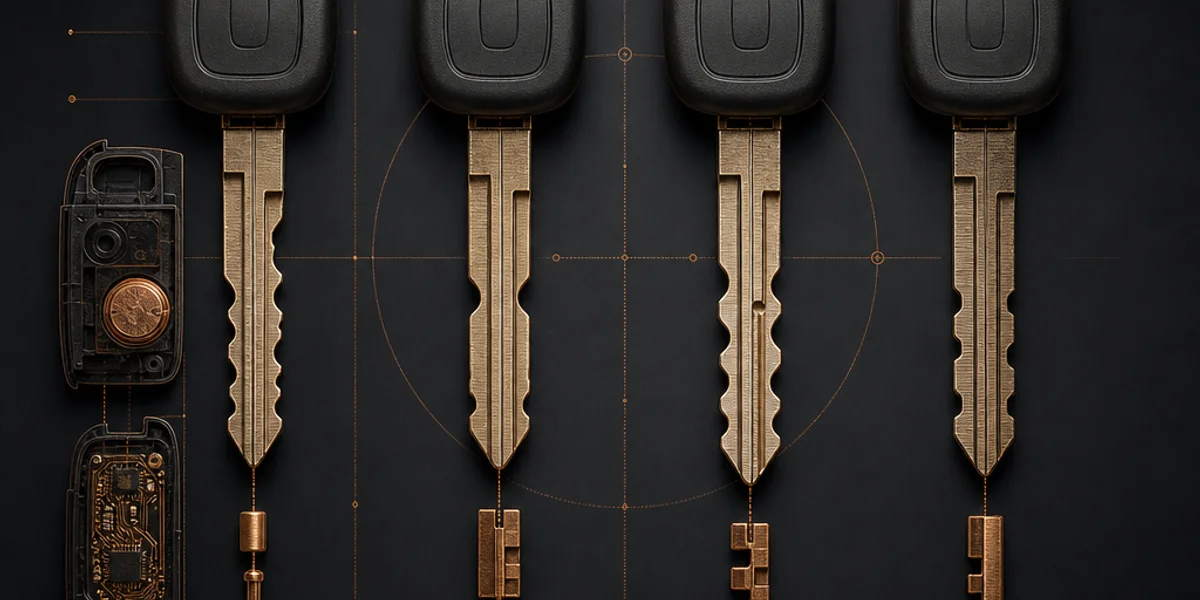
Four profiles cover the range, which is three more than most people expect:
| Profile | Models |
|---|---|
| HU133R | Most of the range: Swift all generations, Vitara, S-Cross, Jimny 2006-2018, SX4, Alto, Splash |
| TOY43 | Grand Vitara remote head key |
| HU87 | Grand Vitara smart key, Ignis (JDM) |
| SZ11R | Jimny 1999-2006 |
For picking and decoding, the trade uses two Lishi tools. Earlier locks take the HU87/HU133 2-in-1. For locks from roughly 2020 onwards, including facelift-era Swifts, the tool is the Lishi "Suzuki 2020", which Classic Lishi lists as covering the HU87/HU133R flat 10-cut profile with different spacing and depths from the older pick. Both appear in the Lishi profile guide. On the Vitara, the HU87/HU133 2-in-1 picks and decodes the door.
Tool coverage, honestly
There is no single tool that covers Suzuki comfortably from end to end, and the coverage pattern is uneven in a way the marketing does not admit.
On the UK Vitara LY — the job you are most likely to get — the database shows only two tools covering both the blade key and the smart key: the Xtool X100 PAD3 and the OBDSTAR X300 DP Plus. The Autel MaxiIM IM608 Pro II is recorded against the smart key only. The Lonsdor K518ISE and the Advanced Diagnostics Smart Pro cover the blade key only, and the Smart Pro needs the Smart Dongle to bypass the PIN — without it you must supply the 8-digit code yourself.
A few more specifics worth holding on to:
- Advanced Diagnostics software matters more than the tool. The 2017-on Swift needs ADS2233, not the older ADS233, which covers 2016-and-earlier Swifts and asks for a PIN. Both appear on the Advanced Diagnostics software list, and the Ilco software notes confirm ADS233 programmes bladed and proximity keys across various Suzuki models. The standard ADC2000 OBD lead is all you need; no extra cable or dongle for the Swift
- OBDSTAR needs Suzuki software V30.47 or later for the AZ Swift
- Xtool's published coverage stops at 2019 on the AZ Swift and on the Vitara. On a 2020-2024 car, check the tablet's coverage list for your build year before quoting
- Autel's online calculation needs a data connection. On the AZ Swift the tool reads the PIN and calculates it online. No signal, no job
- The Autel XP400 Pro or XP200 is needed for transponder read and write on the Ignis and the Grand Vitara, though not on the AZ Swift or the Vitara LY, where everything runs over the 16-pin socket
- OBDSTAR on the Vitara: if the first attempt fails, read a fresh module ID before trying again. The calculated PIN changes between attempts, so a re-used PIN will fail
For a wider view of what each platform actually covers, the key programmer coverage matrix counts confirmed vehicles from the database rather than repeating manufacturer claims.
Common pitfalls
The customer's spare key is now dead. Every Suzuki registration wipes all four slots before writing. This is the single most common complaint on this make, and it is not a tool fault or a mistake — it is how the car behaves. Ask about other keys before you connect, and get them in your hand.
The new fob starts the car but will not lock the doors. Wrong frequency. A 433.92 MHz fob on a Japanese-market car, or a 314.9 MHz fob on a UK car, will learn its transponder and fail on the remote. Check the market before ordering, not after.
The diesel SX4 refuses the chip you brought. Petrol SX4 is ID46 PCF7936; diesel is ID40 PCF7935. Nothing on the key or the lock tells you which.
The car is now on zero keys and completely dead. Usually a cheap aftermarket proximity fob that failed to learn mid-routine on a Vitara. Get the ignition on by feeding 12V to the IG1 SIG fuse — the KLS ignition feed, not the MTR fuse — and re-run key learning. Then fit a decent fob.
"Security code wrong" on a ZC Swift. Enter 0000 instead of 0408. That is the documented fallback, not a sign of a problem.
The tool connects but sees nothing on the immobiliser. On the ZC-series Swift the immobiliser session is K-line on pins 7 and 9. A CAN-only scanner will pull emissions data and find no immobiliser at all.
Programming "failed" on a ZC Swift. You have most likely tried to learn a key the ECM already knows, or all four slots were full. Clear keys and start again with the complete set.
The wrong menu branch. OBDSTAR 06-10 is the Indian Swift. Lonsdor's Japan branch stops at 2004. Xtool Europe is the 433 MHz car. None of these will tell you politely.
Frequently asked questions
Can a Suzuki key be cloned instead of programmed?
On some models, yes. The 2004-2010 ZC-series Swift and the Grand Vitara both carry cloneable Hitag 2 chips, and cloning is often the better route because it does not erase the customer's existing keys. The modern cars cannot be cloned: the Vitara LY, the AZ Swift, the S-Cross and the Ignis all use locked Hitag 3 or Hitag Pro transponders, and every key has to be learned to the module over OBD. The cloning versus programming guide covers where the wall sits across all makes.
Why does programming a Suzuki key erase the existing keys?
Because the factory Immobiliser Key Registration routine is written that way. The module clears all four stored key slots and then relearns them one at a time, on every Suzuki generation in the database. There is no add-without-erase path on this make, which is why collecting the customer's full set before you connect is not optional.
Do I need a PIN to programme a Suzuki key?
It depends entirely on the generation. The 2004-2010 Swift uses the fixed factory code 0408. The 2006-2014 SX4 needs a genuine 4-digit PIN from the dealer or distributor. Every modern Suzuki holds a vehicle-specific password that the tool reads from the module over OBD and calculates or bypasses, so nothing is typed by hand. The dealer route throughout is the Suzuki SDT-II with the security dongle.
How long does a Suzuki all-keys-lost take?
On a modern Vitara, S-Cross or AZ Swift, allow 90 minutes to two hours including entry, cutting the blade and powering the ignition circuit. On the older cars it is quicker — 45 to 75 minutes on an FZ Swift, less on a Grand Vitara. Build the fuse-feed step into the quote on push-button cars, because it is not optional when there is no working key to turn.
Which blade does a Suzuki take?
Most of the range is HU133R. The exceptions are the Grand Vitara remote head key on TOY43, the Grand Vitara smart key and the JDM Ignis on HU87, and the 1999-2006 Jimny on SZ11R. Decode the lock rather than assuming.
Is the UK Ignis the same as the one in the Keysolved database?
No. The current Ignis record is the Japanese-market car at 315 MHz on an HU87 blade. The UK specification is not yet in the catalogue. Read the original key and decode the lock rather than working from the JDM record.
Before you quote the next one
Suzuki rewards a two-minute lookup more than almost any other make, because the variables that decide the job — the code regime, the frequency, the chip, the blade, the menu branch — do not correlate with the badge or the year in any way you can hold in your head. A Swift is three different jobs. A Grand Vitara needs a Toyota blade. A diesel SX4 takes a different chip from the petrol parked next to it.
Look the car up before you order the key, and check the record for its market rather than its model name. Every specification in this guide, including the part numbers, the fuse positions and the per-tool menu paths, sits in the Suzuki section of the Keysolved database, alongside the chip cross-reference in the transponder chip chart and port positions in the OBD port location guide.
If you work on a UK Ignis, or on any Suzuki where the record does not match the car in front of you, submit it as a vehicle request. The catalogue grows from jobs like yours.
Full database access
Check the Record Before You Order
Cancel any time · Billed monthly, or save $99 a year paying yearly, in your local currency
Look up the exact chip, frequency, blade profile, security code source and per-tool menu path for any Suzuki on Keysolved. Region-specific records, so you order for the right car.
No card required to browse — subscribe to unlock full specs and procedures
Frequently Asked Questions
▶Can a Suzuki key be cloned instead of programmed?
▶Why does programming a Suzuki key erase the existing keys?
▶Do I need a PIN to programme a Suzuki key?
▶How long does a Suzuki all-keys-lost take?
▶Which blade profile does a Suzuki take?
▶Is the UK Ignis the same as the one in the Keysolved database?
Full database access
Stop Guessing on Unfamiliar Makes
Cancel any time · Billed monthly, or save $99 a year paying yearly, in your local currency
Keysolved holds key specs, programming procedures, OBD port locations and honest per-tool compatibility across 66 makes, written for working auto locksmiths.
No card required to browse — subscribe to unlock full specs and procedures
Sources
- UK New Car Registration Data(2026)— Society of Motor Manufacturers and Traders monthly and year-to-date UK registrations by marque, used here for Suzuki's UK market share.
- Smart Pro Programming Software List(2026)— Advanced Diagnostics' own software catalogue, confirming the ADS233 and ADS2233 Suzuki software codes.
- Advanced Diagnostics Software Updates(2026)— Ilco's release notes confirming ADS233 programmes bladed and proximity keys across various Suzuki models.
- HITAG 2 Transponder IC(2026)— NXP product documentation for the Hitag 2 transponder family used across the older Suzuki range.
- HITAG Low Frequency Transponder Family(2026)— NXP technical overview of the HITAG family, including the mutual authentication and encrypted transmission that closes the cloning route on Hitag 3 keys.
- Master Locksmiths Association Handbook(2025)— MLA voluntary code of practice for cutting vehicle keys, covering customer identification before key work.
- Get a vehicle log book (V5C)(2026)— GOV.UK guidance on the V5C registration certificate used to verify the registered keeper.
- Classic Lishi Suzuki-2020 2-in-1 Decoder and Pick(2026)— Manufacturer listing confirming the Suzuki-2020 pick covers the HU87/HU133R flat 10-cut profile with different spacing and depths from the older tool.