
Hyundai and Kia Key Programming: Complete Locksmith Guide (All Models)
Five shared immobiliser architectures, the procedure for each, realistic job times, and the add-key trap that costs more call-backs than any other fault on the make
Key Takeaways
- Hyundai and Kia share one immobiliser family across five architectures — Immobiliser Box with SMARTRA, SMARTRA3, BCM-based, BCM-integrated AES and E-GMP — so identifying the era matters more than identifying the badge
- Three incorrect PIN attempts lock the immobiliser for approximately one hour on SMARTRA and SMARTRA3 vehicles, so read the code over the port rather than typing a guess
- Everything from DST AES (8A) onward cannot be cloned and must be enrolled to the vehicle, which covers most Hyundai and Kia models built after about 2018
- All keys lost on the Ioniq 5 and EV6 is an OBD job with no bench work, but coverage of conventional Hyundai and Kia models does not automatically extend to the E-GMP electric platform
- Add-key on an i10 relearns the entire key set rather than appending one, so every existing key must be present or it stops working
Hyundai and Kia turn up on the same job sheet more often than most locksmiths expect, and the reason is not coincidence. The two makes share an immobiliser architecture, a PIN structure, a set of transponder families and — on the newest platforms — the same physical key hardware under different part numbers. Learn one properly and you have very nearly learned both.
That is worth more every year. The Kia Sportage was the second best-selling new car in the UK in 2024 on 47,163 registrations, behind only the Ford Puma, while the Hyundai Tucson took seventh place on 32,174 and the i10 led the supermini class outright, according to SMMT Motor Industry Facts 2025. Those cars are now coming off finance and into the second-hand market in volume, which is precisely when spare keys and lost-key calls start arriving.
This guide goes through the Hyundai and Kia immobiliser generations in the order you will meet them, with the chip, the security model, the procedure and a realistic job time for each. Every specification below comes from a Keysolved vehicle record rather than a manufacturer brochure.
One immobiliser family, five architectures
Hyundai Motor Group does not run separate security programmes for its two brands. A Kia Picanto TA and a Hyundai i10 PA are the same platform with different badges, and they take the same approach to key security. What changes across the range is not the brand but the era.
There are five architectures in current UK circulation, and identifying which one is in front of you is the whole job.
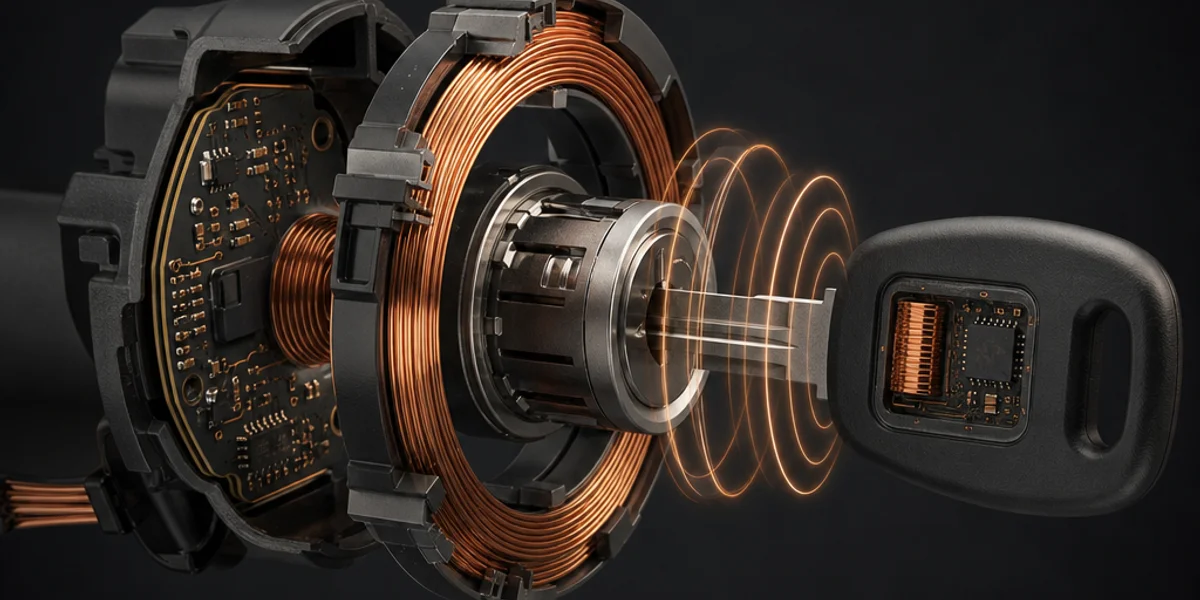
Immobiliser Box with SMARTRA. The oldest of the five and still common on 2011 to 2017 city cars. A separate immobiliser control module works alongside SMARTRA — the SMARt TRansponder Antenna — which is an inductive ring around the ignition barrel. SMARTRA does not authenticate anything itself. As the Hyundai/Kia key coding reference at DiagWiki puts it, the unit converts the 125 kHz transponder signal into serial data and passes it to the ECM, which does the actual cryptography. A 6-digit PIN is mandatory.
SMARTRA3. The third-generation antenna system, running from roughly 2015 to the present on conventional-ignition and push-button trims alike. Same principle, newer chips, and the 6-digit PIN is now readable over the port on every mainstream tool.
BCM-based with no separate immobiliser module. On several platforms — the Hyundai i30 GD and the Kia Rio YB among them — the body control module absorbs the immobiliser function entirely and communicates over CAN. There is no separate unit to remove and no PIN to enter: the tool reads the BCM directly.
BCM-integrated AES. From around 2020, upper trims move to AES-based transponders with security credentials exchanged rather than a PIN typed. The Hyundai i20 BC3 splits across this boundary inside a single model — lower trims keep the SMARTRA3 path, upper trims do not.
E-GMP. The dedicated electric platform under the Hyundai Ioniq 5 and Kia EV6 has no SMARTRA module at all, for the simple reason that it has no ignition barrel to wrap an antenna around. The BCM handles everything.
The chip families you will meet
Seven transponder families cover the whole Hyundai and Kia range in the UK. This is the table worth keeping on your phone.
| Architecture | Chip family | Typical chip | Example vehicle |
|---|---|---|---|
| Immobiliser Box + SMARTRA | Texas DST80 | DST80 (4D-60) | Kia Picanto TA flip remote |
| Immobiliser Box + SMARTRA | Hitag 2 | PCF7952A (ID46) | Kia Picanto TA smart key |
| BCM-based | Hitag 2 | PCF7936 | Hyundai i30 GD |
| SMARTRA3 | Hitag 3 | NCF295x (ID47) | Hyundai Tucson TL smart key |
| BCM-based | Hitag Pro | PCF7953 | Kia Rio YB |
| SMARTRA3 | DST AES | ID8A | Kia Ceed CD |
| BCM-integrated AES | Atmel AES | ID6A | Hyundai i20 BC3 smart key |
| E-GMP, BCM-integrated | Hitag AES | ID4A | Ioniq 5 NE, EV6 CV |
Two practical consequences. First, everything from DST AES onward is enrolment-only — the 8A, 6A and 4A chips cannot be cloned once programmed, so a cloning chip in the van is no help on anything built after about 2018. If you want the wider picture on which families still clone, the transponder chip cross-reference chart sets it out across every make.
Second, chip family does not track neatly with age. The Ceed CD of 2018 uses DST AES while the Rio YB of the same year uses Hitag Pro. Look the specific vehicle up rather than reasoning from the registration year.
Where the 6-digit PIN comes from, and how not to lock yourself out
On every SMARTRA and SMARTRA3 vehicle the ECM or BCM holds a 6-digit immobiliser PIN, and nothing programmes without it. There are three routes to it.
The normal route is to read it over the port. Every tool in Tier 1 below extracts it automatically, usually without a working key present. The second route is the dealer, which requires VIN and documented proof of ownership. The third is a VIN-to-PIN calculation service, which is the fallback when the vehicle will not give the code up.
That fallback is not theoretical. A Keysolved subscriber working a 2013 Picanto 2 recorded that no machine in his van would read the PIN and that a VIN-to-PIN service resolved it. Budget for that possibility on early TA cars rather than discovering it on the driveway.
Three wrong attempts locks the immobiliser. This is the single most expensive mistake on the make. DiagWiki documents the recovery as leaving the mechanical key in the ON position for one hour, or leaving a smart-key car undisturbed with a healthy battery for the same period, and the Keysolved records for the Picanto TA and Ceed CD both carry the same one-hour lockout. Never type a PIN you are guessing at. An hour parked on a customer's drive with nothing to show is an hour you cannot invoice.
Procedure: SMARTRA3 add key and all keys lost
The Ceed CD is the cleanest example of the modern SMARTRA3 path, and the same shape applies across the Sportage QL, Tucson TL and i20 BC3 lower trims. Both add-key and all-keys-lost are rated beginner to intermediate in the database, and neither requires bench work.
Add key, flip remote or smart key:
- Verify the vehicle — check the VIN plate and confirm the generation, then confirm proof of ownership and photographic identification before touching the car.
- Locate the OBD port: driver's side lower dash, under the steering column. On right-hand-drive Ceed CD the port sits below and to the right of the column, behind the lower trim panel above the fuse box, and the plastic fuse box cover has to come off first.
- Connect the tool with an external power supply on.
- Navigate to Kia, Ceed, CD, then Flip Remote or Smart Key, then Add Key.
- Let the tool read the 6-digit PIN automatically from the BCM or SMARTRA3. No manual entry is needed on any current platform.
- Present the new blank DST AES key when prompted. The tool programmes the transponder and the RF side in sequence.
- Test properly: lock and unlock on the buttons, then the blade in the barrel or the push-button start, and then confirm every existing key still works.
- Clear fault codes.
- Time: 20–30 minutes, including access to the port and the ownership paperwork.
All keys lost:
- Confirm ownership documentation before anything else. An all-keys-lost job on a car you cannot tie to a keeper is a job to walk away from.
- Connect at the OBD port with external power maintained throughout.
- Navigate to Kia, Ceed, then the key type, then All Keys Lost.
- The tool reads the PIN via OBD and erases the existing key memory.
- Programme a minimum of two new blanks. Every previously programmed key is invalidated by this step, so tell the customer before you start that any key that turns up later will be dead.
- Verify transponder response, RF function and engine start on each new key.
- Clear fault codes.
- Time: 45–60 minutes on a flip remote, 60–75 minutes where a smart key has to be cut and paired as well.
Part numbers move across the CD production run — 95430-J7000, then J7100, then J7200 on the flip remote — but the chip does not change at any point, including across the 2021 facelift. The ProCeed and Sportswagon use the same hardware as the hatchback.
Procedure: E-GMP, the electric platform
The Ioniq 5 and EV6 are the same car underneath as far as key work is concerned. Both run Hitag AES / ID4A, both extract AES credentials from the BCM over the port, and neither has a SMARTRA PIN step at all. Key part numbers differ between the brands; the procedure does not.
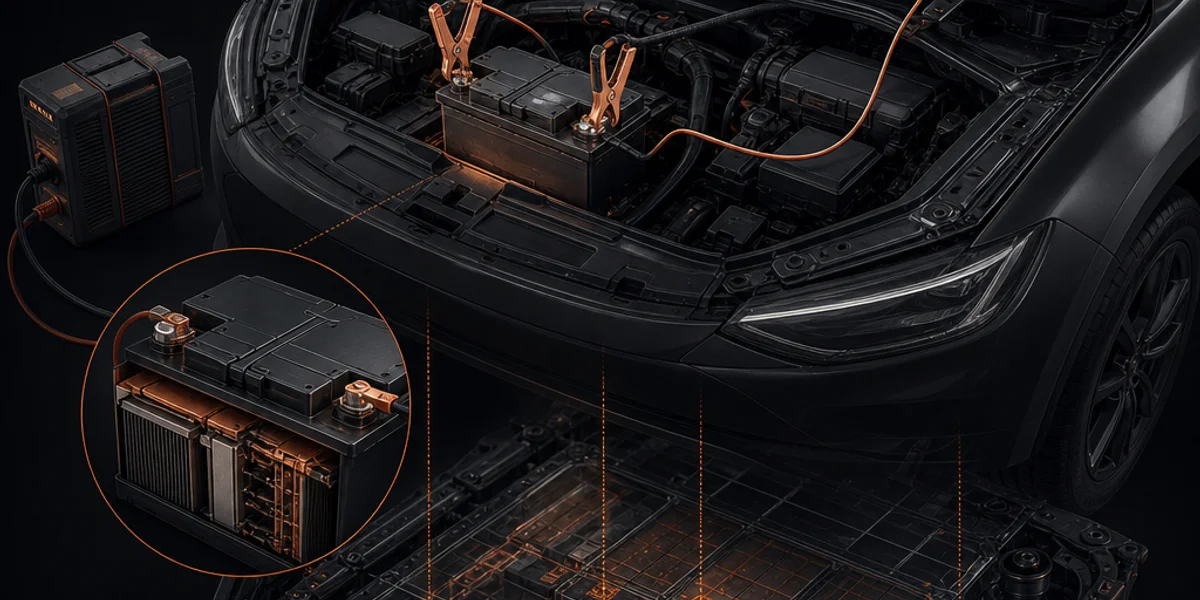
- Check the 12V auxiliary battery before anything else. This is the step that catches people. The 12V auxiliary under the bonnet is entirely separate from the high-voltage traction pack, and a flat auxiliary kills OBD communication no matter how charged the main battery is. Confirm above 12.2 volts and fit an external supply.
- Locate the OBD port: driver's side lower dash under the steering column, behind a removable plastic cover. On right-hand-drive cars it mirrors to the right of the driver's footwell.
- Connect the tool with the external supply running throughout.
- Navigate to the make, the model, E-GMP, Smart Key, then Add Key or All Keys Lost.
- The tool extracts AES credentials from the BCM automatically.
- Present or programme the new Hitag AES key — KK12 emergency blade, 433.92 MHz.
- Test proximity unlock at the handle and push-button start. The emergency blade opens the door only; there is no ignition barrel on any E-GMP variant, so the blade cannot start the car and a blade-only test proves nothing.
- Clear fault codes.
- Time: 30–40 minutes for add key, 60–90 minutes for all keys lost.
Confirm your tool covers E-GMP specifically before quoting an all-keys-lost. Coverage of conventional Hyundai and Kia models does not automatically extend to the electric platform, and the database names the Lonsdor K518Pro and Abrites AVDI as the most dependable routes for E-GMP all-keys-lost work.
Procedure: early Immobiliser Box cars
On a Picanto TA or an i10 PA the work is older and slightly more manual. The PIN may need typing rather than reading, and the remote often programmes as a separate operation rather than alongside the transponder.
- Verify ownership, then identify the blade profile. Early TA production up to mid-2013 uses HYN17; from August 2013 onward it is HY22. Getting this wrong means a key that cuts and decodes perfectly and then does not fit.
- Connect at the OBD port — driver's footwell, left side under the steering column, often inside or behind the fuse box cover.
- Navigate to the make, model, year range, Immobiliser, then Add Key.
- Enter or read the 6-digit PIN. Read it if you possibly can.
- Turn the ignition to ON with the new cut key when prompted and let the tool write the transponder.
- Programme the remote. Some tools fold this into the same operation, others require a separate remote learning step over the port.
- Test transponder, remote and engine start.
- Time: 30–45 minutes add key, 60–90 minutes all keys lost.
Tool compatibility, honestly
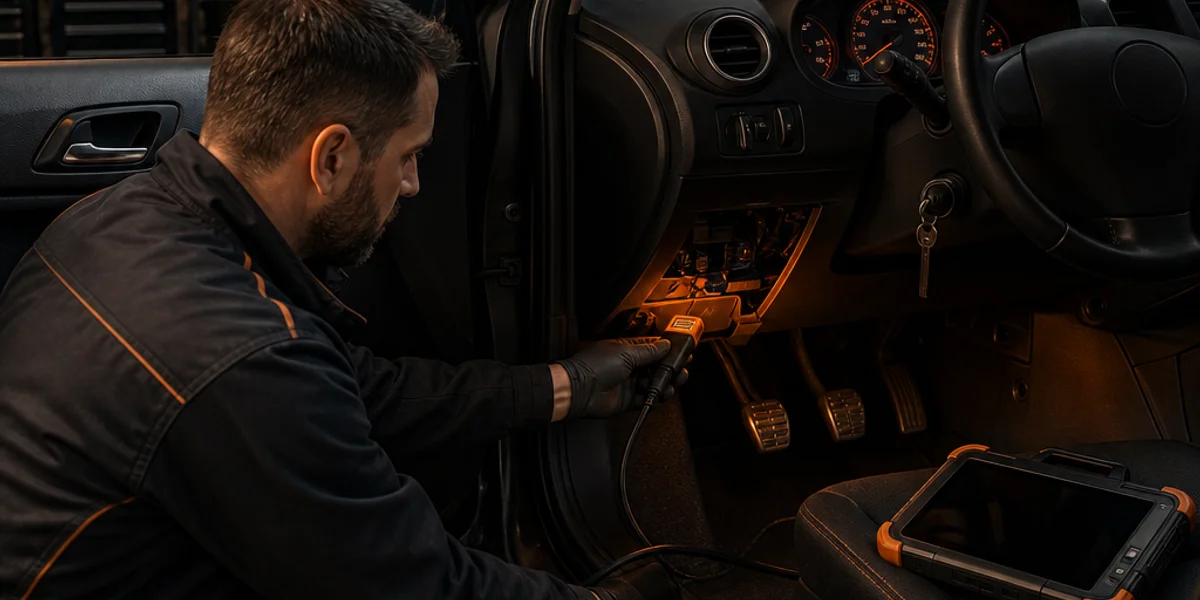
Hyundai and Kia are among the better-covered makes in the aftermarket, and there is no equivalent here of the Mercedes FBS4 wall. Nearly everything is a port job. The differences between tools are about the newest platforms and about running costs, not about whether the job is possible at all.
Tier 1: covers the whole range
Autel MaxiIM IM608 Pro II — named against every Hyundai and Kia architecture in the database, from DST80 Picantos to E-GMP. Reads the 6-digit PIN over the port without a working key. Where it falls short is a documented quirk rather than a coverage gap: on newer Hyundai and Kia smart keys the IMMO menu can return "smart key condition not met", "incapable" or an anti-scan mode error, and the fix is to leave the IMMO path and go in through Diagnostics to the BCM or immobiliser menu instead. This has been written up repeatedly in the trade and the database carries it as an advisory against most post-2020 records. Verdict: the default choice, provided you know the workaround before you need it.
Lonsdor K518Pro — the database repeatedly names this as the most reliable option on newer AES-chip Hyundai and Kia vehicles, specifically where Autel returns errors. The 2023 and 2024 firmware releases expanded E-GMP coverage to the Ioniq 5, Ioniq 6 and EV6. No per-vehicle token cost on this make. Verdict: if your week includes newer Hyundai and Kia electric cars, this is the tool that finishes them.
Abrites AVDI — with the HK011 PIN and Key Manager licence. The HK011 product documentation claims coverage of Hitag 2, Hitag 3, Hitag AES, DST AES and DST 80 transponders, PIN extraction for smart-key vehicles, a PIN-by-VIN calculator for anything up to September 2007, and reset of used keys to new. Abrites states the package covers nearly 100 per cent of Hyundai and Kia vehicles up to 2022. The honest cost is the annual maintenance subscription on top of the licence. Verdict: the deepest coverage on the make, at a price that only makes sense if you are already turning work away.
Tier 2: strong but check the specific vehicle
OBDSTAR X300 DP Plus — covers Hyundai and Kia 46, 47 and 8A chips including PIN reading, and is confirmed against E-GMP. OBDSTAR also sells the H105 as a dedicated budget Hyundai and Kia unit with no token fees, which is worth knowing if this make is a large share of your work. Verdict: the value pick.
Xhorse VVDI Key Tool Plus — generates and programmes on one device, which removes a supplier step. Confirmed across SMARTRA3 and E-GMP. Note that the smart key work generally needs the Key Tool Plus rather than the Key Tool Max and Mini OBD combination, so check which unit you actually own before quoting.
Advanced Diagnostics Smart Pro — covers the make through the ADS2280 and ADS2331 Hyundai and Kia modules, ADS2280 for roughly 2016 to 2019 and ADS2331 for newer. Token cost applies per operation on the relevant categories. Verdict: perfectly capable, but the token model makes it the most expensive way to do routine volume work on this make.
For the full coverage counts behind these rankings, the 2026 car key programmer comparison counts confirmed variants tool by tool across the whole database.
Common pitfalls
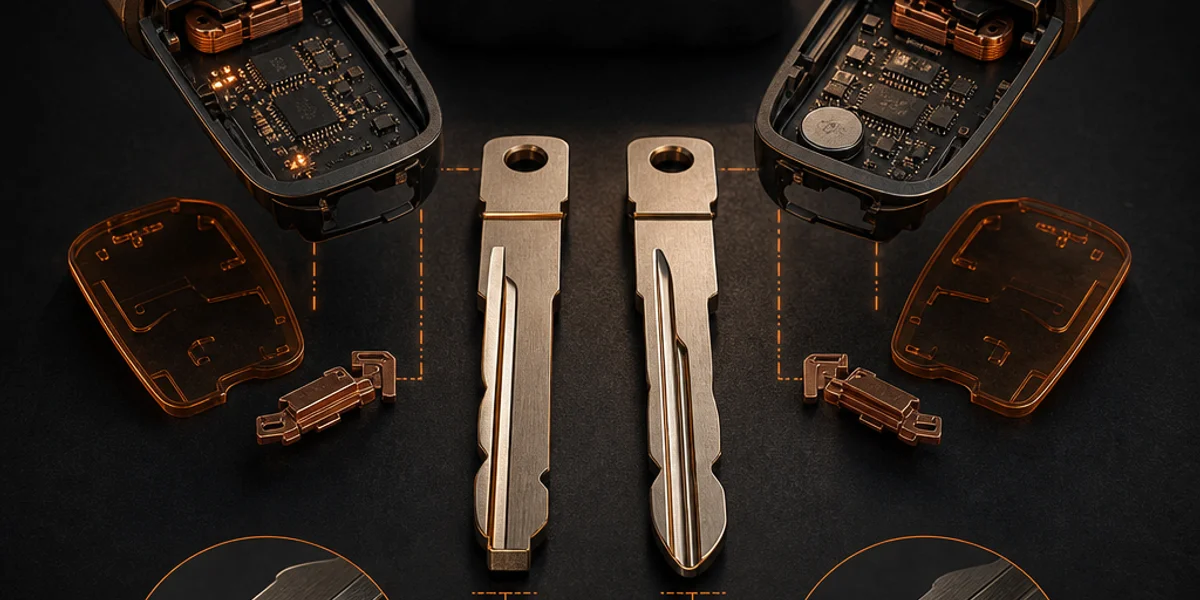
Add key on an i10 relearns every key, not just the new one
This is the field note that saves the most call-backs. A Keysolved subscriber recorded on a 2015 i10 Premium that the add-key operation requires all keys present, because the procedure relearns the full set rather than appending one. If the customer arrives with one key and tells you the other is at home, that other key stops working. Ask before you start, and get every key in your hand.
The blade is not the one the machine suggests
Two separate community records make the same point from different directions. On a 2014 i10 the blade needed a short profile with a rounded tip, genuine part number 81996-1S001, or the existing key rounded off to match. On a Picanto cut from a Dolphin XL-005, a subscriber recorded that you must select the actual blade profile HYN17 rather than letting the machine pick from the vehicle. Cut to the profile, not to the badge.
Assuming the trim has an immobiliser at all
Several Hyundai and Kia trims were built without one. The Tucson TL in SE and Eco trim uses a non-transponder flip key — the blade carries no chip and the engine is not chip-controlled — while the smart-key trims run full SMARTRA3 with a PIN. On those non-transponder trims you still need an OBD session to pair the remote for central locking, but the immobiliser path is the wrong menu entirely and will waste twenty minutes.
Ordering a transponder blank for a market that does not use one
The database flags this explicitly on the Tucson TL: the European flip key carries a DST80 chip on an HY22 blade, while the US flip key of the same generation is a genuine non-transponder unit on a KK10 or LXP90 blade. On an import, confirm the market before ordering the blank.
Treating a flat 12V as a tool fault on an electric car
On the Ioniq 5 and EV6 a depleted 12V auxiliary battery presents as an OBD communication failure. The traction pack can be at eighty per cent and the car will still refuse to talk to you. Check the auxiliary voltage first and you will save yourself an hour of blaming the tablet.
Guessing the PIN
Worth repeating because it is unrecoverable in the moment. Three wrong attempts and the vehicle is locked out for an hour.
Frequently asked questions
Do Hyundai and Kia use the same key programming procedure?
Largely, yes. Both are Hyundai Motor Group platforms and share immobiliser architectures, transponder families and the 6-digit PIN structure. A Kia Picanto TA and a Hyundai i10 PA are the same platform. The Ioniq 5 and EV6 are the same E-GMP platform with the same Hitag AES chip and the same programming path — only the key part numbers differ.
What is SMARTRA on a Hyundai or Kia?
SMARTRA — SMARt TRansponder Antenna — is the inductive antenna ring around the ignition barrel. It reads the 125 kHz transponder signal and converts it to serial data for the ECM, which performs the actual authentication. SMARTRA does not validate the key itself. E-GMP electric vehicles have no SMARTRA module because they have no ignition barrel.
How do I get the 6-digit PIN for a Hyundai or Kia?
Read it over the OBD port. Every mainstream programming tool extracts it automatically from the ECM or BCM, usually without a working key present. A Kia or Hyundai dealer will supply it against the VIN with proof of ownership, and a VIN-to-PIN calculation service is the fallback where the vehicle will not release it. Three incorrect attempts lock the immobiliser for approximately one hour.
Can Hyundai and Kia keys be cloned?
Only the older ones. Hitag 2 and Texas DST80 keys on pre-2018 vehicles can generally be cloned. Everything from DST AES (8A) onward — including Atmel AES (6A) and Hitag AES (4A) on current models — cannot be cloned and must be enrolled to the vehicle.
Is all keys lost on a Hyundai Ioniq 5 or Kia EV6 a bench job?
No. All keys lost on E-GMP is an OBD procedure with no module removal, provided your tool covers the platform. Confirm that specifically, because coverage of conventional Hyundai and Kia models does not automatically extend to E-GMP. The Lonsdor K518Pro and Abrites AVDI with HK011 are the most consistently reported routes. Allow 60 to 90 minutes and connect an external power supply throughout.
Why does my Autel return "smart key condition not met" on a newer Kia?
This is anti-scan mode on newer Hyundai and Kia smart key systems, and it is a menu path issue rather than a coverage gap. Leave the IMMO menu and approach the same vehicle through Diagnostics, then the BCM or immobiliser path. The procedure completes normally from there.
The short version
Identify the architecture before you identify the key. Five systems cover the whole Hyundai and Kia range, and the chip, the security model and the job time all follow from which one you are looking at. Read the PIN rather than typing it, get every existing key in your hand before an add-key on the older cars, and check the 12V auxiliary before you blame your tool on anything electric.
Then look the actual car up. The Hyundai and Kia sections of the Keysolved database hold fifty-three vehicle records between them with the key variants, transponder types, frequencies, blade profiles, OBD port locations, procedures and the specific tools confirmed against each one — plus the field notes from locksmiths who have already done that job. If you are newer to the chip families underneath all this, the transponder key programming beginner's guide covers the fundamentals first.
Full database access
Look Up the Exact Hyundai or Kia in Front of You
Cancel any time · Billed monthly
Key variants, transponder type, frequency, blade profile, OBD port location and the tools confirmed against that specific vehicle.
No card required to browse — subscribe to unlock full specs and procedures
Frequently Asked Questions
▶Do Hyundai and Kia use the same key programming procedure?
▶What is SMARTRA on a Hyundai or Kia?
▶How do I get the 6-digit PIN for a Hyundai or Kia?
▶Can Hyundai and Kia keys be cloned?
▶Is all keys lost on a Hyundai Ioniq 5 or Kia EV6 a bench job?
▶Why does my Autel return "smart key condition not met" on a newer Kia?
Full database access
Fifty-Three Hyundai and Kia Records, Plus Field Notes
Cancel any time · Billed monthly
Browse every Hyundai and Kia generation in the database, with procedures, PIN requirements and tips written by working locksmiths.
No card required to browse — subscribe to unlock full specs and procedures
Sources
- SMMT Motor Industry Facts 2025(2025)— Society of Motor Manufacturers and Traders annual data. Source for 2024 UK registrations: Kia Sportage second best-selling model on 47,163, Hyundai Tucson seventh on 32,174, Hyundai i10 leading the supermini class.
- Hyundai/Kia Key Coding Information — DiagWiki(2026)— Technical reference for the SMARTRA architecture, the 6-digit PIN, the three-attempt lockout and the one-hour recovery procedure.
- Abrites HK011 — PIN and Key Manager for Hyundai/KIA(2026)— Manufacturer capability documentation. Source for the HK011 transponder coverage claims across Hitag 2, Hitag 3, Hitag AES, DST AES and DST 80, the PIN-by-VIN calculator limit of September 2007, and the reset-to-new function.
- Autel IM608 Hyundai/Kia SMK Anti-scan Mode Error Solution(2026)— Trade documentation of the anti-scan mode and 'smart key condition not met' errors on newer Hyundai and Kia smart keys, and the Diagnostics-menu workaround.