
Ghost Immobilisers: What Auto Locksmiths Need to Know
How a CAN-bus start inhibit changes a key job, and the five vehicles you will meet one on
Key Takeaways
- A ghost immobiliser does not interfere with key programming — the transponder enrols normally and the vehicle still will not start, which reads as a failed key job and is not one
- Ghost products are TASSA verified, not Thatcham approved: Thatcham stopped accrediting aftermarket alarms and trackers in certain categories in 2016 and TASSA was founded in 2018 to fill the gap
- Service mode is the working answer — have the customer engage it before you connect and exit it in front of you before you leave, so you never need to know their sequence
- Allow fifteen to twenty minutes on top of the normal job time, and ask about aftermarket security at the booking stage rather than on the driveway
- On a gatewayed diagnostic connector the port does not present raw CAN on pins 6 and 14, so a badly spliced aftermarket module can set lost-communication codes such as U0146 that have nothing to do with your work
You finish the job. The new key is cut, the transponder is learnt, the remote locks and unlocks, the immobiliser light goes out on the dash exactly as it should. Then you press the start button and nothing happens. No crank, no fault code worth having, no clue on the scan tool. The customer, standing in the drive, remembers halfway through your second attempt that the van had "one of those security things" fitted three years ago.
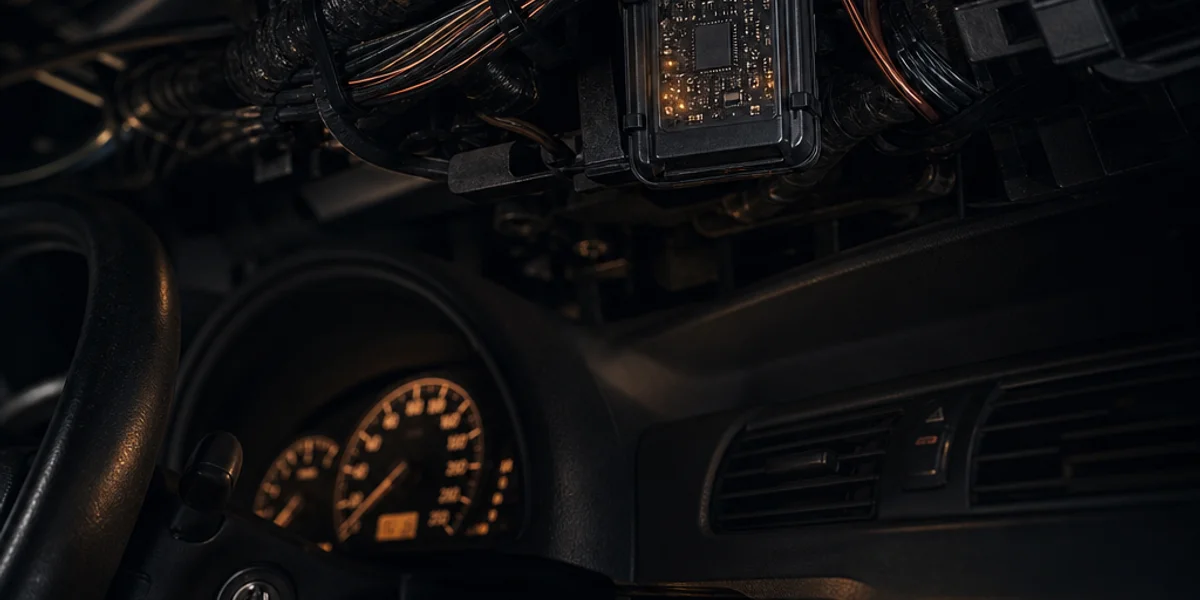
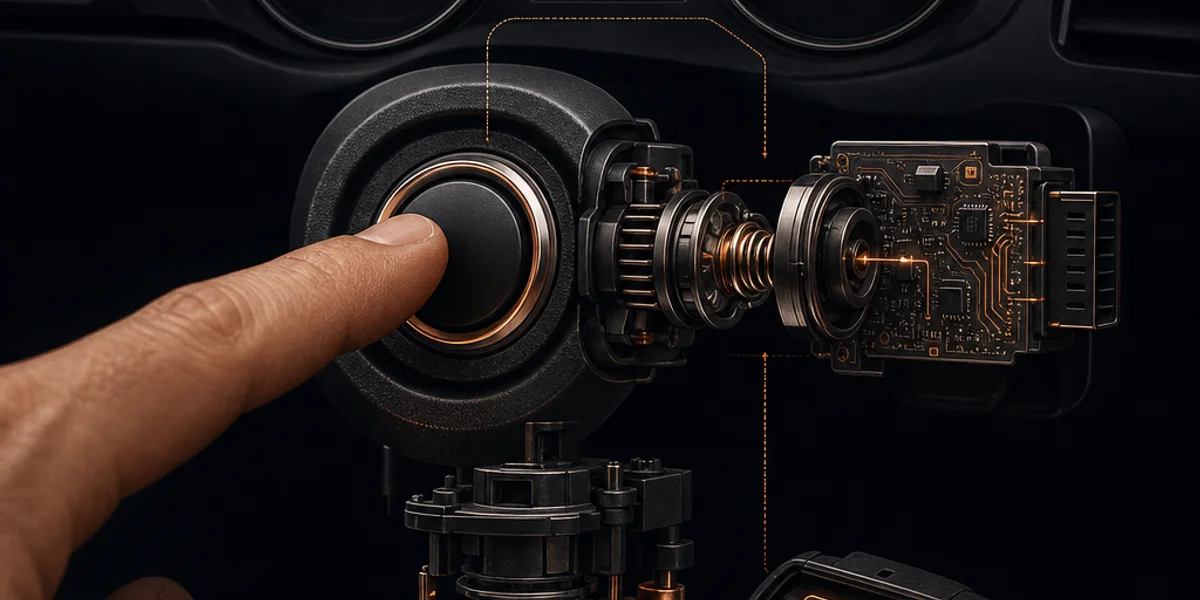
That is a ghost immobiliser, and it is now common enough on UK vehicles that you need a position on it before you quote rather than after. It is not part of the vehicle's own immobiliser, it is not in the manufacturer's wiring diagram, and no diagnostic tool in your van will tell you it is there. It is an aftermarket module spliced onto the CAN bus that refuses to let the engine run until somebody enters a sequence on the vehicle's existing buttons.
This guide covers what a ghost actually does, where it sits in the UK security accreditation picture — which is not where the installers' marketing says it sits — what it means for an add-key or all-keys-lost job, and whether fitting them is worth adding to what you already do.
What a ghost immobiliser actually is
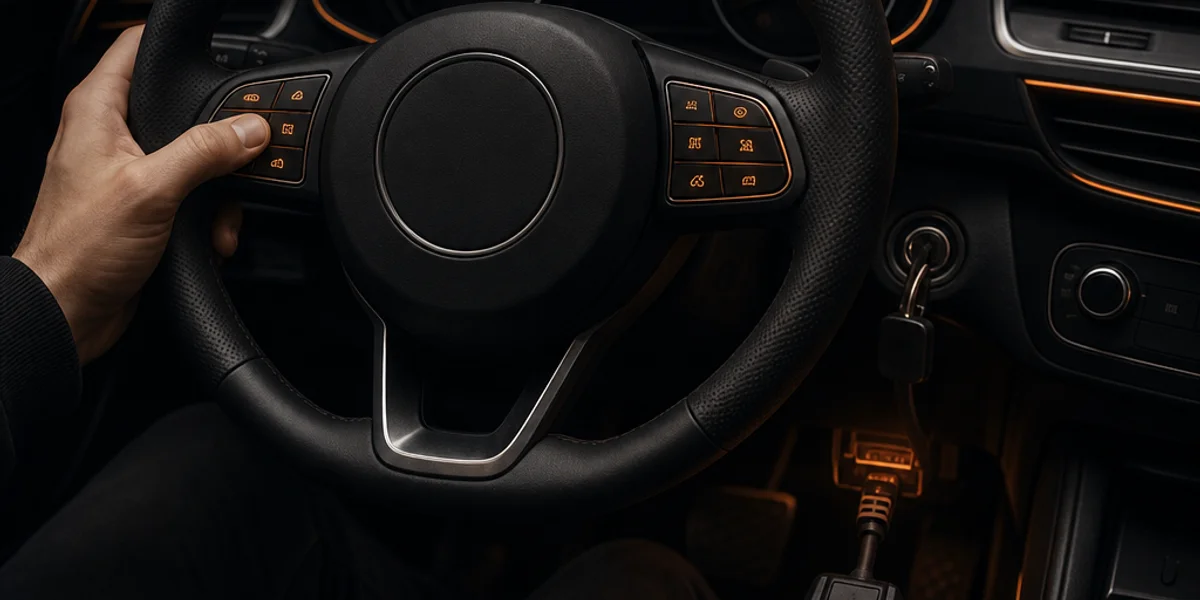
A ghost is a small CAN-bus module that adds a start inhibit on top of whatever the manufacturer already fitted. Autowatch, whose Ghost range gives the category its name in the UK, describe it as a system that connects directly to the vehicle's internal network and requires the driver to "enter your unique PIN using steering wheel or dashboard buttons" before the vehicle will start. Get the sequence wrong and, in their words, the vehicle remains immobilised — a thief holding a cloned or relay-captured key still cannot drive it away.
The defining characteristic, and the reason the trade calls it a ghost, is that there is nothing to find. Autowatch state plainly that there are "no RF signals or external devices", so there is no fob to clone, no LED blinking on the dash and no aerial for a scanner to pick up. The module is hidden in the loom. A thief cannot detect it, and neither can you.
Two current variants matter when you are diagnosing. Autowatch list Ghost-II as a single CAN network product and Ghost-III as dual CAN with CAN-FD, which is what allows it onto the newer architectures where a single high-speed bus no longer carries everything. Ghost 2 also offers a service mode, described as a way to "temporarily suspend the disarm requirement while your vehicle is in a workshop", exited by re-entering the sequence with the ignition on. That service mode is the single most useful fact in this article, and we will come back to it.
The Thatcham question, answered honestly
Search for ghost immobilisers and you will find page after page of installer sites calling them "Thatcham approved". They are not, and repeating that to a customer will eventually cost you.
Thatcham Research's categories are the ones every locksmith half-knows: Category 1 for a combined alarm and immobiliser, Category 2 for an electronic immobiliser, Category S5 and S7 for stolen vehicle tracking, with S5 allowing remote immobilisation and S7 not. Everything outside those categories sits in what the RAC describes as Q Class — aftermarket alarms, immobilisers and marking products that do not hold Thatcham approval.
The reason is structural rather than a comment on the product. TASSA, the Tracking and Aftermarket Security System Association, was founded in 2018 specifically because Thatcham announced in 2016 that it would stop accrediting aftermarket alarms and tracking systems in certain categories, leaving a large body of aftermarket security unregulated. TASSA is wholly owned and managed by VSST Ltd, and verifies products, installation companies and individual installers, maintaining a database that records what was fitted to which vehicle by which trained installer, auditable at any hour and removing the need for paper certificates.
So the accurate statement is that a Ghost is TASSA verified, which Autowatch themselves say, not Thatcham approved. For a locksmith this matters in two directions. When a customer tells you their vehicle has a Thatcham-approved ghost, they have been given loose information and you should not assume anything else they tell you about the install is precise either. And if you fit these yourself, TASSA registration is the credential that carries weight with insurers and police, not a Thatcham category the product cannot hold.
Why the vehicle passes every check and still will not start
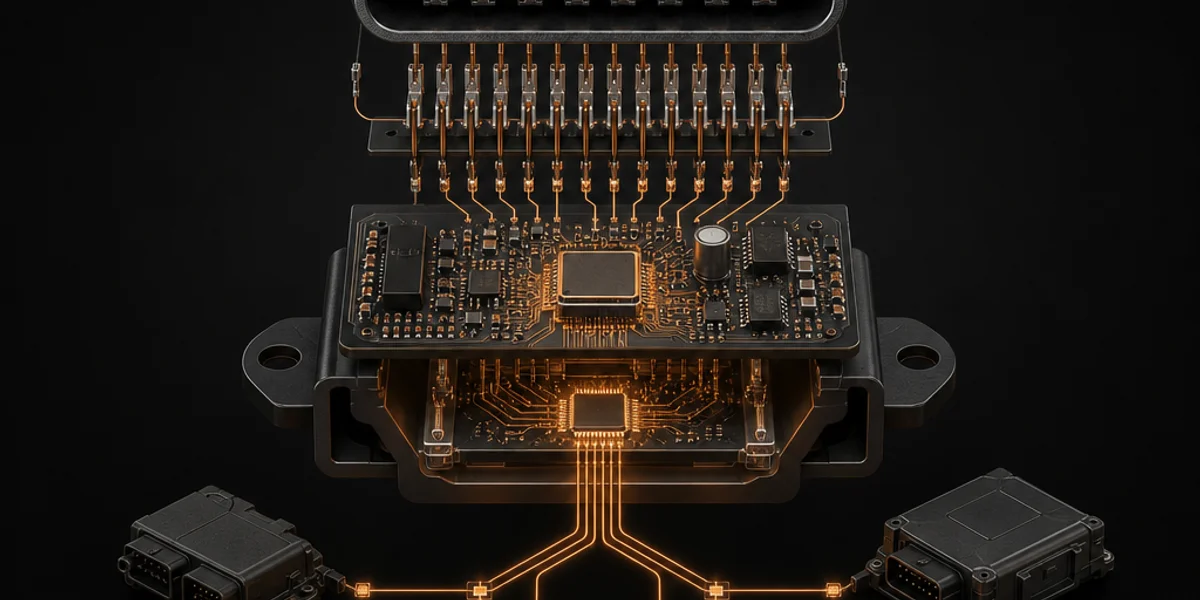
Here is the part that costs people an afternoon. A ghost does not interfere with key programming. The transponder still enrols to the manufacturer's immobiliser exactly as the database says it will, the security access still completes, the stored key count still goes up. Everything you are being paid to do works. The ghost sits alongside all of that and inhibits the start separately, so a successful key job on a ghost-fitted vehicle ends with a vehicle that does not start — and every instinct you have says the key job failed.
It did not. The tell is that the immobiliser warning light behaves correctly and the new key locks and unlocks on the remote. A genuine transponder failure looks different: on the Ford Transit Custom the Keysolved record is explicit that if the buttons are dead after programming, the transponder write did not finish — the board is combined, so remote function and transponder function stand or fall together. Working buttons plus no start is not a key fault.
There is a second, subtler problem, and the Transit Custom record describes the mechanism better than anything written about ghosts does. The Custom's diagnostic socket is not wired straight to CAN: it uses a smart diagnostic link connector fed by a gateway module carrying HS1, HS2, HS3 and MS1 CAN. Keysolved records the consequence plainly — passive dongles and splice-in devices that expect raw CAN on pins 6 and 14 will not see the security modules, and can set U0146. A ghost is a splice-in device on a bus. On a gatewayed vehicle, a poor install can leave you chasing a lost-communication code that belongs to the aftermarket module and not to anything you touched.
The same architectural caution applies on BMW. The X5 F15 runs a Body Domain Controller rather than the FEM of the smaller F-chassis cars, and the Keysolved record notes that the BDC swallows the old CAS, the central gateway, the footwell module and the junction box, with fuses 1 to 14 living inside its own housing and key authentication running over CAN and Ethernet. That is a dense, expensive place for somebody to have spliced an aftermarket module three years ago, and it is worth a look before you start.
The vehicles you will find them on
Ghosts get fitted to vehicles that get stolen, and the population is concentrated. Vehicle crime overall is falling — the Office for National Statistics recorded police-recorded vehicle offences down 13 per cent to 315,923 in the year ending December 2025, with the Crime Survey measure of vehicle-related theft down 14 per cent to 596,000 incidents — but the vehicles owners choose to protect privately are the same ones they always were.
These are the five you are most likely to meet a ghost on, with what the underlying job looks like before the aftermarket module is added to it. Every figure below is the Keysolved record for that vehicle.
| Vehicle | Factory system | Transponder | AKL skill level | Note |
|---|---|---|---|---|
| Range Rover Sport L494 | JLR KVM 2013–2017, JLR PEPS DoIP 2018–2022 | PCF7953 Hitag Pro, 433 MHz | Expert on both sub-generations | 2018-on needs DoIP-capable hardware; AKL very difficult without OEM tooling |
| Ford Transit Custom V362 | PATS 5, BCM-owned | Texas DST80 to May 2016, Hitag Pro after | Skilled | Gatewayed DLC from 2018; live factory alarm blocks security access entirely |
| Toyota Hilux AN120/AN130 | Toyota IMMO smart box / PEPS | Texas DST-AES, 8A H chip, 433.92 MHz | Intermediate | EU spec is 433.92 MHz only — Revo sources quoting 315 MHz are the wrong market |
| Ford Fiesta Mk8 | Ford IDS PATS, Hitag Pro | PCF7953P / NCF2951, 433.92 MHz | Beginner | As-built PIN read over the port; AKL needs a minimum of two new keys |
| BMW X5 F15 | BDC | Smart key | Expert | BDC security key and DME/DDE ISN must agree — AKL is a two-module job |
The pattern is worth noting. On the Fiesta the underlying key job is rated beginner and on the Range Rover Sport it is expert, but the ghost adds the same obstacle to both. It is independent of how hard the vehicle is.
Working a key job on a ghost-fitted vehicle
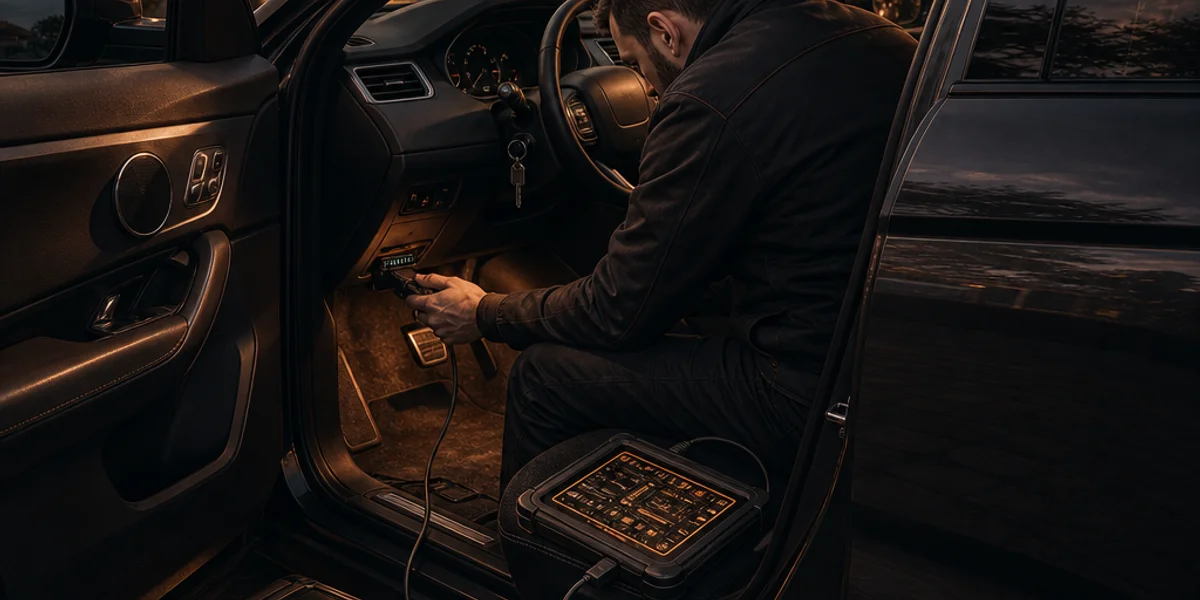
The whole procedure turns on one thing: the sequence belongs to the owner, and you need it before you start, not after.
- Ask at the booking stage whether any aftermarket security has been fitted, and use the words the customer will recognise — "a ghost", "a pin-code immobiliser", "an extra security system". Asking about "aftermarket CAN modules" gets you a blank look. Time: 2 minutes, on the phone.
- If the answer is yes, ask whether they know the sequence and whether they have the installer's paperwork or TASSA record. If they cannot produce the sequence, the job stops here. Say so before you drive out rather than after. Time: 3 minutes.
- On arrival, confirm ownership properly — V5C or equivalent, photographic identification matching the keeper, and a record kept. This is the standard Master Locksmiths Association members work to as a condition of membership, and a ghost raises rather than lowers the bar, because you are now working on a vehicle somebody has paid extra to protect. Time: 5–10 minutes.
- Have the customer put the vehicle into service mode themselves, before you connect anything. On the Ghost 2 this suspends the disarm requirement for workshop use and is exited by re-entering the sequence with the ignition on. You never need to see the sequence, and you should not ask for it. Time: 2–5 minutes.
- Look the vehicle up and do the key job as normal. Nothing about the ghost changes the procedure, the chip, the tool or the time. Time: as per the vehicle — 20 minutes for a Fiesta Mk8 add-key, an hour and a half to two hours for a Transit Custom proximity all-keys-lost.
- Test with the vehicle still in service mode: engine start, remote lock and unlock, and passive entry on both front door handles if fitted. Time: 5 minutes.
- Have the customer take the vehicle out of service mode and start it once in front of you. Do not leave without this step. A vehicle that starts in service mode and not out of it is a conversation you want to have on the driveway, not on the phone that evening. Time: 5 minutes.
- If the customer cannot recover the sequence, refer them to a TASSA-registered installer. Do not attempt to locate, unplug or defeat the module. Time: 2 minutes.
Add fifteen to twenty minutes to your normal job time on a ghost-fitted vehicle, and price it accordingly.
Is fitting them worth adding to the business
For a lot of auto locksmiths, yes, and the economics are more honest than most diversification pitches.
The demand is real and the search behaviour proves it: ghost immobiliser alone runs at roughly 18,000 searches a month in the UK. The work suits the skill set — you already open vehicles, you already understand where modules live, you already own a scan tool to check nothing is upset afterwards. And it is fitting revenue rather than emergency revenue, which means it books in advance and fills the quiet parts of a week that all-keys-lost work never does.
The honest limitations. It is a different trade discipline: install quality is the whole product, and a poorly spliced module on a gatewayed vehicle causes exactly the lost-communication faults described above, on somebody else's job, with your name on the invoice. TASSA registration is effectively mandatory if you want insurer and police credibility, and TASSA verify installation companies and individual installers, not just products — that is an application, an audit and a standard to hold, not a badge you buy. It also puts you in competition with established in-car electronics specialists who have been fitting alarms for twenty years.
The realistic read is that it complements a key business well if you are already doing enough volume to keep a diary, and poorly if you are hoping it will fill one.
Common pitfalls
Diagnosing a failed key programme when the key programmed perfectly Working remote buttons and a correctly behaving immobiliser light, combined with no crank, is a start inhibit sitting outside the manufacturer's system. Re-running the key procedure will not fix it and on some platforms repeated attempts risk a lockout. On the Transit Custom, Keysolved records that a failed attempt can drop the BCM into lockout, at which point Ford's advice is a new module — disconnecting the battery for a few minutes clears it in most cases and costs nothing to try.
Taking the customer's word that there is no aftermarket security Vehicles change hands. A ghost fitted by the first owner does not appear on any document the second owner holds, and they may never have been told the sequence exists. If the vehicle is a Range Rover, a Hilux or a Transit and the history is thin, assume until proven otherwise.
Believing "Thatcham approved" It is Q Class, and the product is TASSA verified. Correct it politely when a customer says otherwise, because it tells you their information about the install is second-hand.
Asking the customer for the sequence You do not need it. Service mode exists precisely so that a workshop never has to know it, and asking puts you in a position you have no reason to be in. If a customer volunteers it, you still work through service mode.
Assuming a ghost blocks your tool It does not, on any evidence available. Key programming runs against the factory immobiliser and completes normally. If your tool genuinely will not communicate, look for the ordinary causes first — the Transit Custom refuses security access below roughly 12.4 volts and reports it as a communication fault, not a voltage fault.
Quoting an all-keys-lost without checking the underlying vehicle The ghost is the smaller problem. On a 2018-onward Range Rover Sport the factory system moved to PEPS with DoIP, and Keysolved is blunt that all-keys-lost is very difficult without OEM tooling. Confirm the tool covers the vehicle before the ghost even enters the conversation — the coverage matrix is the faster way to check than a manufacturer's claim.
Frequently asked questions
Does a ghost immobiliser stop an auto locksmith programming a key?
No. Key programming runs against the vehicle's factory immobiliser and completes normally. The ghost adds a separate start inhibit, so the new key will be learnt, will lock and unlock, and the vehicle still will not start until the owner enters their sequence or the vehicle is put into service mode.
Are ghost immobilisers Thatcham approved?
No. Thatcham stopped accrediting aftermarket alarms and tracking systems in certain categories in 2016, and TASSA was founded in 2018 to fill that gap. Ghost products are TASSA verified and sit in what Thatcham's own scheme treats as Q Class — aftermarket security without a Thatcham category.
What is service mode and should I ask the customer to use it?
Service mode temporarily suspends the disarm requirement so a workshop can start and move the vehicle without the sequence. Have the customer engage it themselves before you connect anything, and have them exit it and start the vehicle in front of you before you leave. You never need to know the sequence.
Can a ghost immobiliser be removed or bypassed if the customer has lost the sequence?
That is installer work, not locksmith work. Refer the customer to a TASSA-registered installer who can verify ownership against the TASSA database. Do not attempt to locate or defeat the module, whatever the customer's explanation.
How much extra time should I allow on a ghost-fitted vehicle?
Fifteen to twenty minutes on top of the normal job — the booking questions, the service mode steps at both ends, and the extra test cycle. The key procedure itself takes exactly as long as it always does.
Will a ghost cause diagnostic faults on a modern vehicle?
It can if it is badly installed. Vehicles with a gatewayed diagnostic connector do not present raw CAN on pins 6 and 14, and splice-in devices that assume they do can fail to see the security modules and set lost-communication codes such as U0146. Check for stored codes before you start so you know what was already there.
The short version
A ghost immobiliser is somebody else's module on the bus, and it changes nothing about the key job except the order you do things in. Ask at the booking, confirm the customer holds the sequence, work through service mode, and test in and out of it before you leave. If the sequence is gone, the job is an installer's, not yours.
What does change the job is the vehicle underneath. Before you quote anything on a Range Rover, a Transit Custom or an X5, look the vehicle up on Keysolved for the exact year and get the key variant, the transponder, the OBD port location and the tools confirmed against it, with the adapter and token requirements attached. If you are unsure which chip family you are dealing with before you order, the transponder chip cross-reference maps the five you will meet in the UK to makes, generations and what still clones.
Full database access
Check the Vehicle Before You Quote
Cancel any time · Billed monthly in your local currency
Look up any make, model and year for the key variant, transponder, OBD port location and the tools confirmed against it.
No card required to browse — subscribe to unlock full specs and procedures
Frequently Asked Questions
▶Does a ghost immobiliser stop an auto locksmith programming a key?
▶Are ghost immobilisers Thatcham approved?
▶What is ghost immobiliser service mode and should I ask the customer to use it?
▶Can a ghost immobiliser be removed or bypassed if the customer has lost the sequence?
▶How much extra time should I allow on a ghost-fitted vehicle?
▶Will a ghost immobiliser cause diagnostic faults on a modern vehicle?
Full database access
Know What Your Tool Actually Covers
Cancel any time · Billed monthly in your local currency
Per-tool coverage records across 60 makes, with field notes from working locksmiths on what each device finishes.
No card required to browse — subscribe to unlock full specs and procedures
Sources
- Autowatch — Ghost Immobiliser: Advanced Car Theft Protection(2026)— Manufacturer documentation for the Ghost range. Confirms direct connection to the vehicle's internal network, PIN entry via steering wheel and dashboard buttons, and the absence of RF signals or external devices.
- Autowatch — Ghost 2 Immobiliser(2026)— Product detail for Ghost 2 and Ghost III, including the single-CAN and dual-CAN/CAN-FD split, the service mode description, and the TASSA verified statement.
- TASSA — About the Tracking and Aftermarket Security System Association(2026)— Confirms TASSA was founded in 2018 after Thatcham ceased accrediting aftermarket alarms and tracking systems in 2016, is owned by VSST Ltd, and maintains an auditable installer and vehicle database.
- RAC — What is a Thatcham category car alarm?(2026)— Reference for the Thatcham security categories 1 to 4, S5 and S7, and the Q Class designation covering non-accredited aftermarket alarms and immobilisers.
- Office for National Statistics — Crime in England and Wales: year ending December 2025(2026)— Police-recorded vehicle offences down 13 per cent to 315,923, and the Crime Survey measure of vehicle-related theft down 14 per cent to 596,000 incidents.
- Master Locksmiths Association — About Us(2026)— MLA membership standards, referenced for proof-of-ownership and customer identification expectations on vehicle key work.
- TASSA — Industry Services(2026)— Detail on TASSA verification of installation companies and individual installers as distinct from product verification.