
Volkswagen Key Programming: Complete Locksmith Guide (All Models)
From IMMO 3 to MQB49 — procedures, job times, and where the aftermarket tools stop
Key Takeaways
- Volkswagen runs five distinct immobiliser generations — IMMO 3, IMMO IV, MQB48 (IMMO V), MQB49 5C and MQB49 5D — and identifying which one you are looking at decides the whole job
- All keys lost on MQB49 vehicles such as the Golf Mk8 and the KESSY T-Roc has no confirmed aftermarket solution: every current tool is add-key only and needs a working key to source the sync data
- On IMMO IV the cluster sub-type (Micronas, NEC 24C32 or NEC 24C64) dictates which bench cable you need, and it only matters for all-keys-lost — the key hardware is identical either way
- MQB all-keys-lost costs £15–40 in server tokens on Autel and Xhorse; the Abrites AVDI with VN009 reads the cluster on the bench and avoids the fee entirely
- SFD and Component Protection are not the immobiliser — SFD blocks the diagnostic session on 2020-onward cars, Component Protection only matters when replacing modules
Volkswagen is the make that separates locksmiths who own the right kit from locksmiths who do not. A Golf is a Golf until you look at the cluster, and then it is one of five different jobs depending on which side of a platform change the car was built. Get the generation wrong and you have driven to a job you cannot finish.
The good news is that the boundaries are clean once you know them. Volkswagen key programming splits along four immobiliser architecture changes in twenty years, and each change moved the security data somewhere new — from a four-digit code in the cluster, to component security bytes shared across five modules, to a cryptographic sync that lives inside the key itself. Everything you need to decide on the phone comes down to identifying which of those you are looking at.
This guide covers all five generations as they appear on UK roads, with the procedures, the realistic job times, and an honest account of where the aftermarket tools stop. The vehicle data throughout is pulled from the Keysolved Volkswagen database, which currently holds 43 Volkswagen records with per-variant chip, frequency, blade and tool detail.
The five Volkswagen immobiliser generations
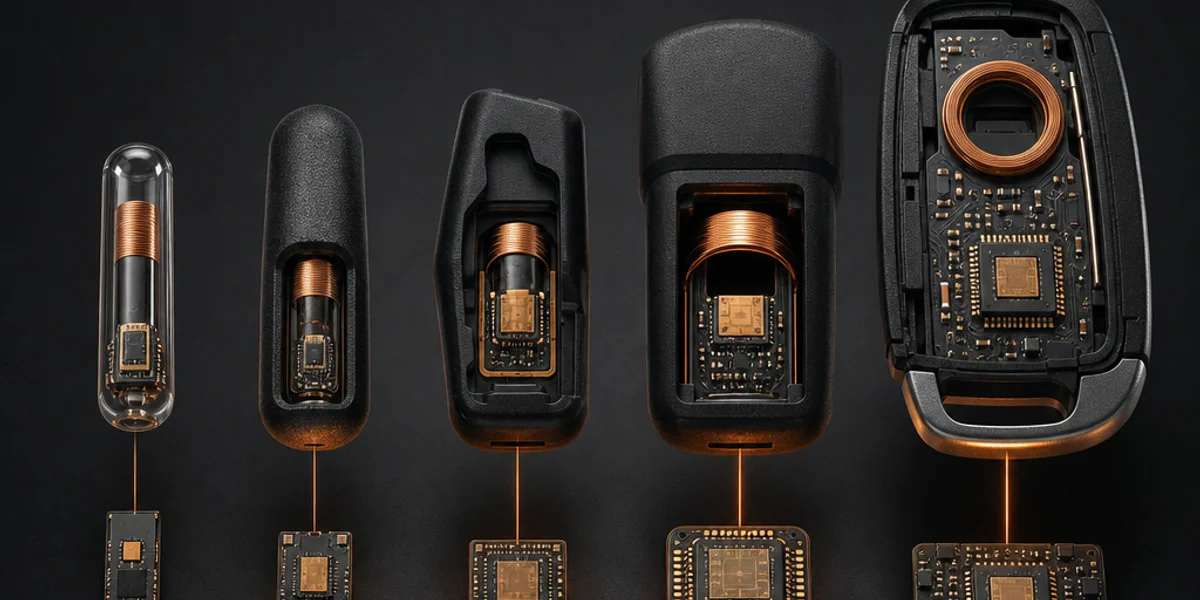
Before any procedure makes sense, fix the architecture in your head. These are the systems you will actually meet on a UK job.
- IMMO 3 (roughly 1998–2010). A four or five-digit Security Key Code (SKC) sits in the instrument cluster EEPROM. The ECM validates an ID48 Megamos Crypto transponder through the antenna ring on the ignition barrel. Read the code, learn the key, done. Up to eight key slots.
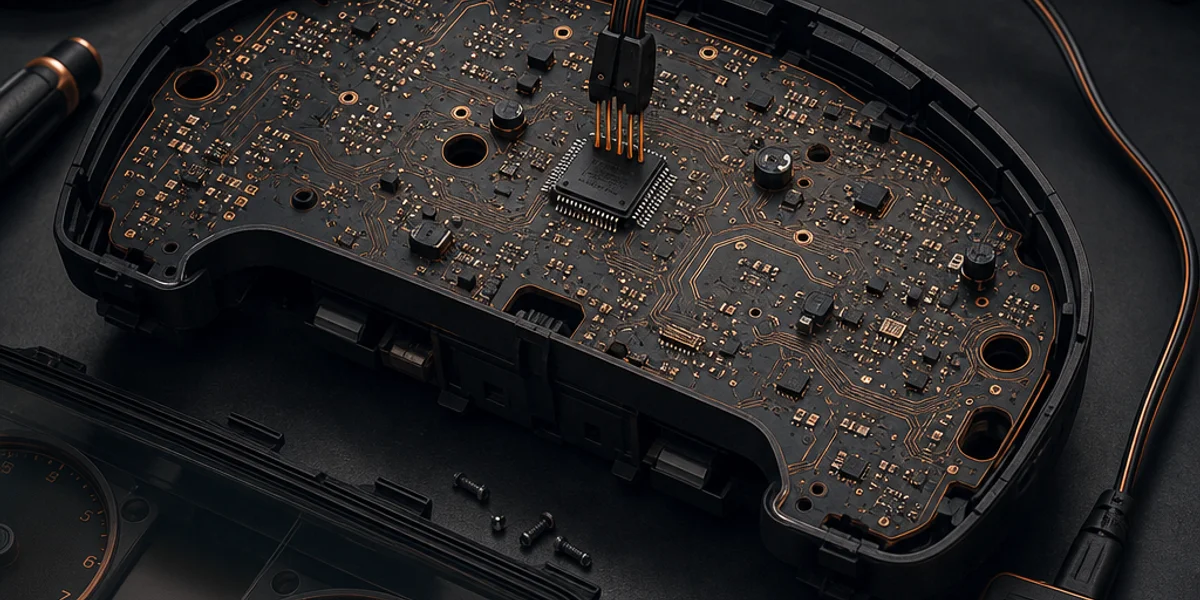
- IMMO IV (roughly 2008–2016). No user-facing PIN any more. The tool pulls the PIN and Component Security bytes straight out of the cluster EEPROM. Same ID48 key hardware, but all-keys-lost becomes a bench job because the cluster has to be read.
- IMMO V / MQB48 (roughly 2012–2020). The MQB platform arrives. Component Security is now shared across cluster, engine ECU, gearbox, steering lock and the KESSY module, and they must all stay in sync. The chip changes to Megamos AES. Add-key stays on OBD; all-keys-lost needs a bench read or a paid server calculation.
- MQB49 / IMMO 5C (roughly 2018–2024 on KESSY cars). Hitag Pro (NCF2161W) transponder with a crypto core on the cluster board. The sync data now has to come out of a working key. All-keys-lost has no confirmed aftermarket route.
- MQB49 5D / MQB Evo (2020 onwards). Golf Mk8 and everything on the CD platform. Same key-sourced sync data, plus SFD diagnostic protection layered on top.
Two things are worth separating out now, because they cause more confusion than anything else on VAG. Component Protection is not the immobiliser. It tethers replacement modules to the vehicle through Volkswagen's servers and is released only through ODIS with a GeKo dealer account, as ProDiagTools sets out in its guide to CP. It does not touch a routine add-key job. SFD is also not the immobiliser. SFD (Schutz Fahrzeug Diagnose) is a diagnostic authorisation layer introduced on 2020-onward MQB Evo and MEB vehicles, and OBDeleven's technical note confirms it protects the instrument cluster, gateway and central electrics among others — which is exactly why it gets in the way of key work on a Mk8 even though it is not a key system.
IMMO 3: the Golf Mk5 era
This is the easy money. The Golf Mk5 2003–2008 runs IMMO 3 with a four-digit SKC in the cluster EEPROM, a Megamos ID48 transponder at 433 MHz, an HU66 blade and a CR2032 in the fob. The Up! 2011–2024 sits on the PQ26 platform and uses the same IMMO 3 architecture with a five-digit PIN, which is why it belongs in this section despite the model years.
Add key — Golf Mk5
- Verify the vehicle and confirm proof of ownership before anything else. V5C and customer ID.
- Connect to the OBD port — driver's footwell, under the instrument panel on the left above the footrest. No trim removal.
- Navigate to VW, then IMMO 2 and 3, or IMMO 3 depending on the tool.
- Let the tool read the four-digit SKC from the cluster. VDO clusters respond quickly. Bosch RB8 clusters take considerably longer — let it finish rather than aborting.
- Cut a virgin ID48 blank and insert it in the ignition when prompted.
- Follow the learn sequence.
- Test engine start, then remote lock, unlock and boot release.
- Time: 25–40 minutes on a VDO cluster. Allow 60 minutes if you find a Bosch RB8.
All keys lost — Golf Mk5
The AKL path is the same shape, which is what makes this generation pleasant. Both add-key and AKL are rated intermediate in the database.
- Connect and navigate to VW, IMMO 3, All Keys Lost.
- Read the SKC via OBD. If a Bosch cluster refuses, remove the cluster and read the EEPROM on a bench programmer — VVDI Prog or an XP400 Pro will both do it.
- Erase the existing key slots.
- Programme replacement virgin ID48 blanks one at a time.
- Verify start on every key before you pack up.
- Time: 45–75 minutes over OBD. Add 45–60 minutes if the cluster has to come out.
One useful note on cloning. Post-2002 ID48 units use an encrypted rolling algorithm, and the earlier non-CAN "Magic I" chips cannot be cloned with standard aftermarket tools. The later 96-bit CAN "Magic II" units can. If you are unsure which is in front of you, use a virgin blank and programme it properly — that works on every cluster variant regardless of sub-generation, and it costs you nothing but a chip. On the Up! specifically, a locksmith on the Keysolved record reports cloning one successfully with an Xhorse super remote, so the option is live on that model.
IMMO IV: Mk6, Tiguan 5N and the T6
This is where the job splits in two. Add-key is genuinely easy — the database rates it beginner on the Golf Mk6 2008–2013 — while all-keys-lost is rated skilled and means bench work. Quote them as different jobs, because they are.
The cars in this bracket are the Golf Mk6, the Tiguan 5N 2007–2016 and the Transporter T6 2015–2023. All three hold their security data in the instrument cluster EEPROM and all three use ID48 Megamos Crypto key hardware, at least early on.
The cluster sub-type is the whole job
Identify the cluster before you quote an AKL, because it dictates which cable you need.
- Golf Mk6: approximately 2009–2011 cars use a NEC microcontroller with 24C32 EEPROM. Approximately 2011–2013 cars, and anything with the 2012 TFT colour display cluster, use NEC with 24C64.
- Tiguan 5N: approximately 2007–2010 cars use a Micronas CDC cluster built on Golf 5 architecture. Approximately 2010/2011–2016 cars use the NEC 24C32 or 24C64 cluster from Golf 6.
- Transporter T6: VDO/Continental NEC with 24C64, though some earlier clusters are 24C32. Verify before you start.
The sub-type affects only the AKL bench procedure. The key variant, chip and blade are identical either way.
Add key — IMMO IV
- Connect to OBD. On the Mk6 the port is above the left footrest in a horizontal trim piece, no cover, often purple.
- Select VW, IMMO IV, Instrument CAN, and let the tool auto-detect the cluster type.
- Turn the ignition on with the working key.
- Read the IMMO data — save the backup before you go any further. This is not optional.
- Insert a new precoded ID48 blank into the tool's programmer slot and select Prepare dealer key.
- Select Add key or Key learning and follow the prompts.
- Insert the prepared key in the ignition when prompted and hold at ON for at least two seconds.
- Confirm the dashboard key count has incremented.
- Test engine start, remote functions and boot release.
- Time: 20–35 minutes.
On KESSY cars the transponder step is identical. The proximity function normally re-adapts automatically as the key-learning step completes. If it does not, the fix is the J518 access and start authorisation module — either VCDS with the SKC into module 05, or the re-adapt Keyless Go function under VAG, Remote Control on VVDI2. Add 10–15 minutes for the KESSY step.
All keys lost — IMMO IV
- Back up the ABS long coding via OBD first. Skipping this is how a straightforward job becomes a recovery job.
- Determine the cluster sub-type and connect the matching bench interface. The OBDSTAR X300 DP Plus uses the VW4-AKL cable, which reads both NEC24C32 and NEC24C64 without IC removal or soldering. The Lonsdor K518Pro uses the SVG149 pogo-pin cable onto the cluster rear PCB. The Autel MaxiIM IM608 Pro II offers a service-mode route with the G-Box, or a dump-mode route with the APA103 clip.
- Let the tool extract the PIN and CS bytes from the dump.
- Select Make dealer key and prepare a virgin ID48 blank.
- Run Key learning.
- Write the original EEPROM content back. Leaving a cluster sitting in a modified service-mode state causes ongoing faults that will come back to you as a warranty call.
- Verify start and clear any stored fault codes.
- Time: 90 minutes to 2.5 hours, depending on whether the cluster has to come out. Service-mode routes on NEC clusters sit at the short end; a Micronas Tiguan at the long end.
Two honest warnings on this generation. First, all previously programmed keys are permanently invalidated by an AKL — tell the customer before you start, not after. Second, on Micronas clusters the database flags Autel EEPROM writes as carrying a higher bricking risk than VVDI2, and names VVDI2 as the preferred tool for Micronas AKL. If you own both, use the Xhorse for that one job.
The T6 carries one extra step that catches people out: it programmes the transponder and the remote separately, so a successful key learn does not mean the remote works. Budget an additional 10 minutes for the BCM remote step.
MQB and IMMO V: Golf Mk7, Polo AW, T-Roc
The Golf Mk7 and Mk7.5 2012–2020 is the volume job in this bracket, alongside the Polo Mk6 AW 2017–2025 and the non-KESSY T-Roc 2017–2024.
There is no static PIN on MQB. Component Security is a 32-byte sync shared across the cluster, engine ECU, gearbox, electronic steering lock and KESSY module. The chip is Megamos AES (NCF29A1 on the Golf), 433.92 MHz, CR2032, and the blade moves from the wider HU66 to the narrower four-track HU162T around 2014–2015. Both blades turn up on 2015–2017 cars — same shell, same electronics, so cut to whatever the door barrel actually takes.
There is no onboard or DIY sequence on MQB. It is a tool-only job, full stop.
Add key — MQB
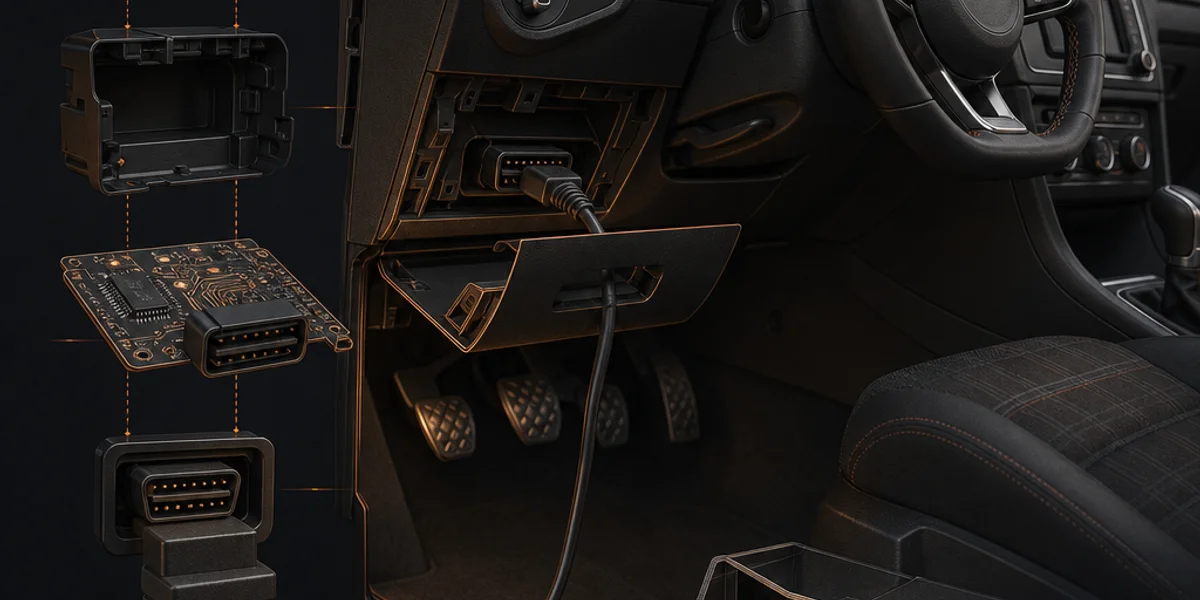
- Connect to OBD. On a right-hand-drive Mk7 the port is not where you expect it: drop the pull-down storage locker to the right of the steering column and the 16-pin connector is inside it. Left-hand-drive cars have it behind a clip-down cover to the left of the column.
- Select VW, Golf, MQB (IMMO V), Add Key, with the working key to hand.
- The tool reads and decrypts the Component Security from the cluster over OBD. No bench work when you have a working key.
- Prepare a Megamos AES key in the tool's slot and write it.
- Learn the key, then cycle every key when prompted — a key that is not presented can drop out of the vehicle entirely. When the tool asks for a key count, enter the total you want the car to end up with, not the number you are adding.
- Confirm start, and on KESSY cars confirm proximity unlock and push-button start.
- Time: 30–45 minutes. Add 10 minutes for the KESSY comfort-access learn on tools that run it as a separate step.
All keys lost — MQB
- With no working key the OBD path is closed. You need either a bench read of the cluster MCU or EEPROM using a solder-free RH850/V850 interface or a NEC35xx read, or the tool's online CS calculation.
- The online route means uploading the cluster and ECU dumps for the 32-byte sync code. Budget £15–40 in server tokens on Autel and Xhorse, around €20 on Abrites, and note that Autel's free MQB calculator since November 2024 removes the cluster-removal requirement for standard MQB AKL on cars like the Polo AW.
- Generate the dealer key with the recovered CS data.
- Learn the keys over OBD and verify start. On DSG cars, confirm the gearbox and electronic steering lock are still in sync.
- Time: 1.5–3 hours. An online calculation on a supported car sits at the low end; a bench cluster read sits at the high end.
The Abrites AVDI is worth singling out here. With the VN009 licence it reads the cluster on the bench through the RH850/V850 programmer and learns the key without an online token at all. If you do a steady volume of MQB all-keys-lost work, avoiding a £15–40 server fee on every job pays the licence back faster than it looks.
MQB49: where the aftermarket currently stops
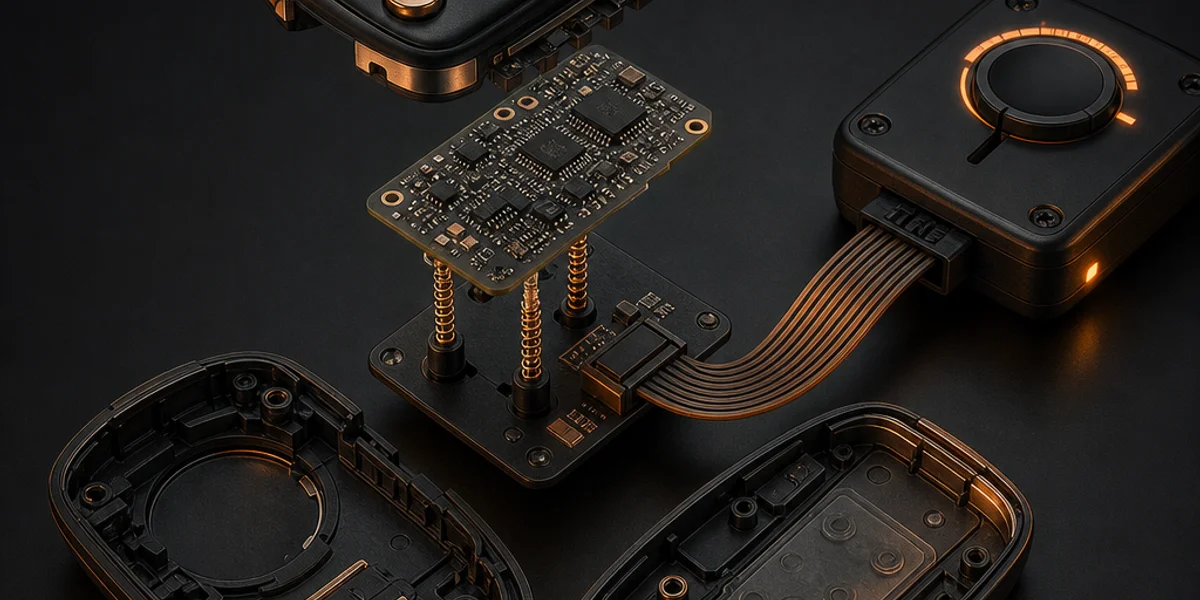
This is the section to read before you quote. The Golf Mk8 2020–2024 and the KESSY variant of the T-Roc run MQB49 with a Hitag Pro NCF2161W transponder and an RH850 cluster carrying a separate crypto core.
The architecture changed in a way that matters commercially: the sync data now comes out of a working key, not out of the car. Tools either dismantle the key to read the chip directly, or interface with it through a dedicated adapter. The key-programmer.com walkthrough of the Autel APB113 procedure sets out the shape of it — read the original key, write a dealer key onto the adapter, unlock SFD on 2023-onward cars, then learn to the vehicle over OBD.
The consequence is blunt. All keys lost on MQB49 has no confirmed aftermarket solution. Every tool that has released 5C/5D support has released add-key support. If the customer has genuinely lost every key to a Mk8 Golf, the honest answer is main dealer via ODIS and GeKo. Say so on the phone rather than after a two-hour drive.
Add-key support arrived across 2025 and 2026, and Abrites got there first: the VN024 licence for VAG Immo 5C became available on 15 May 2025 after pre-orders, adding a spare Hitag Pro key with the AVDI, an RH850 programmer and a PROTAG, and requiring an active Abrites Online Services subscription. The rest followed:
- Xhorse VVDI Key Tool Plus — January 2026, IMMO database V142 and PROG V187 or later. Requires physically dismantling the working key to read the NCF2161W. Approximately £5 per add-key in tokens. Note that the Keysolved record lists Key Tool Plus, not VVDI2, as the confirmed Xhorse route for 5C — coverage here is moving month to month, so confirm your own firmware before quoting.
- Lonsdor K518Pro — February 2026. Needs the MQB49 licence and the ADP40 adapter, and consumes credits per operation.
- Autel MaxiIM IM608 Pro II — March 2026, included within an active subscription rather than charged per vehicle. Uses the APB113 adapter board. An SFD unlock token of roughly £15–25 applies separately where the gateway is protected.
- Yanhua Mini ACDP-2 — March 2026, Module 44 with licence A60A, solder-free ICP read of the key PCB.
- Keydiy KD-X4 — January 2026, app V8.7.1 and firmware V1.53 or later, DB25 cable, no extra token cost beyond the MQB licence.
Time: 45–90 minutes for an MQB49 add-key, and more the first time you dismantle a key on a customer's driveway. Do the first one in the workshop.
Tool compatibility, tiered honestly
No tool covers all five generations equally. This is where the money decision sits.
Tier 1 — full-range coverage. VVDI2 with the MQB48 authorisation, the MaxiIM IM608 Pro II with the XP400 Pro, and the Abrites AVDI with VN009 all run from IMMO 3 through MQB. VVDI2 is the safer choice on Micronas clusters. Autel has the strongest MQB all-keys-lost story since the free calculator. Abrites avoids server tokens on AKL entirely but costs more up front and needs a live subscription.
Tier 2 — strong but with a gap. The OBDSTAR X300 DP Plus is excellent value across IMMO 3 and IMMO IV, and the VW4-AKL cable is one of the cleanest bench solutions on the market. On MQB all-keys-lost it still leans on a bench read or a server token, where the newer X300 Classic G3 calculates on-device. The MaxiIM IM508S runs the same Autel MQB software as the IM608 line at lower cost — same menus, same procedure. Worth knowing: the base IM508 without an XP400 Pro upgrade cannot perform MQB key learning at all.
Tier 3 — specialist or supplementary. The Advanced Diagnostics Smart Pro with ADS2292 is the UK trade standard for VAG add-key and bypasses the PIN in-procedure, but its bench all-keys-lost coverage on IMMO IV is thinner than Xhorse or Autel. VVDI Prog is not a key programmer at all — it is the bench partner that reads the cluster when the OBD path fails, and it earns its place for that alone.
For a broader view across makes, the Keysolved car key programming guide covers which tools pay back and what to charge.
Common pitfalls
The key learns but the count does not change Almost always a key that was not presented during the cycle-all-keys step. On MQB the vehicle expects to see every key you declared. Re-run the learn and physically present each key when prompted.
KESSY programmes but proximity does not work Two causes. Either the blank lacks the LF induction coil — a standard non-KESSY blank will learn the transponder perfectly and never give you proximity — or the J518 module needs re-matching. Check the blank first, because it is the cheaper mistake to have made.
Bosch RB8 cluster will not give up its PIN over OBD Not a fault. Bosch RB8 extraction is genuinely slow and sometimes unavailable. Let the tool run its full course before deciding, then fall back to a bench EEPROM read on the cluster.
The T6 has no OBD port where it should be Check for a relocated port or an aftermarket dummy cover before you conclude the vehicle has a fault. T6 owners fit these routinely as an anti-theft measure, and the real port will be somewhere else in the cab.
Cluster left in service mode after an AKL You did not write the original EEPROM content back. Do it as the last step of every bench job, every time. The faults it causes surface days later and come back as your problem.
Quoting a Mk8 all-keys-lost as a normal job It is not one. MQB49 all-keys-lost is dealer-only with current aftermarket tooling. Quote the recovery, not the key.
Assuming the blade from the model year The HU66 to HU162T changeover on MQB straddles 2014–2015 and both appear on 2015–2017 cars. On the T-Roc KESSY key the blade tracks the part number suffix rather than a clean year break. Cut to the barrel, not the brochure.
Frequently asked questions
Can you programme a Volkswagen key without the original?
On IMMO 3, IMMO IV and MQB48, yes — all-keys-lost is achievable with aftermarket tooling, though IMMO IV and MQB48 need a bench cluster read or a paid online calculation. On MQB49 vehicles such as the Golf Mk8 and KESSY T-Roc, no. Every current aftermarket solution is add-key only and needs a working key to source the sync data. Those jobs go to a main dealer via ODIS and GeKo.
What is the difference between MQB48 and MQB49?
MQB48 uses a Megamos AES transponder and holds the Component Security in the instrument cluster, so a tool can read it from the car. MQB49 uses a Hitag Pro NCF2161W with an additional crypto core, and the sync data has to be read out of a working key instead. That single change is what removes all-keys-lost capability from the aftermarket.
Does SFD block key programming on a Golf Mk8?
Not directly, but it gets in the way. SFD is a diagnostic authorisation layer on 2020-onward MQB Evo vehicles that protects the cluster, gateway and central electrics. Most tools require an SFD unlock — typically a token service costing roughly £15–25 — before the OBD key-learning step will run.
Do I need to worry about Component Protection on a key job?
No. Component Protection tethers replacement modules to the vehicle through Volkswagen's servers and is released only through ODIS with a GeKo account. It does not affect a routine add-key. It becomes relevant when you are replacing a cluster or an ECU, not when you are cutting and learning a key.
Which cluster does a Golf Mk6 have?
Approximately 2009–2011 cars carry a NEC microcontroller with 24C32 EEPROM. Approximately 2011–2013 cars, and any car with the 2012 TFT colour display cluster, carry NEC with 24C64. The distinction only matters for all-keys-lost, where it determines which bench cable you need. The key hardware is identical.
How long does a Volkswagen add-key job take?
Roughly 20–35 minutes on IMMO IV, 25–40 minutes on IMMO 3, 30–45 minutes on MQB48, and 45–90 minutes on MQB49 where the key has to be dismantled. All-keys-lost runs considerably longer — 45–75 minutes on IMMO 3, and anywhere from 90 minutes to three hours on IMMO IV and MQB48 depending on whether the cluster comes out.
Before you drive out
Volkswagen rewards preparation more than almost any other make. Establish the generation from the registration and the year, confirm the cluster sub-type if there is any chance the job is an all-keys-lost, and check your own tool's current firmware against the specific variant — particularly on MQB49, where coverage has changed four times in twelve months.
Then check your stock. The ID48 generations want HU66 blanks and Megamos 48 chips; the MQB generations want HU162T and Megamos AES; MQB49 wants Hitag Pro. Turning up with the wrong blade profile is the most avoidable wasted journey in this trade.
For the specific vehicle in front of you — exact chip, frequency, blade, OBD port location, per-tool notes and the field tips other locksmiths have left — look it up on the Keysolved Volkswagen database. If you are new to the underlying systems, the transponder key programming beginners guide covers the fundamentals, and the OBD port location guide covers every make if the port is hiding.
Full database access
Look Up the Exact Volkswagen in Front of You
Cancel anytime · Billed monthly
43 Volkswagen records with per-variant transponder, frequency, blade profile, OBD port location and tool-by-tool notes. Confirm the generation before you drive out.
No card required to browse — subscribe to unlock full specs and procedures
Frequently Asked Questions
▶Can you programme a Volkswagen key without the original?
▶What is the difference between MQB48 and MQB49?
▶Does SFD block key programming on a Golf Mk8?
▶Do I need to worry about Component Protection on a key job?
▶Which cluster does a Golf Mk6 have?
▶How long does a Volkswagen add-key job take?
Full database access
Stop Guessing the Generation
Cancel anytime · Billed monthly
Keysolved gives working auto locksmiths verified key data, programming procedures and honest tool compatibility across 60 makes — checked before you quote, not after.
No card required to browse — subscribe to unlock full specs and procedures
Sources
- What is SFD? — OBDeleven Technical Support(2026)— Volkswagen Group's Schutz Fahrzeug Diagnose authorisation layer, the platforms it applies to from 2020, and the control units it protects.
- Key Programming (Add Spare Key Hitag-Pro) for VAG Immo 5C Vehicles — Abrites(2025)— Abrites release announcement for the VN024 licence, the first aftermarket add-key solution for VAG Immo 5C, available 15 May 2025.
- Autel IM508 IM608 Add VAG MQB49 5C Key via APB113 Adapter(2026)— Step-by-step account of the Autel MQB49 5C procedure, confirming the working-key requirement and the SFD unlock step on 2023-onward vehicles.
- VAG Component Protection Explained: ODIS Online and GEKO Guide — ProDiagTools(2026)— What Component Protection is, which modules it affects, and why ODIS with online GeKo access is the only route to release it.