
Car Key Programming: The Complete Guide for 2026
A working reference for auto locksmiths — tools, pricing, procedures, and where the trade is heading
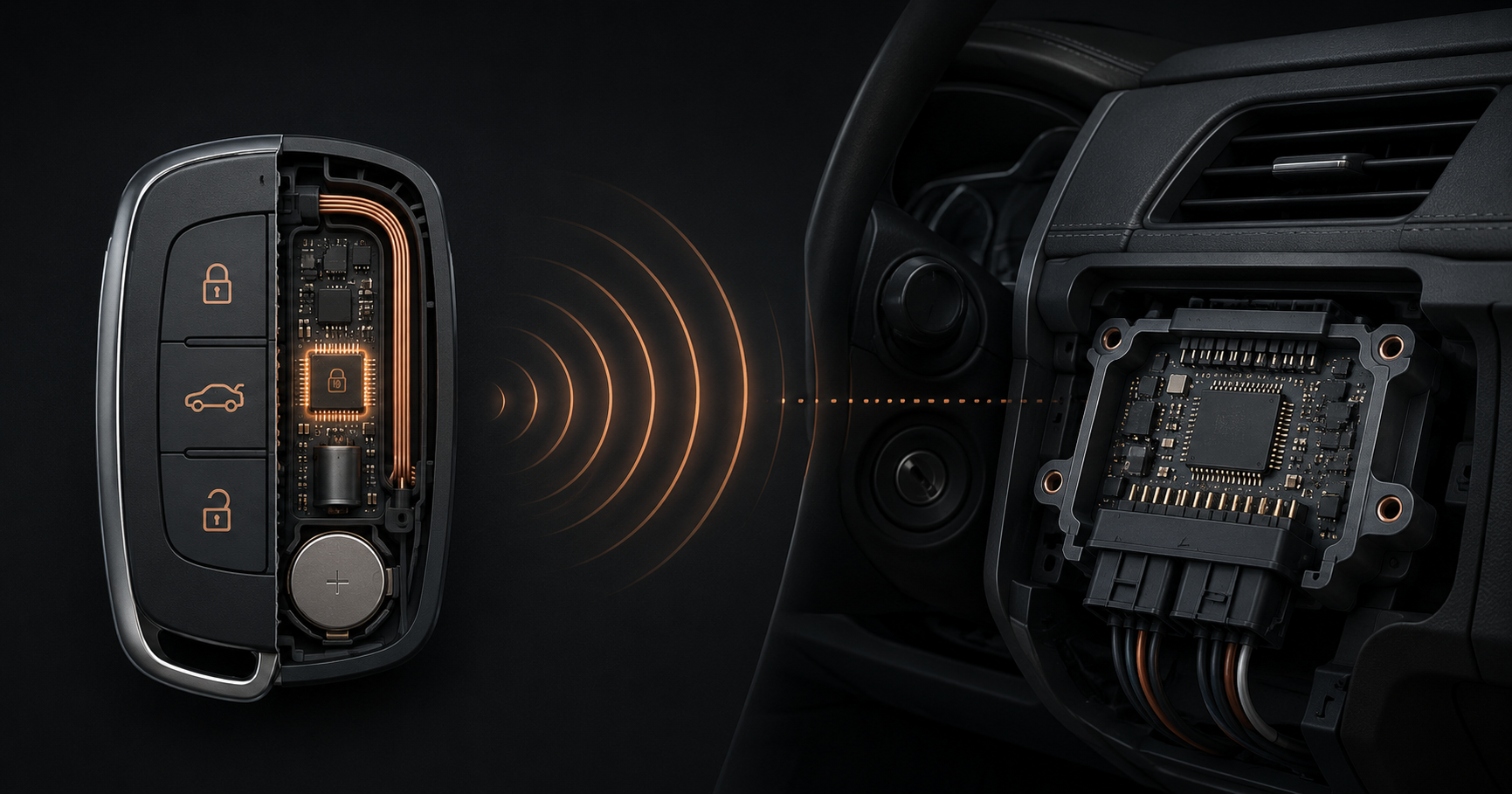
Every auto locksmith reading this knows the call. The customer thinks they need a key cut. You know they need a key programmed. Bridging that conversation — and pricing the work correctly when you do — is half the trade.
The other half is knowing which jobs to take, which tools to own, and which platforms are worth investing in as the work itself shifts under your feet. In 2026 that calculus is changing faster than it has in a decade. Online OEM authentication is now the rule rather than the exception on premium platforms. Secure gateway access is closing aftermarket doors that were wide open in 2020. And the dealer–locksmith pricing gap has widened to the point where dealerships in several regions are now routing their own customer work to mobile locksmiths and billing the difference.
This guide is the working reference for any auto locksmith deciding what to charge, what to buy, what to refuse, and where the next investment should land. It assumes you already know the basics — what an immobiliser is, why a cut key won't start an immobilised car, what an OBD port looks like. The aim is everything that sits above that baseline.
TL;DR
Car key programming is the largest single revenue line in most mobile auto locksmith businesses. Pricing benchmarks in 2026 sit at £80–£250 / $100–$300 for add-key work on mainstream platforms, £250–£500 / $300–$650 for all-keys-lost on smart-key platforms, and £400–£600 / $500–$800 for premium-make AKL. Dealerships charge two to three times those numbers for identical work.
Tool coverage drives the ceiling on what you can earn. The Autel IM508/IM608 family handles the mainstream majority, OBDSTAR and Lonsdor own significant Asian-market coverage, Xhorse leads on remote generation and key cutting, and Advanced Diagnostics holds the OEM-licensed UK dealer-tier coverage. The right tool stack for any specific locksmith depends on the local market mix — but two complementary tools is the floor, not the ceiling.
The structural shifts to watch: online authentication, secure gateway access (FCA SGW, VW DataPlug equivalents, BMW remote tokens), and the steady tightening of aftermarket access to the newest platforms.
The trade's terminology — and the customer conversations around it
A reminder for newer auto locksmiths and a script library for the customer calls.
Programming registers a new transponder with the vehicle's immobiliser via OBD, EEPROM, or direct ECU access. Cloning copies an existing transponder's data onto a new chip — faster, but limited to a narrowing set of chip families. Cutting shapes the blade for the mechanical lock and has nothing to do with the immobiliser handshake.
The customer call almost always opens with one of three framings: "I've lost my key", "I need a spare cut", or "my key isn't working". The first is an add-key or an all-keys-lost depending on whether they still have a working key; price accordingly. The second is usually an add-key (cut and program a spare) unless the car is pre-immobiliser, which is rare in 2026 outside specialist classics. The third is typically a fob battery, a damaged blade, or — occasionally — a failing transponder, which costs different amounts to triage.
The phone triage that pays back is asking three questions on every call: "What make, model, and year?" "Do you currently have a working key?" and "Is the car at your home address?" Those three answers tell you whether the job is in your coverage, whether it's an add-key or AKL, and whether it's a mobile or recovery job. Five minutes spent on the phone before quoting saves hours of unexpected work on site.
The four programming pathways you should know how to handle
Every job runs through one of four pathways. Knowing which pathway a given vehicle uses — before you arrive — is the difference between a profitable hour and a written-off afternoon.
OBD programming is the default on mainstream vehicles from roughly 2010 onwards. The tool talks to the immobiliser via the 16-pin port under the dash. Most modern OBD procedures need an active internet connection on the tool to authenticate against the OEM's server before the procedure unlocks; carry mobile data, not just venue Wi-Fi. The trade-relevant detail: many platforms now token the online authorisation per-job rather than charging a flat annual subscription, which means each job has a small embedded software cost you should be aware of when pricing.
EEPROM programming is bench work. The immobiliser ECU comes out, the EEPROM is read directly, key data is edited, and the chip is written back. Slower, more invasive, but still the cleanest path on a meaningful slice of older European vehicles and any car where the OBD port has been disabled — which on stolen-recovered cars is now a common counter-theft measure. EEPROM kit is cheaper than top-tier OBD platforms, which makes a bench setup a low-cost entry point for newer auto locksmiths.
Direct ECU programming is for high-security platforms where neither OBD nor EEPROM works cleanly. BMW CAS modules, late-model Mercedes-Benz ELV/ESL units, and certain Land Rover ECUs typically come out and connect directly to the programming tool. This is where premium-make pricing lives — the customers expect it, the work supports it, and the tool investment justifies it.
Add-key versus all-keys-lost. With a working key in hand, you're using the customer's existing cryptographic handshake to authorise a new pairing — quick, low-risk, predictable. Without one, the immobiliser has to be reset or the seed data extracted before any new key can be paired. All-keys-lost is the job most worth specialising in: 2–3× the price of an add-key, customers can't easily shop around (most can't drive the car to a competitor), and the proportion of newer auto locksmiths who refuse AKL leaves the work to those equipped for it.
The tools that pay back
Tool buying is the most leveraged decision an auto locksmith makes. The wrong stack caps your revenue ceiling; the right stack opens up margin you don't yet realise is available. These are the brands that matter and the ROI logic behind each.
Autel is the most widely deployed brand globally. The Autel IM508 is the workhorse entry-level platform — broad mainstream coverage, regular updates, sensible learning curve, and resale value when you upgrade. The Autel IM608 extends into high-security platforms including BMW, Mercedes-Benz, and most of the VW Group lineup. Buying decision: if you're starting and want one tool to cover 70–80% of the local market, the IM508 is the floor. If you're already working and your add-on is going to be high-security, jump to the IM608.
Xhorse is the leading specialist brand for key cutting and remote generation, with strong programming on top. The Xhorse VVDI Key Tool Plus consolidates a remote programmer, transponder cloner, and OBD programmer into a single handheld unit, which is what makes it the natural choice for a mobile locksmith with limited van real estate. Its European-make coverage is among the strongest in the market.
OBDSTAR offers the best price-to-coverage ratio on Asian makes. The OBDSTAR X300 DP Plus is the platform of choice for locksmiths whose local market skews Toyota, Honda, Hyundai, and Kia. The procedural depth on Japanese platforms specifically is meaningfully better than Autel at the equivalent price point.
Lonsdor has built a near-monopoly reputation on Toyota smart-key AKL and Lexus work. The Lonsdor K518Pro is the tool other brands measure themselves against on those specific procedures. If Toyota represents more than 15% of your local market, this isn't optional.
Advanced Diagnostics is the OEM-licensed brand most visible in UK dealer workshops. Their Smart Pro family is what senior auto locksmiths working warranty-sensitive jobs default to. The brand carries pedigree from being the underlying licensee on several manufacturer relationships, which means dealer-equivalent procedure access on a long list of platforms.
The buying-order logic most working auto locksmiths arrive at, after their first 18–24 months: start with one mainstream tool (typically Autel IM508 or IM608), add a complementary specialist (Lonsdor for Toyota or OBDSTAR for broader Asian coverage), add a key cutter and remote generator (Xhorse) once volume justifies it, and consider Advanced Diagnostics if warranty work or commercial/fleet contracts come into the mix. Annual software-subscription costs across that stack run £1,500–£3,500 in 2026 — a meaningful cost line, but small against the revenue it unlocks.
What to charge — pricing benchmarks for working auto locksmiths
The single most common pricing mistake new auto locksmiths make is reading what dealerships charge and pricing slightly below that. The right reference point is the working trade rate, which sits significantly below the dealer rate without being a discount on it. Pricing too low signals to the customer that the work is simpler than it actually is, attracts the customers who'll haggle over every line, and trains the local market to expect your rate from everyone else.
Working trade rates (UK, GBP)
| Job | Working trade rate | Dealer alternative |
|---|---|---|
| Add a spare key (basic transponder) | £80–£140 | £180–£300 |
| Add a spare key (proximity / smart key) | £150–£250 | £350–£600 |
| All-keys-lost (basic transponder) | £180–£280 | £400–£700 |
| All-keys-lost (smart key) | £280–£480 | £600–£1,200 |
| Premium-make AKL (BMW, Mercedes-Benz, Land Rover) | £400–£600 | £700–£1,500 |
| Bench/EEPROM job (mainstream) | £150–£300 | Often refused |
Working trade rates (US, USD)
| Job | Working trade rate | Dealer alternative |
|---|---|---|
| Add a spare key (basic transponder) | $100–$180 | $200–$350 |
| Add a spare key (proximity / smart key) | $200–$300 | $400–$700 |
| All-keys-lost (basic transponder) | $200–$320 | $450–$800 |
| All-keys-lost (smart key) | $320–$500 | $700–$1,400 |
| Premium-make AKL (BMW, Mercedes-Benz, Land Rover) | $500–$800 | $800–$1,800 |
| Bench/EEPROM job (mainstream) | $200–$400 | Often refused |
For working locksmiths in Australia, Canada, New Zealand, and Ireland, expect rates broadly equivalent to the UK column adjusted for local currency, with a modest premium in rural and remote-coverage regions.
Three pricing principles that hold across markets. First, the dealer–locksmith gap is your pricing headroom, not a discount you offer: position yourself credibly within it and stop racing the unaccredited operator at the bottom. Second, AKL premium is non-negotiable — the work is materially harder, the consequences of getting it wrong are larger, and the customer alternatives are far worse than they are for add-key work. Third, call-out fees are a separate line item and should be charged on every mobile job regardless of distance; bundling them into the headline price trains your customers to compare you on the wrong number.
When to refuse a job
Refusing the wrong job is the cheapest insurance an auto locksmith carries. A few rules that mature locksmiths converge on quickly.
Refuse jobs outside your current tool coverage. Guessing on procedure or borrowing a tool you haven't trained on is how ECUs get bricked. The customer goes elsewhere; the bricked ECU sits in your liability for months. Refer cleanly and protect your reputation.
Refuse jobs without proper identification. V5C plus photo ID in the UK; title plus ID in the US; equivalent national documents elsewhere. The customer who's reluctant to produce them is the customer you can't afford to help. This is also where the trade meets the law — stolen-vehicle facilitation is a serious offence in every market the trade operates in.
Refuse jobs that don't add up. Damaged ignition surrounds, customers who can't describe the car they own, mismatched VIN-to-documents, anyone unwilling to wait while you verify — those are signals. Working locksmiths develop the instinct fast; the cost of getting it wrong once is much higher than the cost of refusing politely.
Refuse jobs you can't price profitably. A two-hour AKL in a rural area at £180 is a loss-making job dressed up as a busy day. If the customer can't pay the working rate, refer them on or take the deposit and let them think it over. Cheap jobs train cheap customers.
The makes that matter — a working locksmith's view
Coverage notes by manufacturer, oriented around the questions an auto locksmith actually asks: which platform, which tool, where the margin lives, where the trouble lives. Each entry links to the full programming reference on Keysolved.
Ford — the bread-and-butter make in most western markets. Mainstream OBD coverage from 2000 onwards on all major tool brands. Transit fleet work alone justifies Ford fluency in the UK; F-150 work does the same in the US. Some 2010s models still support the two-working-keys customer-side add procedure, which is occasionally relevant when triaging an add-key job.
Vauxhall and Opel (GM globally) — straightforward across the range. Corsa, Astra, Insignia are routine OBD jobs. UK auto locksmiths see Vauxhall constantly; the corresponding US Chevrolet, Buick, and Cadillac platforms share procedures with their European counterparts on platform-shared models.
Volkswagen Group (VW, Audi, Skoda, SEAT) — the cleanest pricing tier in the trade. Pre-MQB cars (broadly pre-2015) are mainstream work. MQB platform vehicles (post-2015) require specific tool support and command a meaningful price premium — £50–£150 / $70–$200 above equivalent non-MQB jobs. MQB AKL still requires either specialist tools or, on a narrowing set of latest-platform vehicles, dealer involvement. Watch the secure gateway access requirements on the latest models.
BMW — the textbook premium-margin make. Pre-2015 CAS3 and CAS4 vehicles are well-supported by mainstream Autel and Xhorse hardware. FEM/BDC vehicles (broadly 2015 onwards on F-series, all G-series) need specialist bench-programming kit and command premium pricing. iX and i7 are still dealer-only at time of writing. The work is harder; the rates support it.
Mercedes-Benz — split sharply by generation. FBS3 (pre-2018) is locksmith territory with the right tools. FBS4 (2018 onwards) requires ELV/ESL handling on top of the immobiliser pairing, takes longer, and prices accordingly. The FBS4 premium is one of the cleanest justified upcharges in the trade.
Nissan and Infiniti — NATS-based immobilisers across most of the line from the late 1990s onwards. Well-supported by all major tools. GT-R and certain Infiniti models need specific platform support; check coverage before quoting.
Toyota and Lexus — the make where tool choice matters most. Toyota smart keys (G chip and H chip platforms) are the work Lonsdor was built for. AKL on smart-key Lexus is one of the highest-paying mainstream procedures available; if Toyota share is high in your local market, the Lonsdor K518Pro investment is mandatory rather than optional.
Honda and Acura — routine across the range from 2005 onwards. Older Honda transponder-system work is some of the simplest paid work in the trade; useful margin floor in any local market with Honda density.
RAM, Jeep, Dodge, Chrysler (Stellantis family, US-strong) — share immobiliser platforms across many year ranges. Mainstream OBD on most current platforms with standard tools; 2013-on proximity-key models carry a modest pricing premium over basic transponder work.
MLA, ALOA, MLAA — trade body membership and what it does for your business
The most consistent margin uplift an auto locksmith makes is the move from unaccredited to accredited operator. Customers don't always know what an MLA Approved Company means in detail, but they recognise the badge — and on smart-key AKL jobs in the £400+ bracket, that recognition is what lets you charge confidently.
In the UK, the Master Locksmiths Association — founded 1958, around 1,400 individual members and 350 Approved Companies — is the recognised trade body. The MLA Auto qualification is the layer above general MLA membership and is what signals competence on car-specific work. MLA members typically price 15–25% above unaccredited locksmiths in the same market and are far more likely to win commercial, fleet, and insurance work, which doesn't route to non-members.
In the US, the Associated Locksmiths of America sets the equivalent professional standard across North America. The ACE (Auto Certified Expert) credential, on top of general ALOA certification, signals auto-specialism. The dynamics are similar: commercial and insurance work concentrates with credentialed operators, and the pricing premium is real.
Other markets have equivalents — the Master Locksmiths Association of Australasia covers Australia and New Zealand, the Locksmith Guild of Canada, and similar national bodies in Ireland, South Africa, and elsewhere. The strategic logic is the same: in a trade where customer trust is the gating factor on pricing, accreditation is the cheapest credibility you can buy.
The investment to qualify — training, exam, inspection, ongoing CPD — pays back fast on smart-key AKL pricing alone, before any of the commercial-work benefits.
Where the trade is heading in 2026
Four shifts are reshaping the work and the buying decisions around it. Working auto locksmiths who track them are making different tool and training choices than those who aren't.
Online OEM authentication is now the baseline. Procedures that ran offline in 2018 increasingly need an internet connection and an active manufacturer-server account on your tool. Autel, Xhorse, OBDSTAR, and Lonsdor each sell ongoing online-authorisation tokens for specific platforms; on the highest-security work, those are now per-job tokens rather than annual subscriptions. The cost base shifts accordingly — and tools without active subscriptions lose job coverage every quarter, even if the hardware still works.
Secure gateway access is the next inflection. FCA Stellantis SGW, VW Group DataPlug equivalents, BMW remote tokens, and similar OEM gateway systems are progressively closing aftermarket access to the newest models. Tool brands respond with gateway-bypass licences and per-VIN unlock tokens, which work — but cost. The strategic question every auto locksmith should be asking in 2026: which platforms do I want to still cover in 2028, and what does that imply for my tool stack now?
The dealer outsource trend is real. Several major dealer groups in the UK and US now route AKL and add-key work to preferred mobile locksmiths rather than handling it in-workshop, and bill the customer at dealer rates. For locksmiths who can build that relationship — clean documentation, fast response, professional handover — it's high-volume, high-margin work that doesn't require winning customers individually.
Aftermarket access is tightening, not closing. The narrative that "in five years no aftermarket tools will work" is overstated and has been since 2018. What's actually happening is steady tightening of the newest platforms while the long tail of older vehicles stays open. The implication: tool decisions in 2026 should weight current revenue (older platforms still served by mainstream tools) against future-proofing (newest platforms supported by tools with active OEM agreements).
The reference layer
The work itself rewards locksmiths who can quote fast, arrive prepared, and finish jobs without surprises. Most of that is experience. The rest is having a reference layer that handles the data you can't carry in your head — every make, every model year, every transponder family, every supported tool combination — and surfacing it the moment a customer call comes in.
That's the gap Keysolved was built to fill. If you're looking for the programming method for a specific vehicle, the tool list for a procedure you're about to take on, or coverage confirmation before quoting a job you haven't done before, the database covers it.