
SERMI Explained: What UK Auto Locksmiths Need to Know
Accreditation, cost, the manufacturer list — and the gateway unlocks that still decide the job
Key Takeaways
- SERMI now operates in the UK, but it remains voluntary for manufacturers — it binds you only on the makes that have switched it on
- UK certification runs through RMISC at £1,800 plus VAT for sixty months, or £30 plus VAT a month, with £125 for each additional technician
- Twenty-two marques have committed so far, and the Volkswagen Group, BMW, Hyundai, Kia and Honda are not among them
- SERMI changes the official manufacturer route. It does not remove the Stellantis bypass cable, the VAG SFD token or the Toyota bypass harness
- On a 2025-build Audi A3 the second-generation diagnostic protection cannot be worked around at all — that is a dealer recovery job whatever certification you hold
SERMI has been discussed in the trade for over a decade and it arrived in the UK on 1 April 2026. Since then the questions in every locksmith group have been the same three: do I have to have it, what does it cost, and will my tablet stop working without it.
The short answers are not yet, £1,800 plus VAT for five years, and no. The longer answer is the part worth reading, because SERMI changes the official manufacturer route into a vehicle and leaves most of the aftermarket routes exactly where they were. Knowing which of those two you are standing in front of, on a given car, on a given driveway, is what decides whether a job is a forty-minute add-key or a flatbed to a franchised dealer.
This is a reference for working UK auto locksmiths. What the scheme is, what certification actually involves, which marques have joined, and — pulled from the programming data in the Keysolved database — the gates SERMI does not open. None of what follows changes the first job on any security call: proof of ownership, a V5C check and customer identification before the tool comes out of the van.
What SERMI actually is
SERMI stands for Security-related Vehicle Repair and Maintenance Information. It is a certification scheme that approves an independent business and authorises named technicians inside it to access manufacturer security data — the information, software and parts that stop a vehicle being stolen and driven away. In practice that means key programming, immobiliser resets and anti-theft component coding.
The scheme is managed jointly by vehicle manufacturers, represented by ACEA, and by independent operators. It exists to replace a separate accreditation from every manufacturer with one master certificate and one platform that links to all of them, which is why it took ten years of negotiation to agree. The SERMI UK scheme is now live and operating with standardised access to security-related repair and maintenance information.
In the UK the scheme is delivered by RMI Standards and Certification, the ISO-accredited subsidiary of the Retail Motor Industry Federation, on a not-for-profit basis. The Independent Garage Association negotiated the framework so that audited UK operators get the same level of access as their European counterparts under the same rules.
Two things it is not. SERMI does not replace a manufacturer's own security system — it is a framework a manufacturer may choose to integrate alongside what it already runs. And it does not touch general diagnostics. Fault code reading and clearing, live data, guided diagnostics and service resets are unaffected on every vehicle, certificate or no certificate.
Who needs a SERMI certificate
Any business or technician who works on or with vehicle security information needs a certificate in order to obtain that information from the manufacturers. That is the formal answer and it is accurate.
The working answer is narrower. You need SERMI to use the official manufacturer route — the factory tester, the manufacturer portal, the code against the VIN. You do not currently need it to run an aftermarket programmer on the majority of cars on a UK round, because the aftermarket route does not ask the manufacturer for permission. It reads the secret off the vehicle or off the customer's existing key.
That distinction is the whole post. Everything below is about which route a given car forces you into.
What certification costs and what the process involves
Certification for the organisation plus one technician costs £1,800 plus VAT as a one-off, or £30 plus VAT per month over sixty interest-free instalments. Both options buy sixty months of access. Additional technicians are £125 each as a one-off fee, also for up to sixty months.
The published SERMI pricing states that the fee covers registration with the European Trust Centre, certification for the organisation and one technician, full identity verification, all ISO document checks in line with UKAS requirements, two onsite audits, access to the scheme helpline and the supporting online resources. There is a separate published fee tariff for anything outside that package.
What you need in front of you before applying:
- Documented evidence of ownership of the independent operator.
- Evidence of public liability insurance in excess of £1m.
- Evidence and a declaration of a legitimate business.
- A Basic DBS certificate for the business owner, or the person with significant control, and for each nominated employee to be authorised, supported by self-declaration forms.
- Evidence of working within the automotive area.
- Time: one to two hours to assemble the pack, once the Basic DBS certificate is back. The DBS is the long pole and it sits outside the scheme's control, so start it first rather than last.
A certificate is valid for five years. During that period you will be audited at least twice by site visit — one pre-arranged, one unannounced. Budget for an afternoon lost to each.
Which manufacturers have joined
Twenty-two marques have committed to providing access through the scheme on the published SERMI manufacturer list.
| Group | Marques signed up |
|---|---|
| Stellantis | Abarth, Alfa Romeo, Chrysler, Citroën, Dodge, DS Automobiles, Fiat, Jeep, Lancia, Opel, Peugeot, Ram Trucks, Vauxhall |
| Ford | Ford |
| JLR | Jaguar, Land Rover |
| Mercedes-Benz | Mercedes-Benz |
| Nissan | Nissan |
| Toyota | Toyota |
| Volvo | Volvo, Volvo Trucks |
| Other | Maserati |
Read the gaps, because the gaps are where the work is. The Volkswagen Group is absent, and the Keysolved database holds 54 Volkswagen, 28 Audi, 17 Skoda, 12 SEAT and one Cupra record. BMW and MINI are absent. So are Hyundai, Kia, Honda, Mazda, Renault, Dacia, Suzuki, Subaru, Mitsubishi, Tesla and MG. On every one of those makes a SERMI certificate changes nothing today, and the barrier you meet on the driveway is the manufacturer's own.
The list is updated as marques join, so check it rather than trusting a printout.

Stellantis: a firewall in the bus
FCA started fitting a Security Gateway Module from the 2017 model year, and by 2020 it was reported on close to every FCA vehicle. The manufacturer's own framing, quoted in Autel's secure gateway certification notice, is that the module was developed not to restrict access to diagnostic data but to restrict "the ability of non-registered and non-authenticated users to perform intrusive diagnostics such as bi-directional controls". Key programming is bi-directional by definition, so it sits squarely behind the gate.
The database is explicit about what that means per vehicle. On the Jeep Wrangler JL 2018-2024 the security code source is recorded as extracted automatically from the immobiliser module over OBD, with an SGW bypass cable required for write access. On the Jeep Compass MP 2017-2024 the record states SGW active from 2018, with AutoAuth registration or a bypass cable required for full OBD access. The Jeep Renegade BU record carries the same note from 2018 onwards, and because the Renegade is built in Italy for global markets that applies to European cars as well as American ones.
The add-key procedure on a Wrangler JL, as recorded:
- Connect the FCA 12+8 bypass cable to the SGW connectors under the steering wheel, then connect the programmer to the OBD port. The port itself is in the driver's side lower dash beneath the steering column, facing downward, and on some build dates a metal cross-brace obstructs the line of sight — expect to work by feel.
- Select Jeep > Wrangler JL > Smart Key.
- The tool reads the IMMO password from the vehicle automatically. There is no manual PIN entry on this platform.
- Place the new fob in the front cabin and follow the on-screen prompts to learn the key.
- Cycle the ignition and verify the new fob starts the vehicle.
- Time: 30 to 45 minutes on a car you have done before, of which fitting and removing the cable is ten.
Tool coverage, honestly. The Autel MaxiIM IM608 Pro II handles all three JL key variants with the FCA 12+8 adapter, and the database flags vehicle voltage above 13.5 V as the single most common cause of failure on this platform — fit a battery support unit. The original MaxiIM IM608 is recorded as 2018-2019 only, because SGW from 2020 needs the firmware that arrived on the Pro II. The Lonsdor K518 Pro does the same job with the L-JCD cable and is confirmed on 2018-2021 Wrangler JL add-key and all-keys-lost. The OBDSTAR X300 Classic G3 covers the FCA module. The Xtool AutoProPAD G2 Turbo has demonstrated JL proximity support in the 2018-2021 range, but the record is clear that full 2018-2024 coverage should be verified against the current vehicle support list before you commit to a job. Do that, rather than assuming.
A word on AutoAuth, because it comes up constantly and it is a North American answer to a European question. Registration is $50 a year for up to six users plus $2 for each additional user, covering up to 100 registered tools, and Autel pushes the enabling software to North American market tablets with active subscriptions. On a UK tablet the bypass cable is the route you will actually use, and SERMI is the route Stellantis is pointing at.
Volkswagen Group: a lock on the session
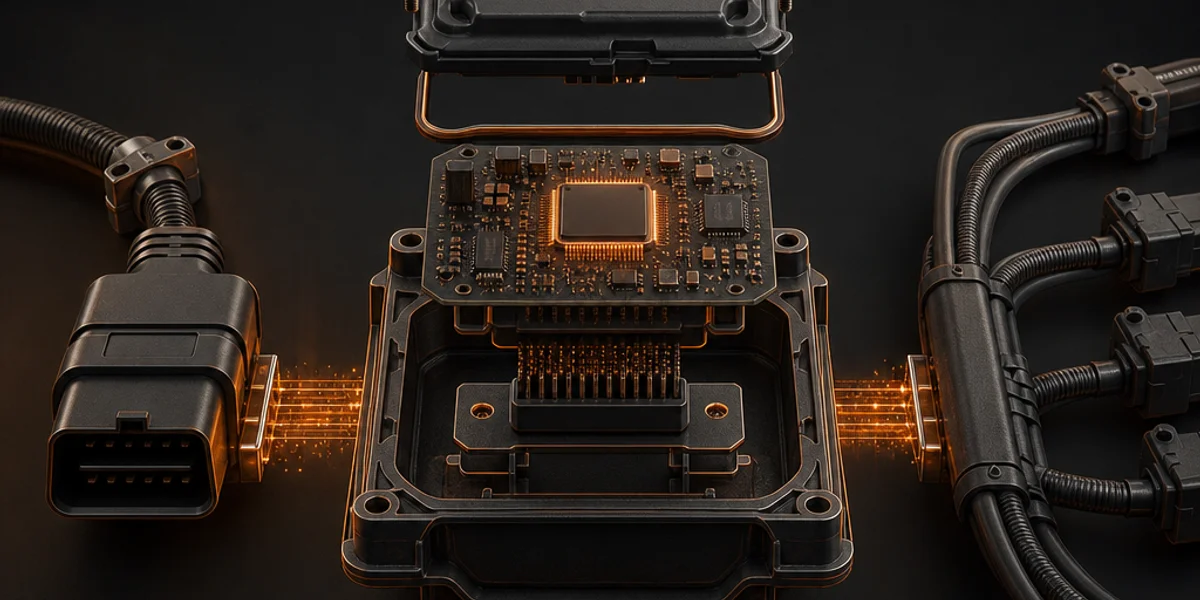
SFD — Schutz Fahrzeug Diagnose, vehicle diagnostic protection — is not a module sitting in the bus. It is a software lock on the diagnostic session that requires an authorisation handshake between the vehicle and the manufacturer's server. Volkswagen AG introduced it on cars built from 2020 on the MQB Evo and MEB platforms, which covers Golf Mk8, Octavia IV, Leon IV, Audi A3 8Y and Q4, ID.3, ID.4 and Enyaq. According to OBDeleven's technical note on SFD, the protected control units include engine electronics, central electrics, the instrument cluster, gateway electrics and the multimedia unit, and the protection restricts adaptation, coding and parametrisation.
The practical consequence on a Golf Mk8 2020-2024 is recorded plainly: add-key requires a working original key, involves key PCB dismantling and bench reading by the ICP method, and the SFD gateway must be unlocked first. The unlock is a paid token. The Xhorse VVDI Key Tool Plus record lists roughly £5 to £10 per MQB online calculation with the SFD unlock token additional, and notes that VVDI2 does not support this platform at all — Key Tool Plus only. The MaxiIM IM608 Pro II gained MQB49 5C and 5D in March 2026, free inside an active subscription, with the Autel SFD token at roughly £15 to £25 per vehicle where a separate unlock is needed. Add-key only, in both cases.
All-keys-lost on a Golf Mk8 MQB49 5D is effectively dealer-only with current aftermarket kit, because with no original key there is no PCB to read sync data from. The dealer route runs ODIS Service with an active GeKo account and a server-side calculation, and the database records a typical lead time of five to ten working days for key supply from Germany.
The Audi A3 8Y 2020-2026 is worse and it is worth knowing why before you quote. The record states the 8Y has carried gateway protection since launch in 2020, which is why coding on this car has needed an unlock from day one — and that cars from model year 2025 add a second-generation protection on top which cannot be worked around at all. Expect any 2024-build-onwards car to stop and demand an online unlock at the key-learning step. There is no aftermarket all-keys-lost on an 8Y at any price: the body module locks itself out once every key is gone, and the documented outcome is a new body control module plus keys supplied against the VIN and commissioned online. Four figures, and days off the road waiting on parts.
Add-key on an 8Y, in outline:
- Scan first and note whether the gateway returns flagged as protected.
- Open the original fob, check the cell reads about 3 V, and free the circuit board. Newer boards are welded rather than clipped.
- Read the board on a solder-free adapter rather than wiring it. Where you must wire it, wire by the printed labels and never by wire colour — at least one common loom has a lead printed RED that is physically purple, and getting that wrong destroys the customer's only key.
- Write the dealer data into the new key's board and reassemble.
- Unlock the gateway when the tool asks.
- Ignition on, run key learning, enter the total key count, and present each key flat against the key symbol on the column shroud for about two seconds. Keep every other key two metres outside the car.
- Time: 60 to 90 minutes. Keep a charger on the car throughout — a sagging battery during the write is how these get bricked.
No SERMI certificate changes any of this today, because the Volkswagen Group has not joined the scheme. You buy tokens from your tool maker, or you refer the car.

Toyota: a code that regenerates every half hour
Toyota is on the SERMI list, and the Toyota entries in the database are the clearest example of the scheme mattering on a real job.
On the second-generation C-HR 2023-2026 the security code is recorded as a 12-digit passcode that Toyota holds and regenerates every half hour, released only through its technical information service against a verified request. In the UK that access now runs through SERMI, with Toyota among the first manufacturers to adopt it — which in practice means DBS-checked accreditation, a digital certificate on your phone, and an identity and V5C check on the customer before you start.
The alternative is recorded just as plainly: skip the code entirely by connecting a bypass harness to the certification ECU's 30-pin connector and backing up the immobiliser data, which is what every capable aftermarket route on this car does. Drop the lower trim panel on the left of the dash — one 10 mm screw plus clips — unplug the white 30-pin connector and put the harness in line.
- Park with doors closed and a stable 12 V supply. This is a hybrid, so use a supply rather than trusting the 12 V battery through a long session.
- Connect at the OBD port and read the VIN, so the tool identifies a second-generation BA car rather than a 2016-2023 one.
- Fit the bypass harness at the certification ECU and back up the immobiliser data to file. Keep the file — it is also what lets you delete keys later.
- Switch power to ON with the existing key and confirm the registered key count.
- Run Add Smart Key. Hold the registered key against the start switch until the buzzer sounds once, remove it, then hold the new key against the start switch until it is written.
- Re-check the count, then test proximity entry on both front handles, the tailgate release, remote lock and unlock, and a full start.
- Time: 45 to 75 minutes including trim removal. Present every key the customer owns during the session — anything not presented can be dropped.
Both routes are legitimate. Only one of them costs £1,800. If your round carries regular Toyota work, that is the calculation to run. For all-keys-lost the fallback without an emulator is the built-in immobiliser reset, which wipes every registered key and takes sixteen minutes of waiting — a genuine get-you-going option, but it destroys any key the customer later finds in a coat pocket.
Where there is no gate at all
It is worth saying clearly that most of a UK round is not gated, and misdiagnosing the barrier is how locksmiths talk themselves out of profitable work.
On the Ford Puma 2019-2026 the as-built PIN is read automatically from the BCM over OBD. The smart key variant does not even need a PIN — the tool extracts the BCM authentication code directly, and the record grades both add-key and all-keys-lost as beginner. Ford is on the SERMI list, which matters for the official FDRS route, and not at all for this one.
On the Vauxhall Corsa F 2019-2024 the 4-digit BSI PIN comes over OBD and bench work is not required, even for all-keys-lost. What costs you time there is not an authorisation but the Delphi UDS BSI dropping into a wait or sleep mode before it releases the PIN — the Abrites PN018 skips the wait, while other tools may sit through up to thirty minutes of it. Note that the port is inside the glove compartment behind a small cover, not under the driver's dash as on earlier Corsa generations.
On the Fiat Ducato 2021-2025 there is no OBD immobiliser read at all on the AES-generation van — but that is not a gateway either. The routes are a dealer-precoded key against the VIN with the PIN, or removing the Marelli BCM and reading its EEPROM on the bench. An AES van shows the new colour-display dash and will not let you read immo data over OBD, which is the identification check to make before you quote.
Three vehicles, three completely different reasons you might not get in, and only one of them is a gateway. Diagnose the barrier before you price the job.

So is SERMI worth it for you
SERMI remains voluntary for vehicle manufacturers in the UK. Where a manufacturer chooses to enable it, it becomes mandatory for anyone needing security and immobiliser access on that manufacturer's vehicles. When a manufacturer opts in it is required to give advance notice, typically between six weeks and three months, before compliance becomes mandatory. The Independent Automotive Aftermarket Federation's position, summarised by Maverick Diagnostics, is that the business case varies by workshop and that the voluntary nature creates real uncertainty, while the IAAF continues to lobby for the scheme to be made mandatory as it is across the EU.
Certify now if a meaningful share of your work sits on the marques already signed up — Toyota, Stellantis, Mercedes-Benz, JLR, Nissan, Volvo, Ford. The Toyota case alone is concrete: on a second-generation C-HR or a newer Corolla the code route is a SERMI route.
Hold off, for now, if your round is mostly Volkswagen Group, BMW, Hyundai, Kia, Honda, Mazda or Renault. On those makes the certificate buys you nothing you can use this month, and the money is better spent on the adapters and tokens that do.
The arithmetic is not frightening either way. £1,800 over sixty months is £30 a month, and £125 for a second technician over the same period is not a decision. One extra add-key a month covers it. The question is not whether you can afford SERMI — it is whether the marques you actually work on have switched it on yet.
Common pitfalls
You buy the certificate and expect the tablet to behave differently. SERMI authorises you against manufacturer systems. It does not change what an aftermarket programmer can do, and it does not retrofit coverage onto a tool that never had it.
You fit the bypass cable and still get no communication. Voltage, nine times in ten. The database flags above 13.5 V for Wrangler JL programming and above 13 V throughout Corsa F BSI operations. Put a support unit on before you start, not after the first failure.
You treat a 2024-build Audi like a 2021 one. The 8Y has had gateway protection since launch, but model year 2025 adds second-generation protection that cannot be worked around. Check the protection marker against the gateway during the scan, before you quote.
You quote all-keys-lost on a Golf before checking which MQB it is. MQB48 and MQB49 are different systems and the tools are not interchangeable. An MQB49 5D with no original key is a dealer job, and attempting it with incompatible kit risks corrupting the instrument cluster.
You plan around AutoAuth on a UK tablet. The enabling software is pushed to North American market tablets. Plan around the cable.
You present the customer's spare keys after the delete step on a Toyota. Every key you want to keep must be held against the start switch during the delete, not afterwards. Anything not presented is erased and cannot be recovered.
You skip ownership checks because the paperwork feels like friction. Proof of ownership, a V5C check and customer identification are the floor on every security job, SERMI or not, and the Toyota code route makes them an explicit condition of access.
Frequently asked questions
Is SERMI mandatory in the UK?
Not for manufacturers. It is voluntary for them, and currently only some have enabled it. Where a manufacturer does enable it, SERMI becomes mandatory for anyone needing security-related and immobiliser access on that manufacturer's vehicles.
How much does SERMI certification cost in the UK?
£1,800 plus VAT as a one-off, or £30 plus VAT per month across sixty interest-free instalments. Both give sixty months of access for the organisation and one technician. Each additional technician is £125.
Do I need SERMI to programme a car key?
Not on most cars. On a vehicle where the aftermarket route reads the secret from the car or from the customer's existing key — which covers the majority of a UK round — no certificate is involved. You need SERMI where the only route to the security code is asking the manufacturer for it, as on a second-generation Toyota C-HR.
Does SERMI replace the Stellantis security gateway bypass cable?
No. The gateway is a hardware firewall in the vehicle network and the cable is a physical route around it. SERMI governs authorised access to Stellantis security information through official channels. The two sit side by side, and the cable is still the route most UK locksmiths use on a 2018-onwards Jeep.
Will my Autel or Lonsdor stop working without SERMI?
No. General diagnostics are unaffected, and aftermarket immobiliser functions continue to work exactly as they did. What changes is access to manufacturer-held security information, where the manufacturer has enabled the scheme.
How long is a SERMI certificate valid?
Five years, with at least two site audits during that period — one pre-arranged and one unannounced.
Before you quote the job
SERMI is a genuine improvement on the old position of negotiating separately with every manufacturer, and for a locksmith with regular Toyota, Stellantis, Mercedes-Benz or JLR work it will pay for itself. It is also not the answer to the hardest cars on the road right now, because the Volkswagen Group and BMW are not in it, and a 2025 Audi A3 with no keys is a dealer recovery job whatever certification you hold.
The practical skill is unchanged: identify the barrier before you price the work. Gateway, token, dealer-held code or nothing at all — those four answers lead to four different quotes and four different job times, and the difference between them is thirty seconds of looking it up.
Every vehicle named in this post has a full record in the Keysolved database, including the security code source, the add-key and all-keys-lost procedures, the OBD port location and the per-tool compatibility notes with their adapters and token costs. Look the car up before you commit to a price.
Full database access
Check the Barrier Before You Quote
Cancel any time · Billed monthly, or save $99 a year paying yearly, in your local currency
Look up the security code source, add-key and all-keys-lost procedures, OBD port location and per-tool compatibility for any vehicle on Keysolved.
No card required to browse — subscribe to unlock full specs and procedures
Frequently Asked Questions
▶Is SERMI mandatory in the UK?
▶How much does SERMI certification cost in the UK?
▶Do I need SERMI to programme a car key?
▶Does SERMI replace the Stellantis security gateway bypass cable?
▶Will my Autel or Lonsdor stop working without SERMI?
▶How long is a SERMI certificate valid?
Full database access
Every Gate, Every Vehicle, One Lookup
Cancel any time · Billed monthly, or save $99 a year paying yearly, in your local currency
Keysolved records which cars need a gateway unlock, which hand over the PIN over OBD and which are dealer-only — with the tool, adapter and token cost for each.
No card required to browse — subscribe to unlock full specs and procedures
Sources
- SERMI UK — Security-related Repair and Maintenance Information(2026)— The UK scheme site, operated by RMI Standards and Certification (RMISC)
- SERMI UK — Pricing(2026)— Published certification fees, inclusions and additional technician cost
- SERMI UK — Vehicle Manufacturers on the Scheme(2026)— The published list of marques committed to providing access through SERMI
- SERMI — Access to vehicle security-related information(2026)— Independent Garage Association guidance on required documents, DBS, validity and audits
- SERMI UK Update: Security Access and What It Means for Independents(2026)— Trade FAQ covering the voluntary status, per-manufacturer opt-in and notice periods, including the IAAF position
- What is SFD? — OBDeleven(2025)— Technical note on Volkswagen AG vehicle diagnostic protection, affected platforms and protected control units
- Secure Gateway Access — Autel(2025)— FCA certification notice covering the Security Gateway Module's purpose and the AutoAuth registration route