
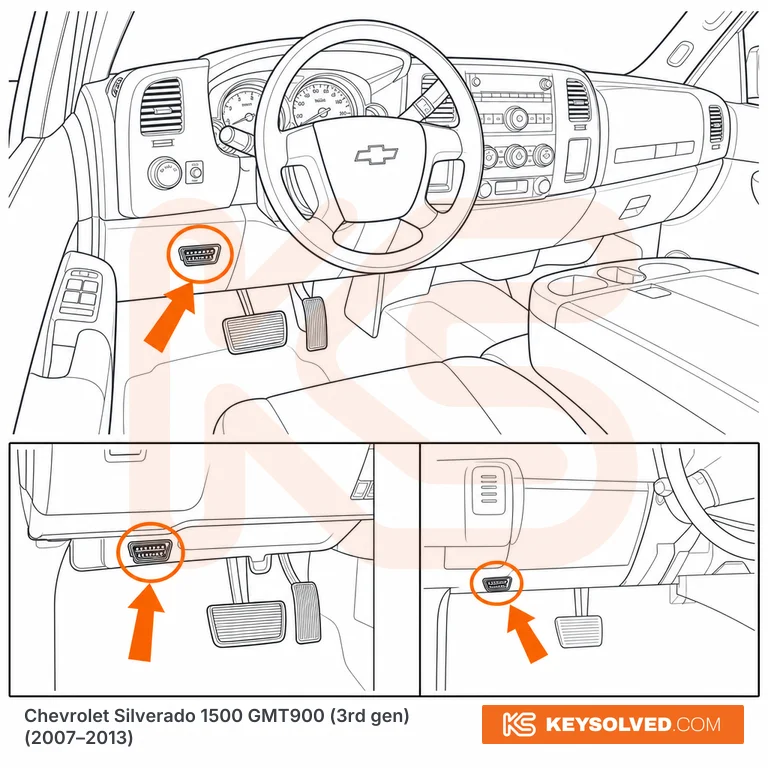
GMT900 (3rd gen) 2007–2013
Driver's side, under the dashboard above the brake pedal and to the left of the steering column. No cover — exposed and directly accessible. Standard 16-pin OBD-II connector.
Four generations, 1999–2024. Pick yours.
2019–2024
Illustration — use it to know where to look.
Left-hand-drive US trucks: driver's-side footwell, under the lower edge of the dash directly above where your feet rest, just left of the brake pedal and below the kick-panel/interior fuse block. Standard 16-pin DLC, faces down, no cover. Same position across all trims and across both the 2019–2022.0 (Global A) and 2022.5+ (Global B) builds.
Also on this Silverado 1500
2014–2018
Illustration — use it to know where to look.
Under the driver's side dashboard, below and to the left of the steering column. No cover — accessible without removing any trim. Standard 16-pin OBD-II connector.
Also on this Silverado 1500
Driver's side, under the dashboard above the brake pedal and to the left of the steering column. No cover — exposed and directly accessible. Standard 16-pin OBD-II connector.
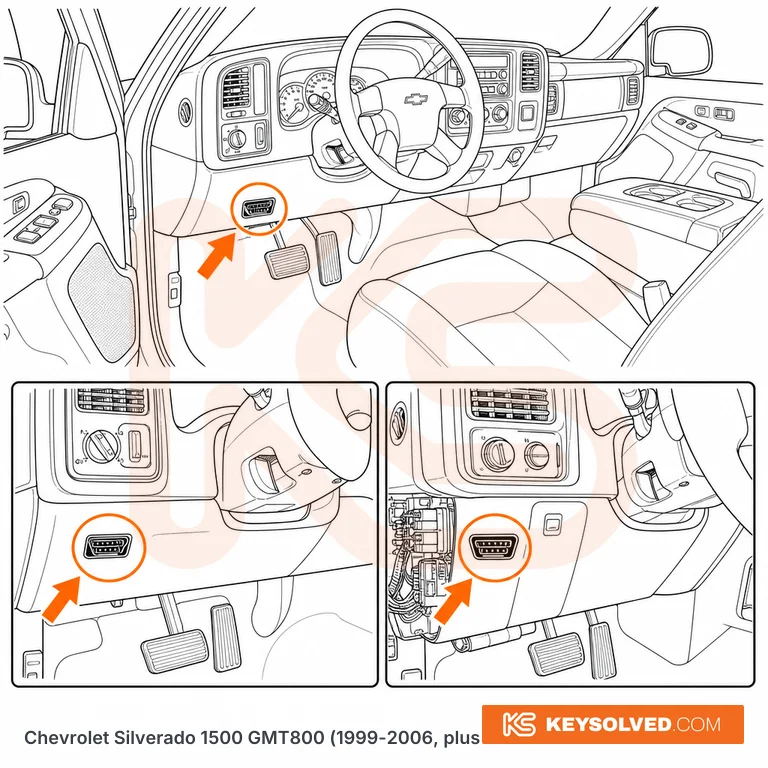
LHD (US market only): under the lower edge of the dash on the driver's side, just left of the steering column, facing down into the driver's footwell above the pedals. On 1999-2002 trucks it sits on the left lower dash directly below the column. On 2003-2006 and 2007 Classic trucks (revised dash) it sits at the lower left of the dash next to the end-of-dash fuse block and the BCM connectors. Same position on regular, extended and crew cab and on all trims, including Sierra Denali.
Questions
Step-by-step add-key and all-keys-lost procedures for every Silverado 1500, which of your tools will do it, and what catches people out.
Subscribe